
The Orange Pi RG portable retro gaming console powered by a RISC-V processor, is officially now under development.
[Press Release 11/1/2025] – Orange Pi, a well-known name in embedded computing and open-source hardware, has unveiled the Orange Pi RG Portable Gaming Console. This compact device is designed to transform portable gaming with its RISC-V architecture, offering an ideal mix of performance and energy efficiency for gaming enthusiasts.
RISC-V processors are gaining momentum, appearing in everything from tiny microcontrollers to high-performance data center chips, some laptops, and recently also gaining momentum and are used in single-board computers. However, they haven’t yet made a big impact on consumer or gaming devices, apart from microcontroller-based applications. That’s about to change with this new product, so let’s dive into the information we have so far.
Specifications
| Feature | Specification |
|---|---|
| SoC | Ky X1 |
| CPU | Ky X1 8-core RISC-V AI CPU 2TOPS AI power |
| GPU | PowerVR IMG BXE-2-32 |
| RAM | LPDDR4 1GB |
| Buttons | D-pad, A/B/X/Y Joystick Volume +/- START/MENU /SELECT/Power/ RESET Left shoulder button L1/L2, Right shoulder button R1/R2 |
| Display | 3.5-inch IPS touchscreen, 640×480 pixels with a brightness level of 300 nits. |
| LCD interface (MIPI DSI) | ✔ |
| Micro HDMI | ✔ |
| OTG interface | ✔ Shared with the charging port. |
| Storage | Supports two slots: a system card slot and a game card slot. |
| LED Status lights | Two LED indicator lights: a charging indicator and a working indicator. The charging indicator shows the charging status: charging in progress/fully charged/low battery. The working indicator shows normal operation/error message. |
| Personalize RGB lighting | ✔ |
| Built-in Speaker | ✔ |
| Built-in Microphones | ✔ |
| 3.5mm headphone jack | ✔ |
| Vibration motor | ✔ |
| Sensor | GYRO-Sensor |
| Network | WiFi (2.4G/5G), BT 5.0 |
| Supports multiple controllers | With Bluetooth/2.4G Connected to handheld console |
| Supported game emulators | Supported game genres: Nintendo: NES, FC, SFC/SNES, N64, GB, GBA, GBC, NDSwiiu, NGC. Sony: PS1, PSP, PS Vita, PS2 Sega: Mega Drive, Game Boy, SMS, Dreamcast; Arcade: CPS1, CPS2, CPS3, Neo Geo, NGPC.PGM NEC: PCE Bandai. |
| Power supply interface | USB to Type-C power cable, 5V 2A power supply. |
| Power consumption during standby (sleep) | 50mW |
| Battery | 3200mAh polymer lithium battery, approximately 6 hours of battery life. |
| Cooling | Passive heat dissipation (K1 covered with thermally conductive silicone + shielding cover). |
| Product colors | Black, white, transparent, red and white, gray and white colored buttons. |
| Package contents | ✔ Charging cable ✔ Product manual ✔ Certificate of conformity ✔ Card reader ✔ TF card ✔ Protective film ✔ Storage bag ✔ Packaging box |
| Software | Support OTA updates. Linux operating systems, such as Ubuntu, Slarm64, and Debian. |
| Other functions | ✔ Video Player ✔ Music Player ✔ E-Book (Support TXT file importing) |
| Working Temperatures | -20℃~55℃ |
| Dimension | 13.9 x 9.2x 2.2 cm |
| Weight | 200g (Without packaging) |
Under the hood: Chipset, GPU, Display and Storage
As the name implies, the Orange Pi RG is tailored for straightforward retro gaming and comes equipped with the KY X1 SoC, which utilizes RISC-V architecture.
Designed for low to mid-range devices, this system-on-chip should handle retro games effortlessly. It is expected to support Debian and other distributions from Orange Pi, making it ideal for running most lightweight games.
Hardware specifications
This device is reported to feature a 3.5-inch IPS display with a resolution of 640×480 pixels and a brightness of 300 nits. It will come with 1GB of LPDDR4 memory, a microSD card slot, a micro-HDMI port, an internal speaker, a 3.5mm headphone jack, and an OTG/Power port.
SPI NOR flash is used for the bootloader, while eMMC storage has been omitted and replaced with two micro-SD card slots—one dedicated to storing games and the other for OS system updates. Wireless connectivity options include Wi-Fi 5 / 2.4GHz bands with Bluetooth V5.0 support. Additionally, an internal vibration motor and a built-in microphone have also been added.
The console will feature a built-in 3200mAh Lithium Polymer (LiPo) battery that charges via a Type-C cable. Weighing around 200 grams, making it lightweight and compact enough to fit into a small pocket, making it perfect for outdoor activities.
GPU Architecture & Performance
Featuring the PowerVR IMG BXE-2-32 GPU, a power-efficient graphics core from Imagination Technologies’ B-Series architecture, the BXE line is optimized for fill-rate performance and minimal silicon area, making it perfect for embedded systems, mobile devices, and RISC-V platforms.
Architecture
It utilizes a tile-based deferred rendering (TBDR) architecture, which processes screen tiles independently to minimize memory bandwidth usage and power consumption. With 2 pipelines per core and a 32-wide ALU cluster, it can handle 32 pixels per clock cycle. The GPU is compatible with modern graphics and compute APIs like Vulkan 1.3, OpenGL ES 3.x, and OpenCL 3.0. It also incorporates advanced features like IMGIC (Imagination Image Compression) for efficient texture and framebuffer compression, along with HyperLane technology that supports up to eight isolated hardware task queues for secure multitasking.
Performance
This GPU isn’t built for high-end gaming, but it’s great for casual and 3D mobile games, supported by open-source drivers like Mesa’s PowerVR Vulkan driver. It’s already in use in RISC-V laptops like the DC-ROMA II. The BXE-2-32 offers up to 30% lower power usage and 25% area savings compared to earlier models, and its scalable architecture supports multi-core setups for handling more demanding tasks.
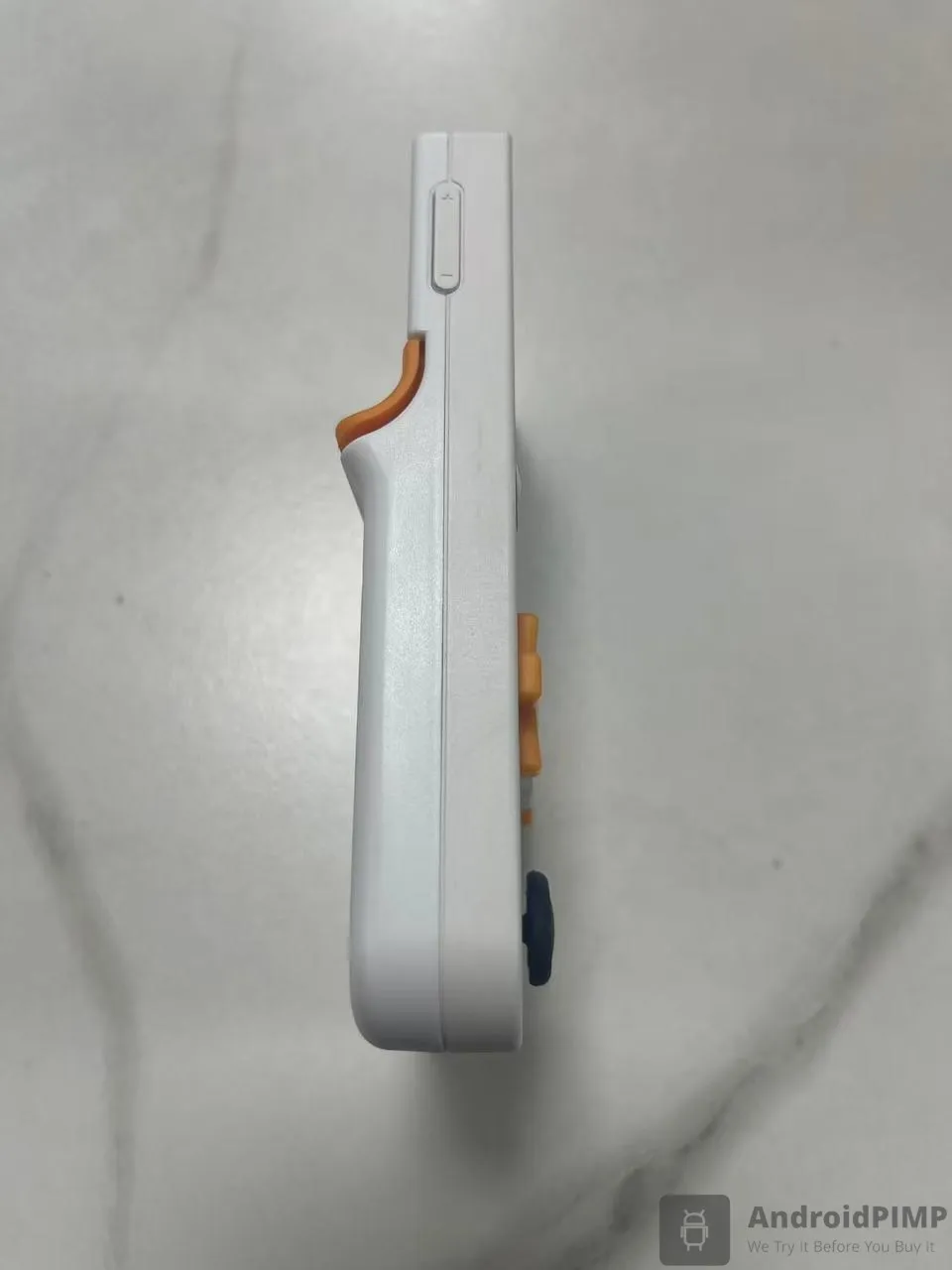
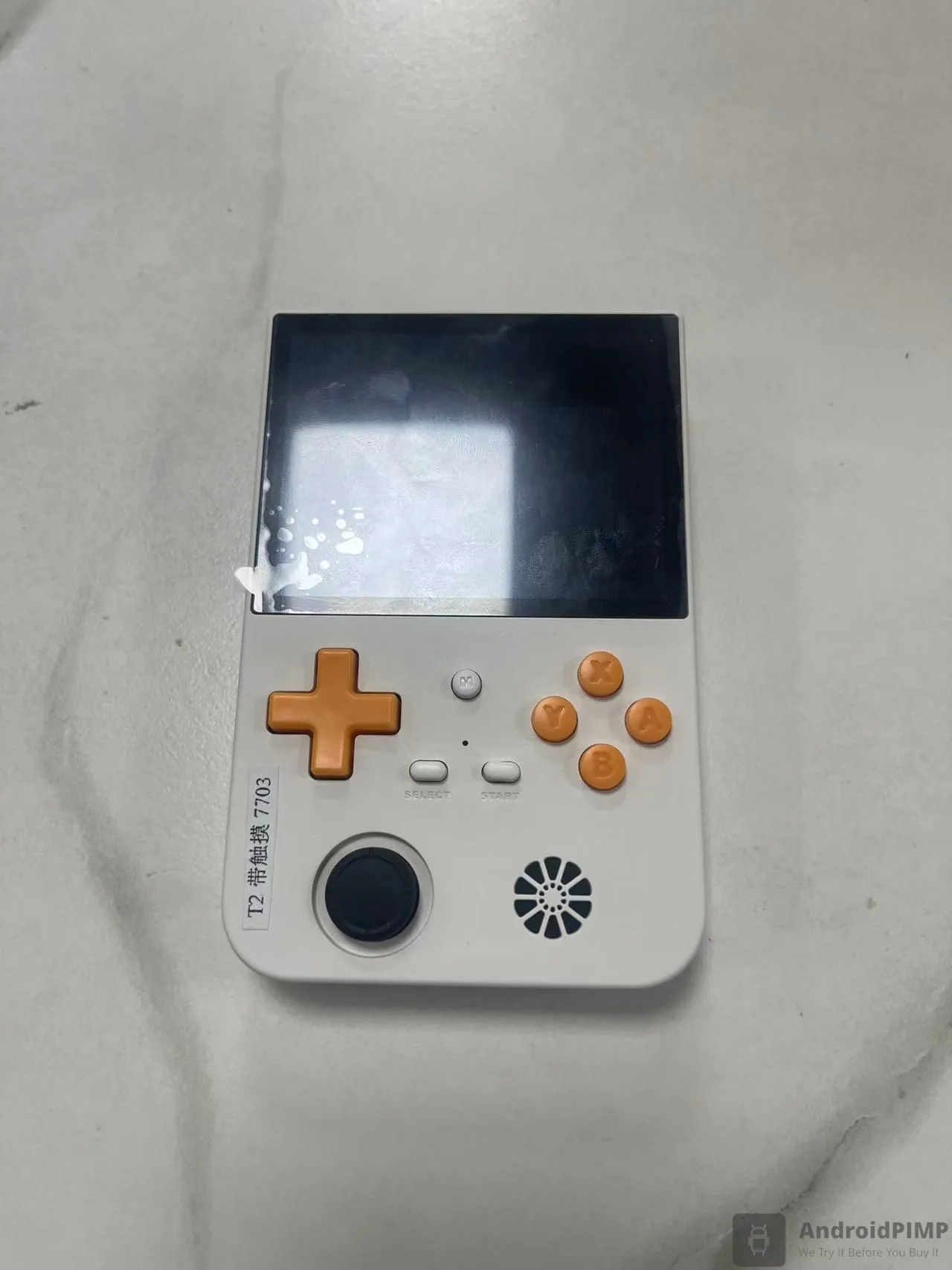
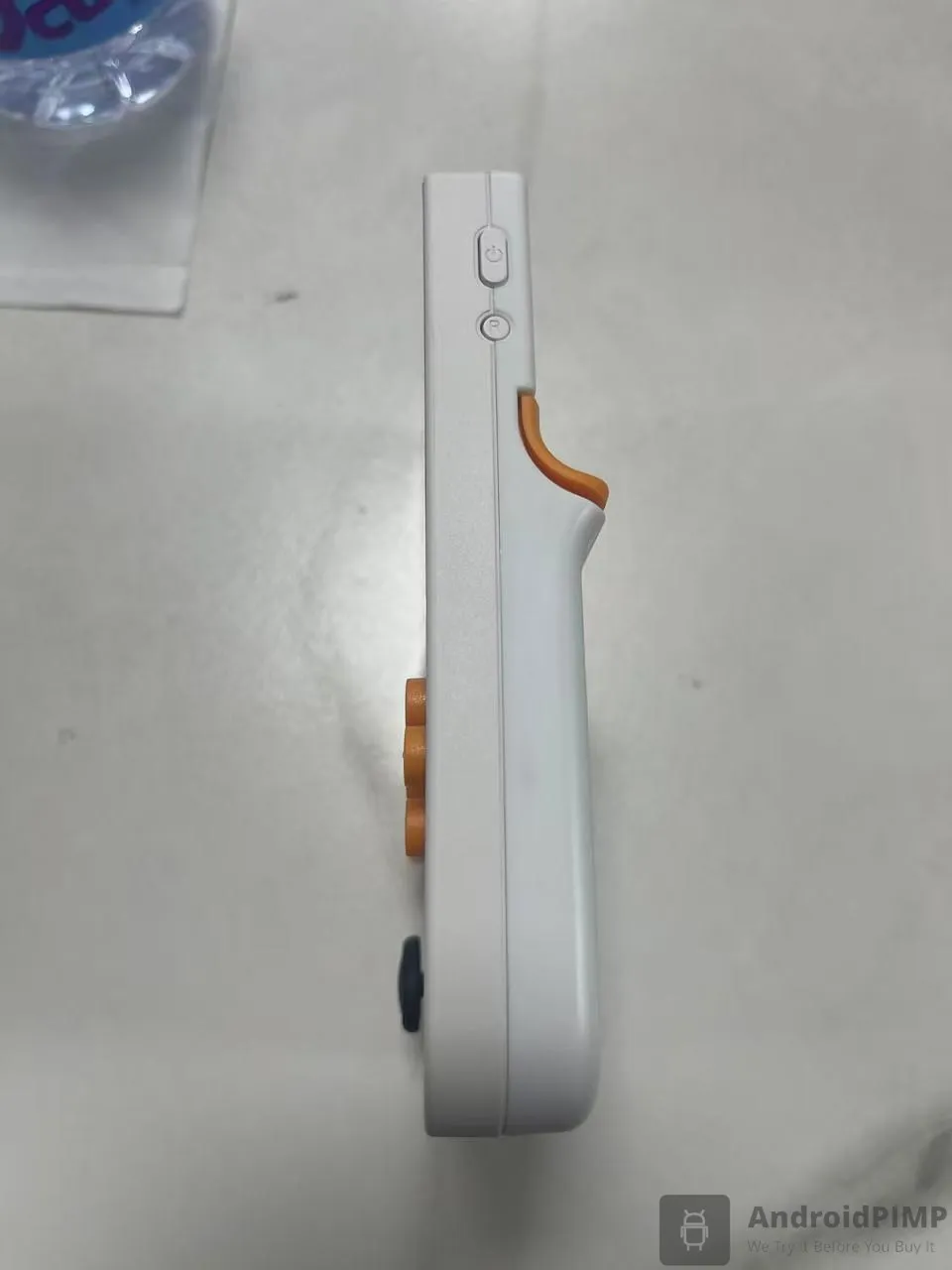
Exclusive first-look photos (engineering sample)
Key takeaways
1. Nostalgic design that’s user-friendly
The device combines low-power hardware with a simple external ergonomic design, much like most non-RISC-V consoles. It includes basic navigation controls, buttons, and a 3.5″ display, making it user-friendly also for first-time gamers.
2. Enhanced Gaming Experience
The console is designed to deliver a fun gaming experience for casual players. With its sleek and compact display, it lets users enjoy popular retro-style games. It supports a variety of genres, from nostalgic classics to modern indie gems, appealing to gamers of all preferences.
3. Micro-HDMI and casting support
Users can experience the best of both worlds by connecting the console to an external display or TV, either with a cable or wirelessly, making it an ideal portable device for on-the-go activities.
4. Connecting multiple controllers to the device via Bluetooth.
With Bluetooth support, the device allows users to operate multiple controls at the same time, which is especially convenient when the console is connected to a large display.
5. Navigation keys/buttons
The device features the familiar, user-friendly buttons typically found on mini game consoles, including A/B/X/Y, Menu, Select, Start, and more.
6. Battery life
Thanks to the low-power RISC-V hardware that powers this device, users can enjoy approximately 6 hours of battery life on a single charge, providing nearly half a day of usage.
Pricing and Availability
The Orange Pi RG hasn’t hit the market yet, but the expected price range is around $40–50. This compact gaming console is likely to be available for pre-order in the next few months, though no official launch date has been announced. In the meantime, similar low-end handheld consoles without RISC-V on AliExpress start at about $30. It’ll be interesting to see how much interest it draws, how well it performs for gaming, and what kind of real battery life it offers.
About Orange Pi
Orange Pi is dedicated to advancing open-source hardware and software solutions. With a focus on innovation and community engagement, the company aims to empower users and developers worldwide through accessible technology.