Close Menu
  • Home
  • About
  • Wearables
  • Earbuds
  • Computer Accessories
    • Routers
    • Remotes
  • Embedded
    • Single Board Computers
    • Addon Boards
    • Raspberry Pi
  • Wireless Routers
  • Contact
Facebook X (Twitter) Instagram Threads
Trending
  • Banana Pi BPI-R4 Pro Review: A new OpenWrt WiFi 7 router featuring dual 10GbE SFP+ ports
  • AliExpress New Promotions: Country-specific Promo Codes
  • CamThink NeoEyes NE301: An Ultra-Low Power Edge AI Camera with STM32N6 MCU (Review)
  • Kickpi K7C RK3576 Edge AI SBC Launches with 6 TOPS AI Power & Dual Gigabit Ethernet
  • Raspberry Pi 5 vs Orange Pi 6: Which SBC is Best in 2026?
  • Ugoos SK4 Review (2025): The Best Mid-Range Android TV Box for Value & Features
  • Orange Pi 6 Unveiled: The Affordable, Slimmed-Down SBC Alternative to the 6 Plus
  • Orange Pi 6 Plus Review: A 12-Core SBC Powerhouse (Benchmarks, Specs, and Pricing)
AndroidPIMP
Facebook X (Twitter) Instagram
  • Home
  • About
  • Wearables
  • Earbuds
  • Computer Accessories
    • Routers
    • Remotes
  • Embedded
    • Single Board Computers
    • Addon Boards
    • Raspberry Pi
  • Wireless Routers
  • Contact
AndroidPIMP
Embedded Computers

Orange Pi RV2 Review: A Complete Detailed Look

By androidpimpJuly 5, 2025Updated:July 6, 2025No Comments26 Mins Read
Facebook Twitter Pinterest LinkedIn Tumblr Email
Follow Us
Google News Flipboard
Table of contents
  1. Additional Interfaces
    1. Featuring dual GbE and M.2 slots in one SBC (Single-board computer)
  2. Ky X1 System on Chip (SoC) – Designed for entry-level AI Applications
    1. Key Takeaways
  3. Orange Pi RV2 specs
  4. Board interfaces and layout.
  5. A budget-friendly solution for building a router gateway
    1. Practical Applications
  6. Software Support
  7. Main Features of the RV2
    1. Powerful Performance
    2. 1. Robust Connectivity Options
    3. 2. Compact and Versatile Design
    4. 3. Two M.2 Key-M slots on a single board
    5. 4. Anticipated data transfer speeds
  8. RISC-V Architecture: The Advantages
  9. Part 2: Orange Pi RV2 Review: Unboxing, Testing, Pricing
  10. The Packages
  11. Unboxing & First Impressions
    1. What’s included (Package Contents)
  12. A closer look at the board
  13. Cooling the Board
  14. Software Support
    1. System resources
  15. Power Usage and Temperature Monitoring
    1. Evaluating the chip temperature with an infrared thermometer
    2. But wait, isn’t the temperature too high?
    3. What are the actual power requirements for the RV2 board?
    4. So, do you still need to use a heatsink?
    5. Power Consumption
  16. Performance Wise
    1. Additional applications
    2. Are there any noticeable lags during operation?
  17. Exploring information about the hardware
    1. Checking CPU information
  18. Evaluating the performance the storage devices
    1. Checking Storage Devices information
    2. Checking the NVMe manufacturer information.
    3. Evaluating the RV2 PCIe link specifications
    4. Incorporating all flash storage devices into the RV2 board.
  19. Benchmarking: Testing read/write speeds
    1. 1. CRUCIAL P3 PLUS 3 Benchmark test results (Screenshots).
  20. 2. Faxiang S700 Benchmark test results (Screenshots).
    1. Putting it to the test
    2. Our Test Results
  21. Wireless Connectivity
    1. Expected bandwidth
    2. What actual output speeds can you anticipate?
  22. Orange Pi RV2 benchmarks
    1. Geekbench Benchmark Assessment
    2. Single-Core Performance – Geekbench 6.4.0 Test Results
    3. Multi-Core Performance – Geekbench 6.4.0 Test Results
  23. Comparing the Orange Pi RV2 and Raspberry Pi 5 Performance
  24. A comparison of the Orange Pi RV2 with other RISC-V board brands.
  25. Gaming
  26. Concluding reflections.
    1. Is it worth purchasing?
  27. Pricing and where to buy Orange Pi RV2.
  28. Where to Order
    1. Orange Pi RV2
  29. FAQ
    1. Is it possible to use the RV2 as a Mini PC?
    2. Is there official OpenWrt support for the RV2?
    3. Does the RV2 require a heatsink for effective cooling?
    4. In terms of performance, how does the RV2 compare to the Raspberry Pi 5?
    5. What Wi-Fi throughput speeds can I anticipate when using the RV2?
    6. Is the RV2 worth the money?

Evaluating the performance the storage devices

Checking Storage Devices information

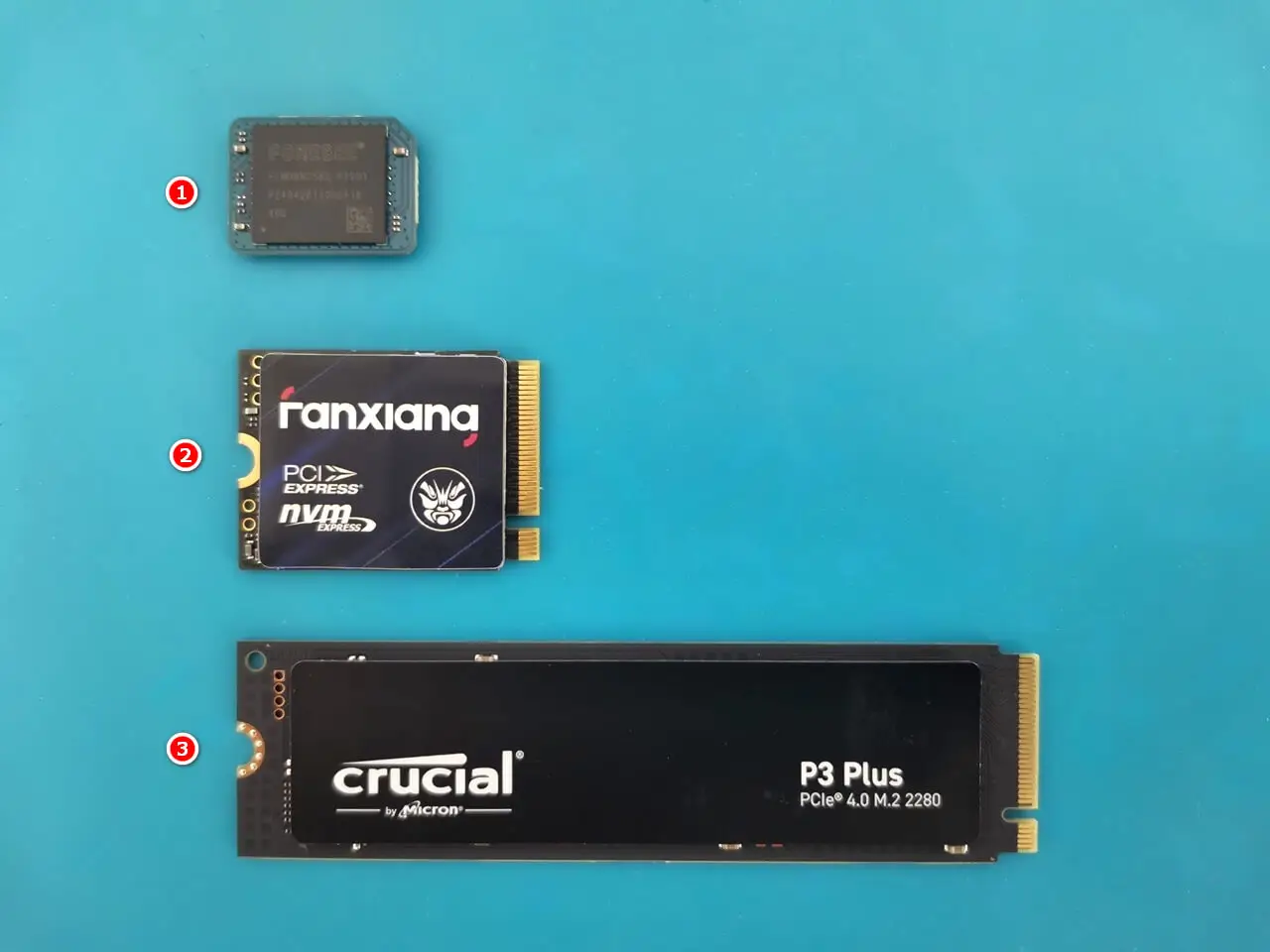
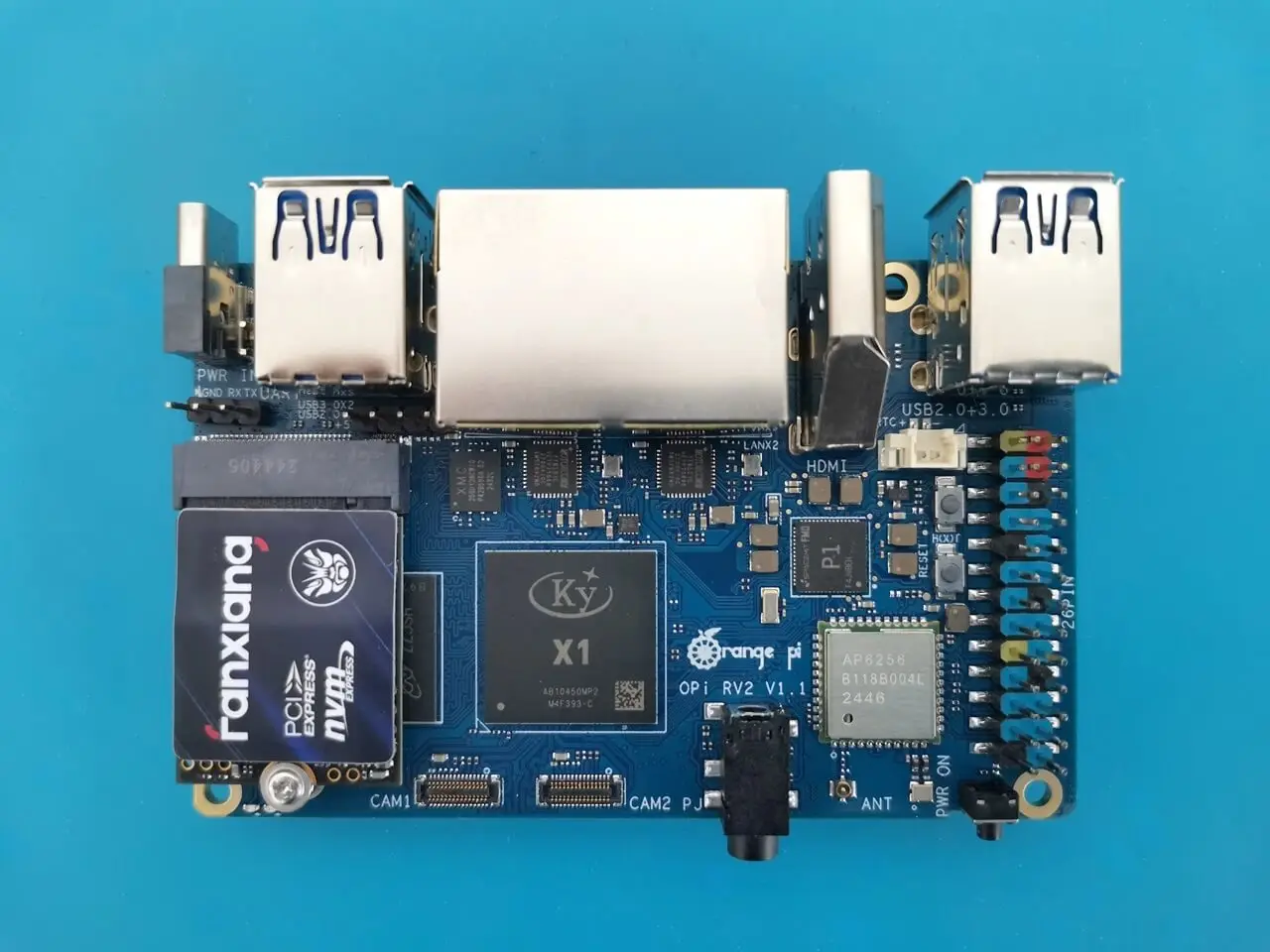
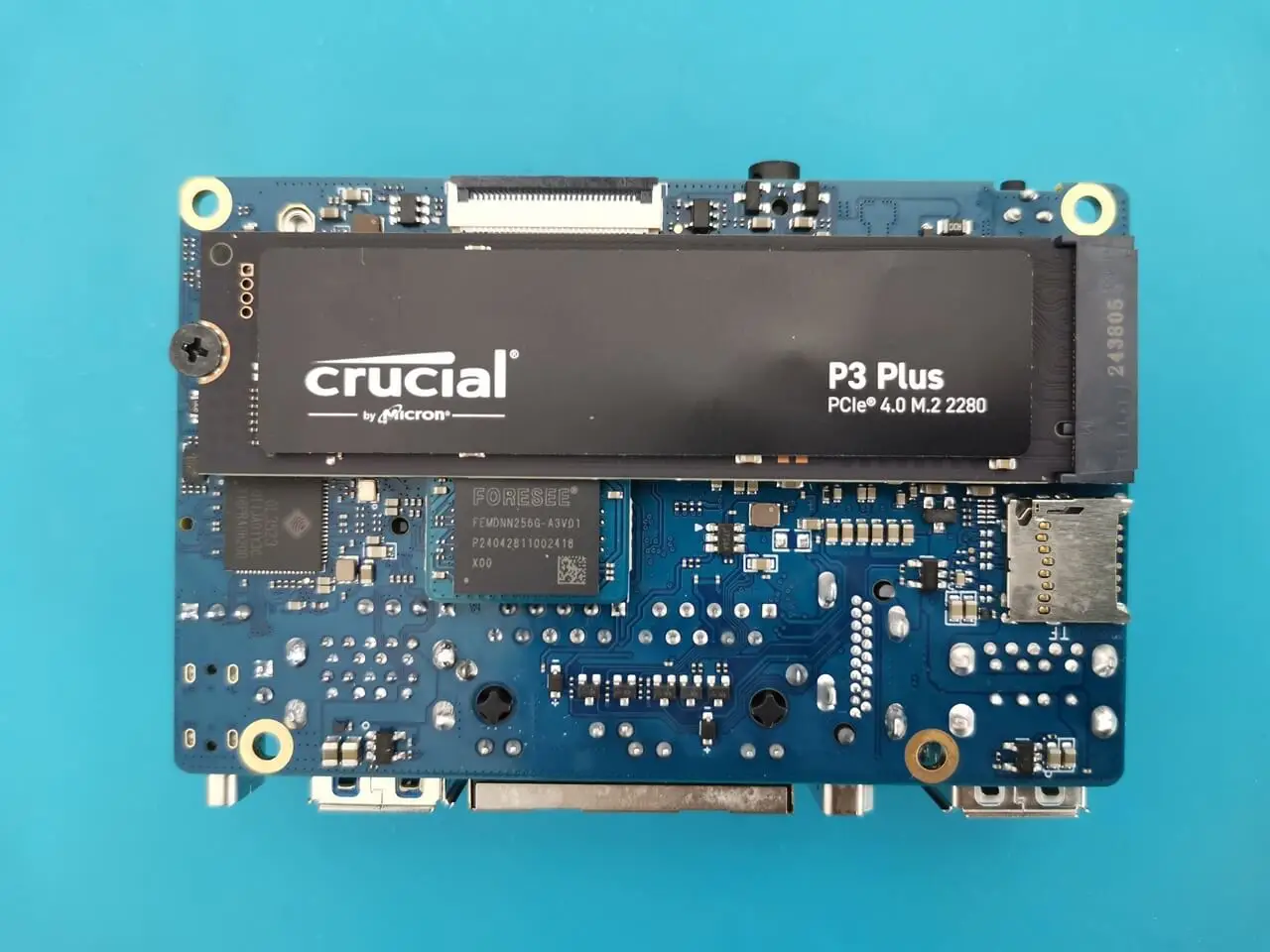
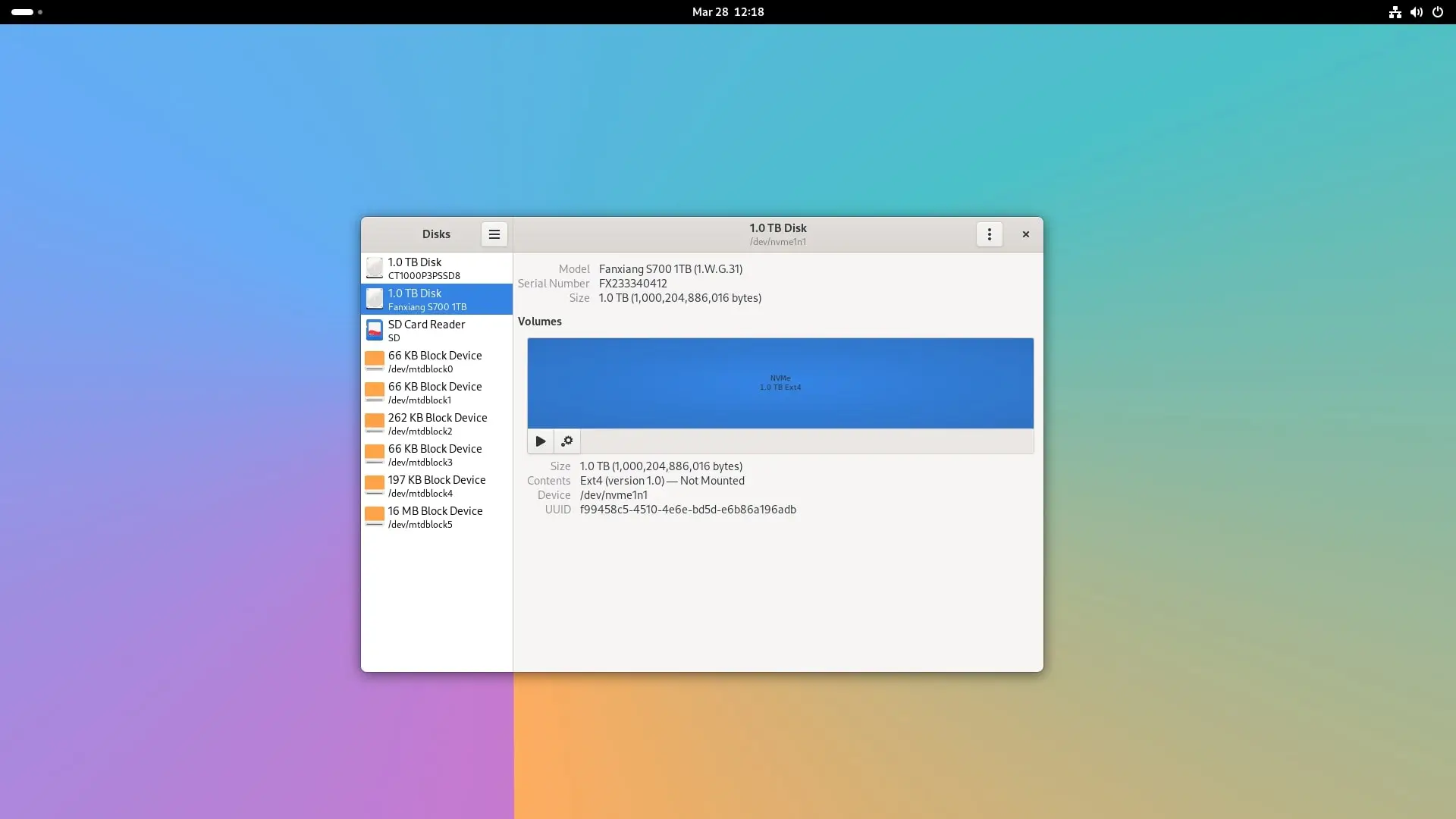
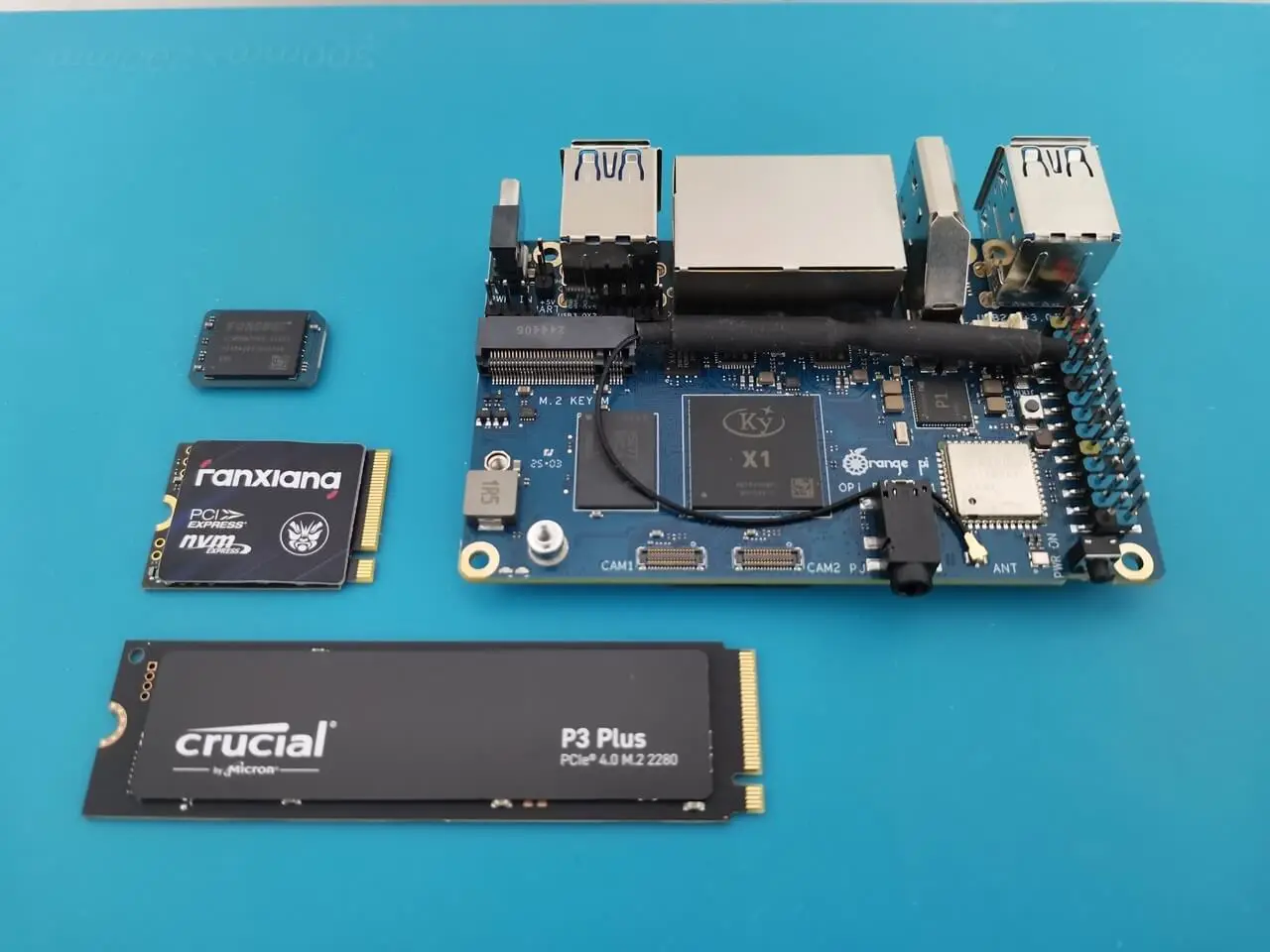
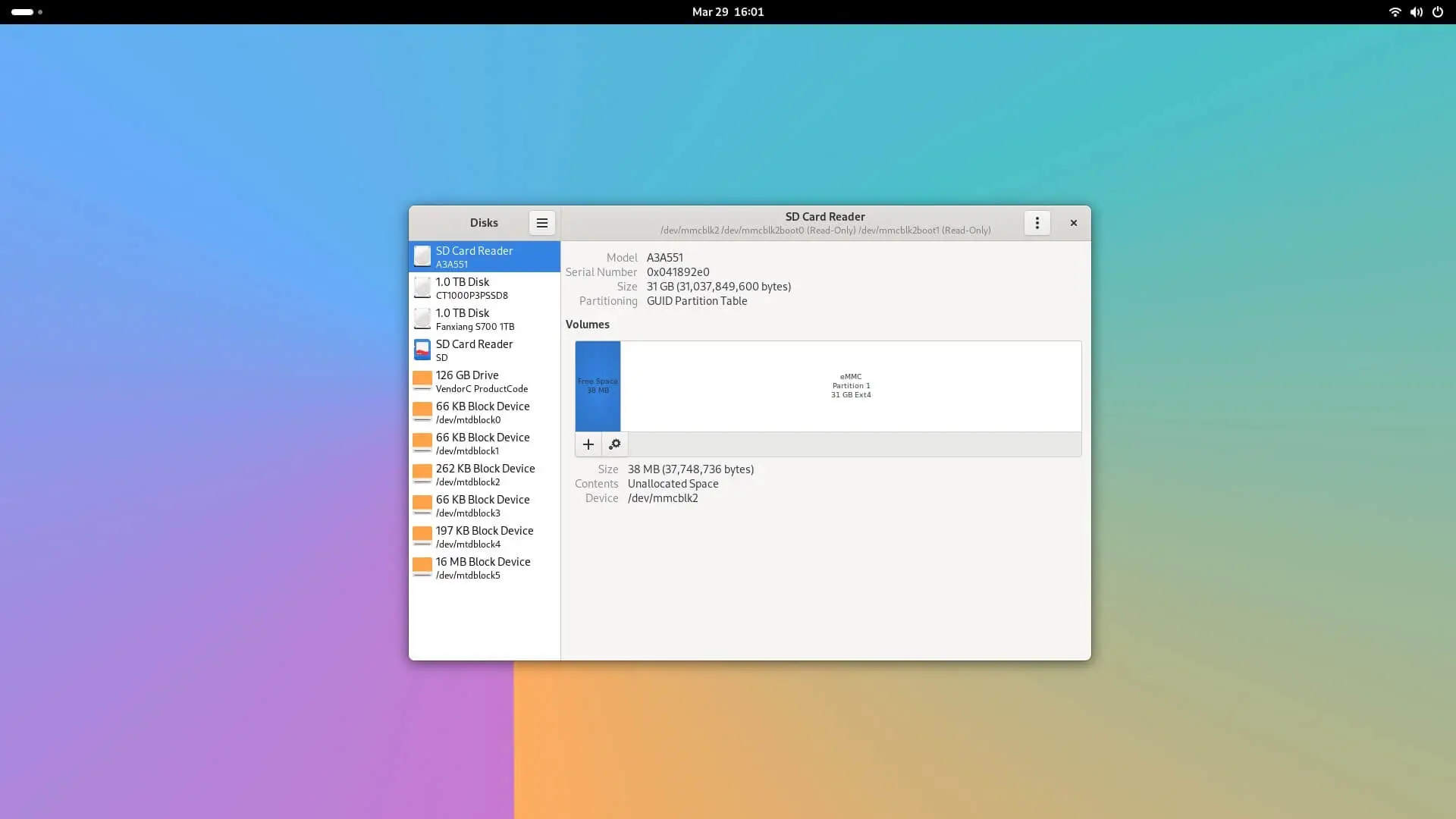
Both of our NVMe SSDs were successfully recognized by the rv2 board, along with the 32GB eMMC chip. Below is a table showcasing the available storage devices.

Storage Device TypeBrand/ModelDevice name
1TB NVMe (2230)Fanxiang S700nvme1n1
1TB NVMe (2280)CRUCIAL P3 PLUSnvme0n1
32GB eMMCFEMDNN032G-A3A55 (FORESEE)mmcblk2
MicroSD CardHP U3 128Gmmcblk0
oot@orangepirv2:/# fdisk -l
Disk /dev/mtdblock0: 64 KiB, 65536 bytes, 128 sectors
Units: sectors of 1 * 512 = 512 bytes
Sector size (logical/physical): 512 bytes / 512 bytes
I/O size (minimum/optimal): 512 bytes / 512 bytes


Disk /dev/mtdblock1: 64 KiB, 65536 bytes, 128 sectors
Units: sectors of 1 * 512 = 512 bytes
Sector size (logical/physical): 512 bytes / 512 bytes
I/O size (minimum/optimal): 512 bytes / 512 bytes


Disk /dev/mtdblock2: 256 KiB, 262144 bytes, 512 sectors
Units: sectors of 1 * 512 = 512 bytes
Sector size (logical/physical): 512 bytes / 512 bytes
I/O size (minimum/optimal): 512 bytes / 512 bytes


Disk /dev/mtdblock3: 64 KiB, 65536 bytes, 128 sectors
Units: sectors of 1 * 512 = 512 bytes
Sector size (logical/physical): 512 bytes / 512 bytes
I/O size (minimum/optimal): 512 bytes / 512 bytes


Disk /dev/mtdblock4: 192 KiB, 196608 bytes, 384 sectors
Units: sectors of 1 * 512 = 512 bytes
Sector size (logical/physical): 512 bytes / 512 bytes
I/O size (minimum/optimal): 512 bytes / 512 bytes


Disk /dev/nvme1n1: 931.51 GiB, 1000204886016 bytes, 1953525168 sectors
Disk model: Fanxiang S700 1TB
Units: sectors of 1 * 512 = 512 bytes
Sector size (logical/physical): 512 bytes / 512 bytes
I/O size (minimum/optimal): 512 bytes / 512 bytes


Disk /dev/mtdblock5: 15.38 MiB, 16121856 bytes, 31488 sectors
Units: sectors of 1 * 512 = 512 bytes
Sector size (logical/physical): 512 bytes / 512 bytes
I/O size (minimum/optimal): 512 bytes / 512 bytes


Disk /dev/nvme0n1: 931.51 GiB, 1000204886016 bytes, 1953525168 sectors
Disk model: CT1000P3PSSD8
Units: sectors of 1 * 512 = 512 bytes
Sector size (logical/physical): 512 bytes / 512 bytes
I/O size (minimum/optimal): 512 bytes / 512 bytes


Disk /dev/mmcblk0: 116.48 GiB, 125069950976 bytes, 244277248 sectors
Units: sectors of 1 * 512 = 512 bytes
Sector size (logical/physical): 512 bytes / 512 bytes
I/O size (minimum/optimal): 512 bytes / 512 bytes
Disklabel type: dos
Disk identifier: 0x502b62e6

Device         Boot Start       End   Sectors   Size Id Type
/dev/mmcblk0p1      61440 241827839 241766400 115.3G 83 Linux


Disk /dev/mmcblk2: 28.91 GiB, 31037849600 bytes, 60620800 sectors
Units: sectors of 1 * 512 = 512 bytes
Sector size (logical/physical): 512 bytes / 512 bytes
I/O size (minimum/optimal): 512 bytes / 512 bytes
Disklabel type: gpt
Disk identifier: AB6F3888-569A-4926-9668-80941DCB40BC

Device         Start      End Sectors Size Type
/dev/mmcblk2p1 73728 60618751 60545024 28.9G Linux filesystem


Disk /dev/mmcblk2boot0: 4 MiB, 4194304 bytes, 8192 sectors
Units: sectors of 1 * 512 = 512 bytes
Sector size (logical/physical): 512 bytes / 512 bytes
I/O size (minimum/optimal): 512 bytes / 512 bytes


Disk /dev/mmcblk2boot1: 4 MiB, 4194304 bytes, 8192 sectors
Units: sectors of 1 * 512 = 512 bytes
Sector size (logical/physical): 512 bytes / 512 bytes
I/O size (minimum/optimal): 512 bytes / 512 bytes

Checking the NVMe manufacturer information.

root@orangepirv2:~# nvme list
Node                  Generic               SN                   Model                                    Namespac                        e  Usage                      Format           FW Rev
--------------------- --------------------- -------------------- ---------------------------------------- --------                        -- -------------------------- ---------------- --------
/dev/nvme0n1          /dev/ng0n1            24464C0DFFE2         CT1000P3PSSD8                            0x1                                  1.00  TB /   1.00  TB    512   B +  0 B   P9CR413
/dev/nvme1n1          /dev/ng1n1            FX233340412          Fanxiang S700 1TB                        0x1                                  1.00  TB /   1.00  TB    512   B +  0 B   1.W.G.31

Evaluating the RV2 PCIe link specifications

According to the Orange Pi website, the RV2 supports PCIe 2.0 with 2 lanes. What kind of read and write speeds should you anticipate with this configuration?

For a PCIe 2.0 NVMe SSD with 2 lanes (x2), the theoretical maximum transfer speed is approximately 1 GB/s (gigabyte per second). However, in real-world scenarios, you can expect slightly lower speeds due to overhead and inefficiencies, typically around 850–900 MB/s.

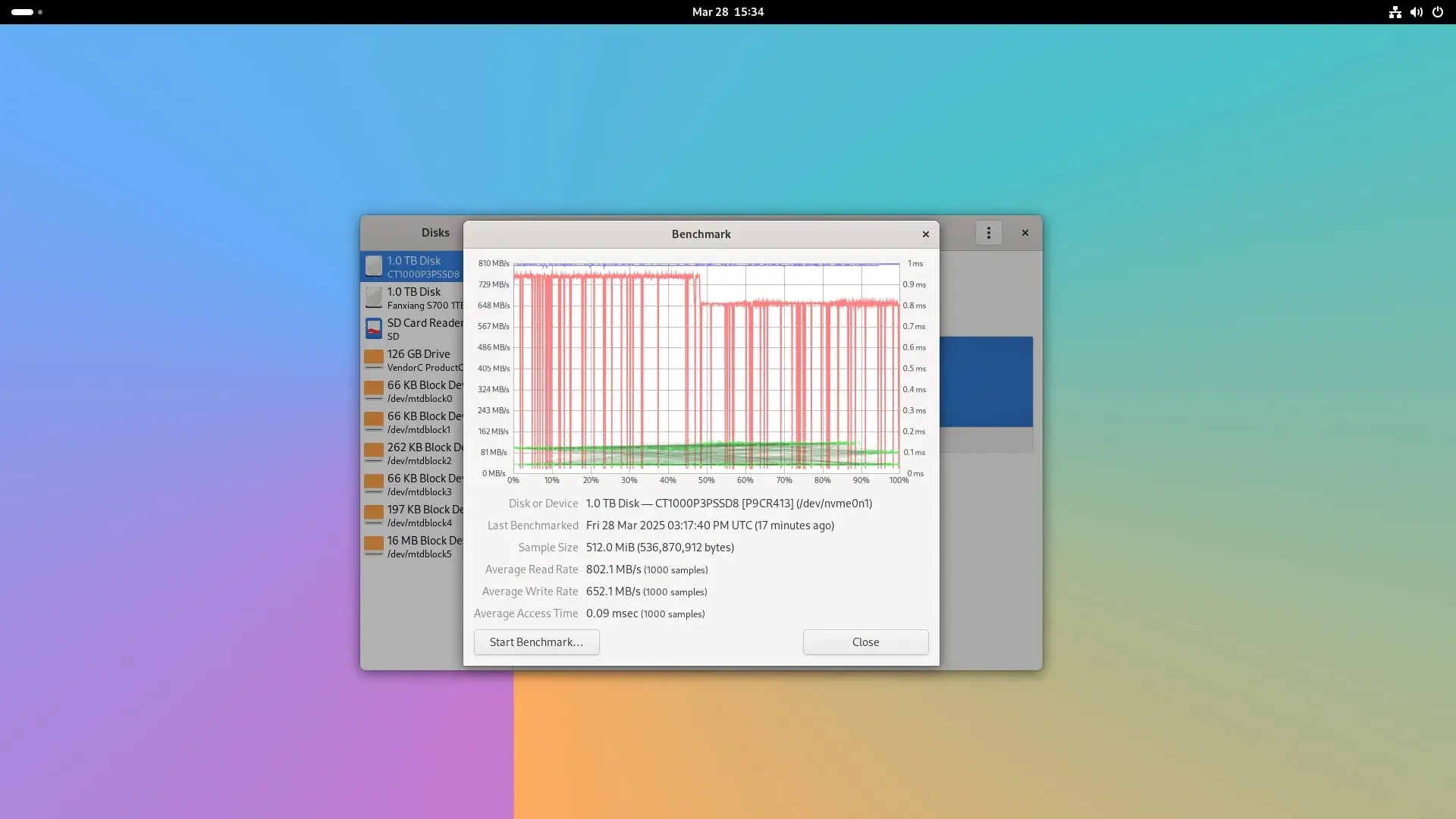
What transfer speeds did our benchmark tests uncover? We achieved approximately 800 MB/s for reading and 700 MB/s for writing.

root@orangepirv2:/# sudo lspci -vv | grep -E 'LnkCap|LnkSta'

  LnkCap: Port #0, Speed 5GT/s, Width x2, ASPM L0s L1, Exit Latency L0s <4us, L1 <16us
  LnkSta: Speed 5GT/s, Width x2
  LnkCap2: Supported Link Speeds: 2.5-5GT/s, Crosslink- Retimer- 2Retimers- DRS-
  LnkSta2: Current De-emphasis Level: -6dB, EqualizationComplete- EqualizationPhase1-
  LnkCap: Port #1, Speed 16GT/s, Width x4, ASPM L1, Exit Latency L1 unlimited
  LnkSta: Speed 5GT/s (downgraded), Width x2 (downgraded)
  LnkCap2: Supported Link Speeds: 2.5-16GT/s, Crosslink- Retimer+ 2Retimers+ DRS-
  LnkSta2: Current De-emphasis Level: -6dB, EqualizationComplete- EqualizationPhase1-
  LnkCap: Port #0, Speed 5GT/s, Width x2, ASPM L0s L1, Exit Latency L0s <4us, L1 <16us
  LnkSta: Speed 5GT/s, Width x2
  LnkCap2: Supported Link Speeds: 2.5-5GT/s, Crosslink- Retimer- 2Retimers- DRS-
  LnkSta2: Current De-emphasis Level: -6dB, EqualizationComplete- EqualizationPhase1-
  LnkCap: Port #0, Speed 16GT/s, Width x4, ASPM L1, Exit Latency L1 <64us
  LnkSta: Speed 5GT/s (downgraded), Width x2 (downgraded)
  LnkCap2: Supported Link Speeds: 2.5-16GT/s, Crosslink- Retimer+ 2Retimers+ DRS-
  LnkSta2: Current De-emphasis Level: -6dB, EqualizationComplete- EqualizationPhase1-
  • Port #0 supports speeds up to 5GT/s with a width of x2. ASPM (Active State Power Management) modes L0s and L1 are enabled, with exit latencies of <4μs for L0s and <16μs for L1.
  • Port #1 has a higher capability, supporting speeds up to 16GT/s with a width of x4. However, the current status shows it is downgraded to 5GT/s and x2 width. ASPM L1 is enabled, but the exit latency is unlimited.

Here’s a rough breakdown:

PCIe transfer speeds depend on the link speed (GT/s) and width (number of lanes, e.g., x2, x4). Here’s a rough breakdown for your scenario:

  • Port #0:
    • Speed: 5GT/s, Width: x2
    • Approximate transfer speed: ~2 GB/s (gigabytes per second)
  • Port #1 (downgraded):
    • Speed: 5GT/s, Width: x2
    • Approximate transfer speed: ~2 GB/s

If Port #1 operated at its full potential (16GT/s, x4), you’d expect a theoretical transfer speed of ~8 GB/s. However, with the current downgrade to 5GT/s, x2, its speed aligns with Port #0.

Conclusion

With a 2 LAN bandwidth alongside PCIe 2.0 support, you are likely to face a bottleneck that restricts NVMe read/write speeds to a maximum of 1 Gbps. Therefore, using a PCIe 4.0 NVMe card won’t make any difference in performance. Therefore, buying a cheaper NVMe PCIe V2.0 should be enough.


Incorporating all flash storage devices into the RV2 board.
Benchmarking: Testing read/write speeds

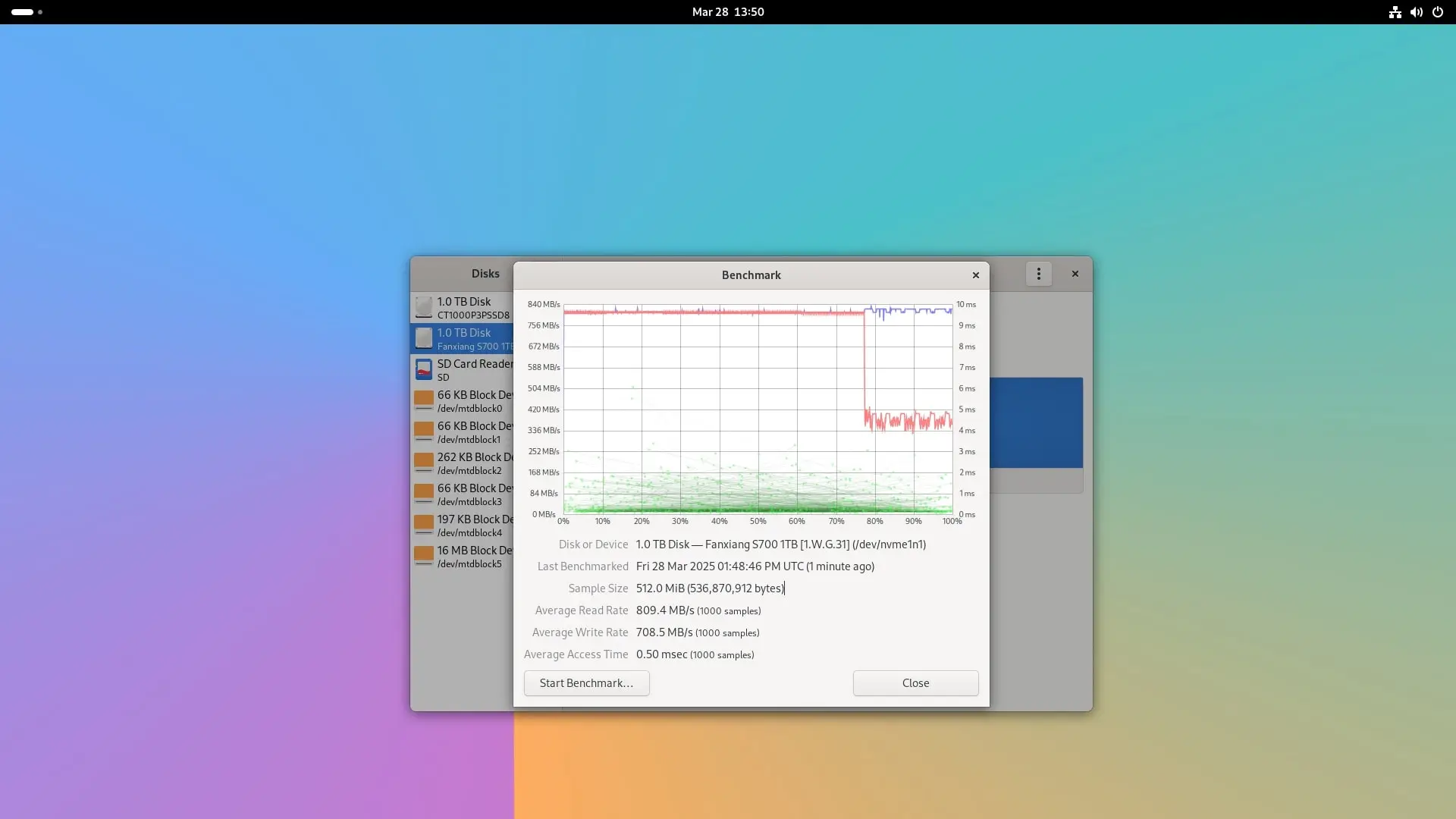
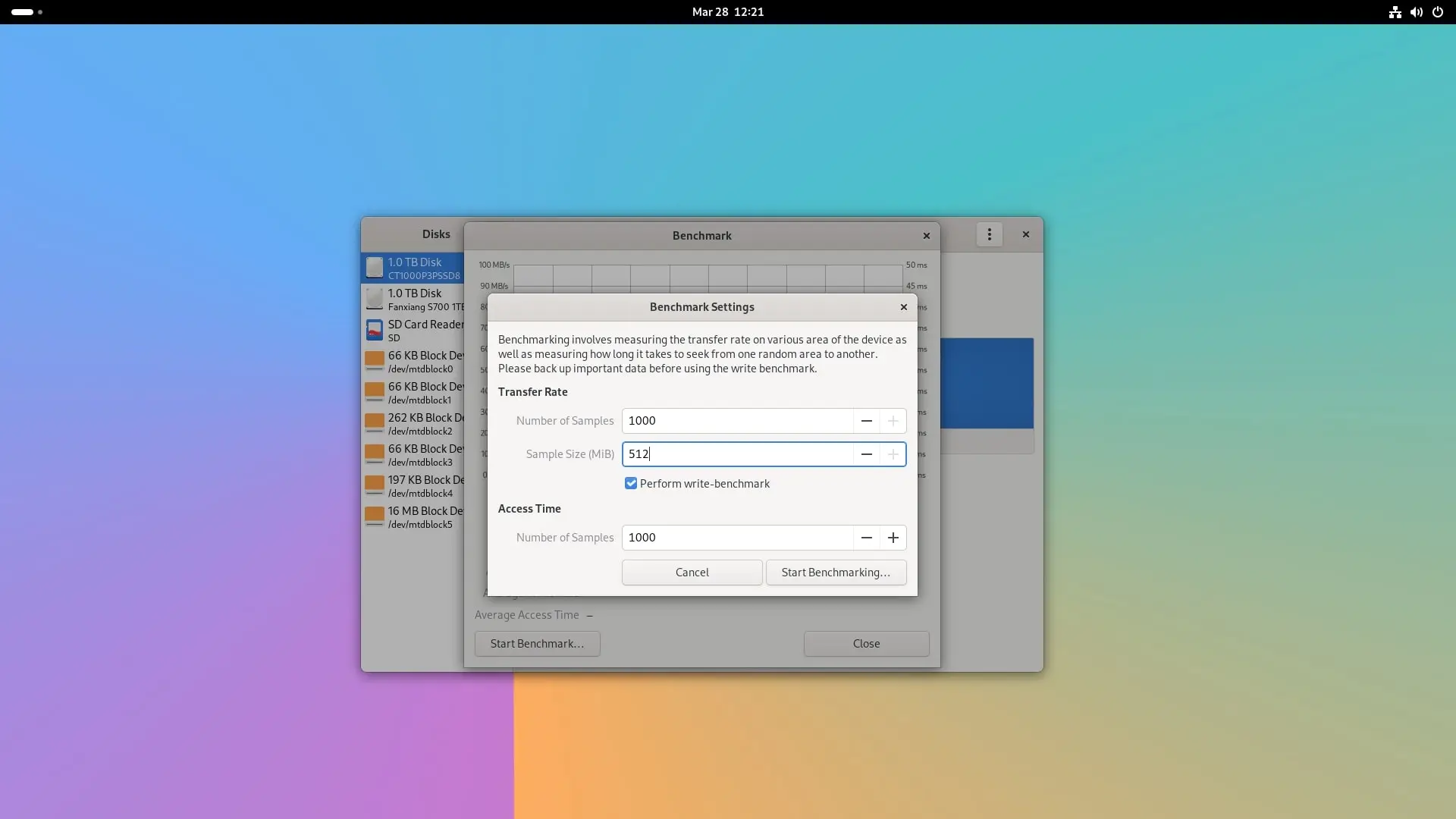
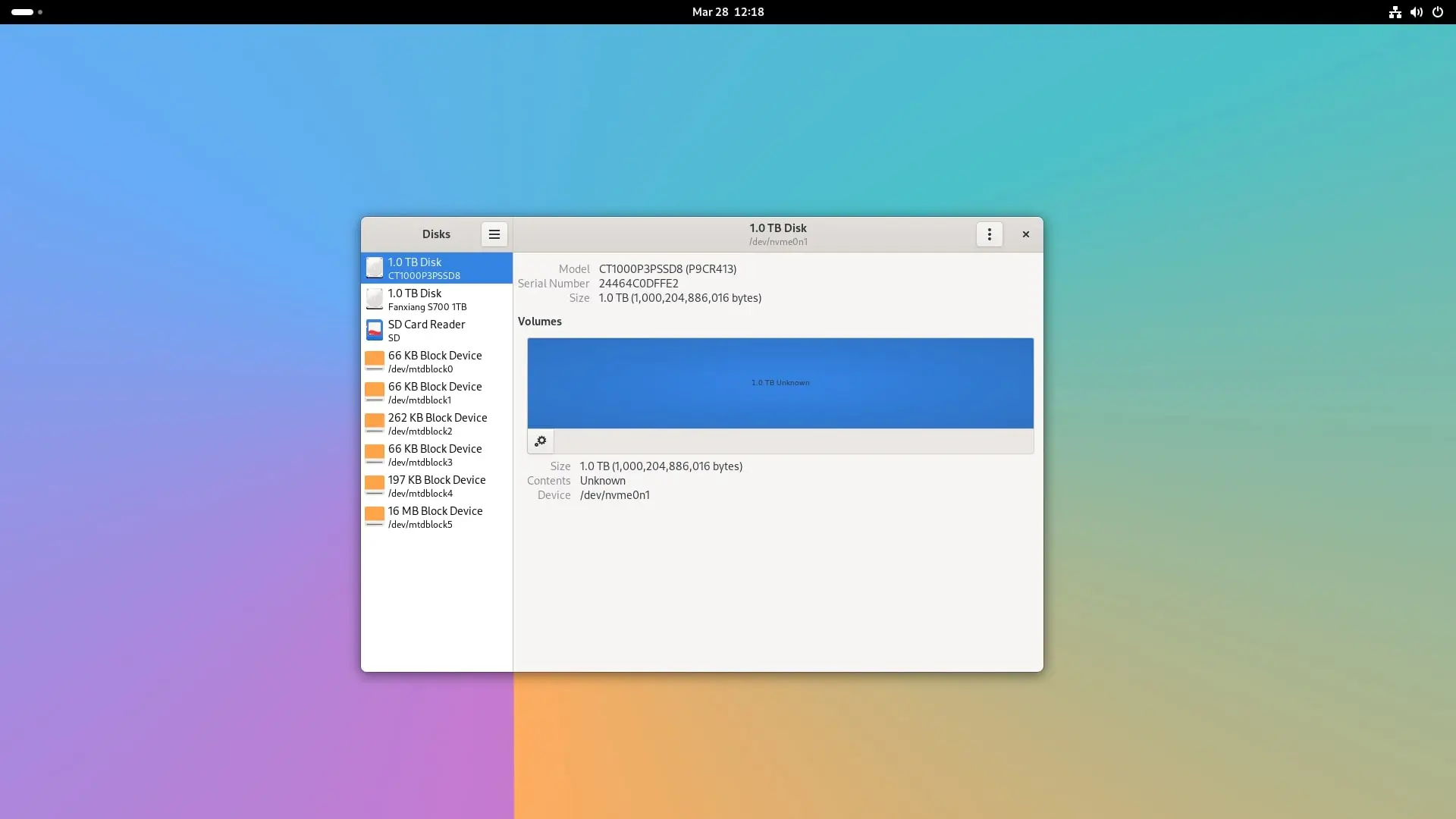
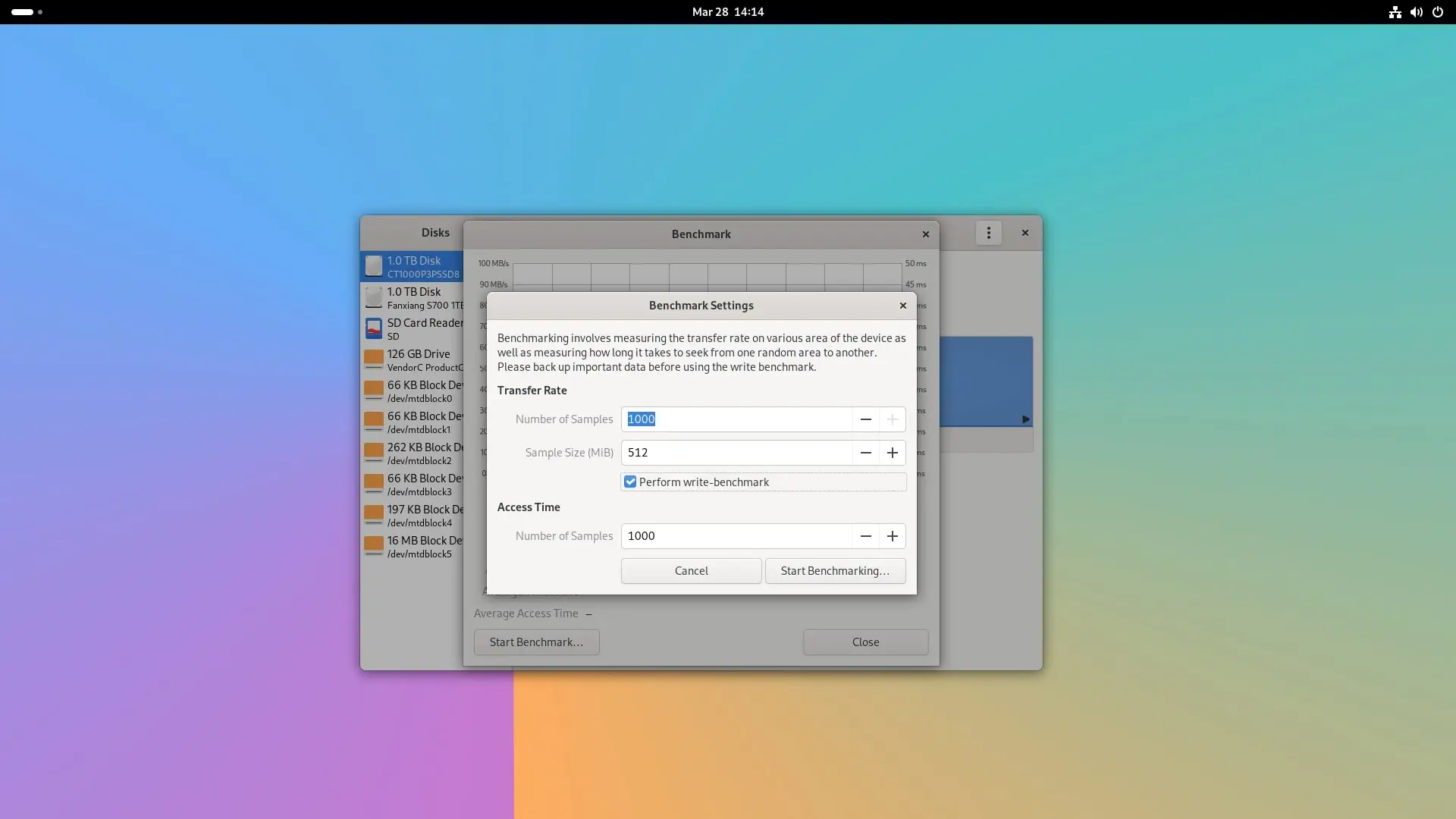
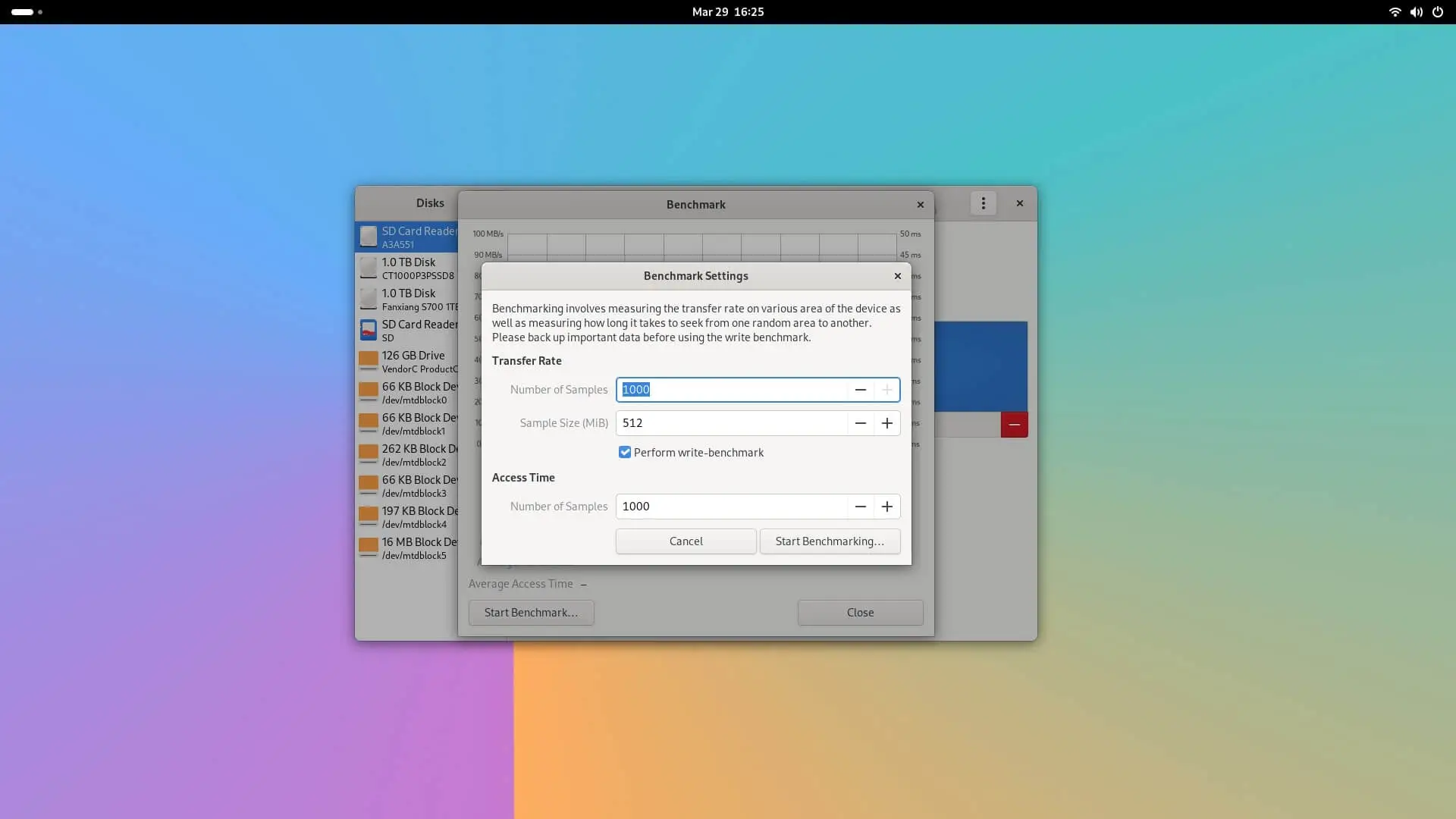
For our benchmark testing, we utilized the GNOME Disks tool. We partitioned and formatted the NVMe SSDs to the EXT4 file system, configuring the number of samples to 1,000 and setting the sample size to approximately 0.5GB.

1. CRUCIAL P3 PLUS 3 Benchmark test results (Screenshots).
2. Faxiang S700 Benchmark test results (Screenshots).
3. 32GB eMMC Benchmark test results (Screenshots).
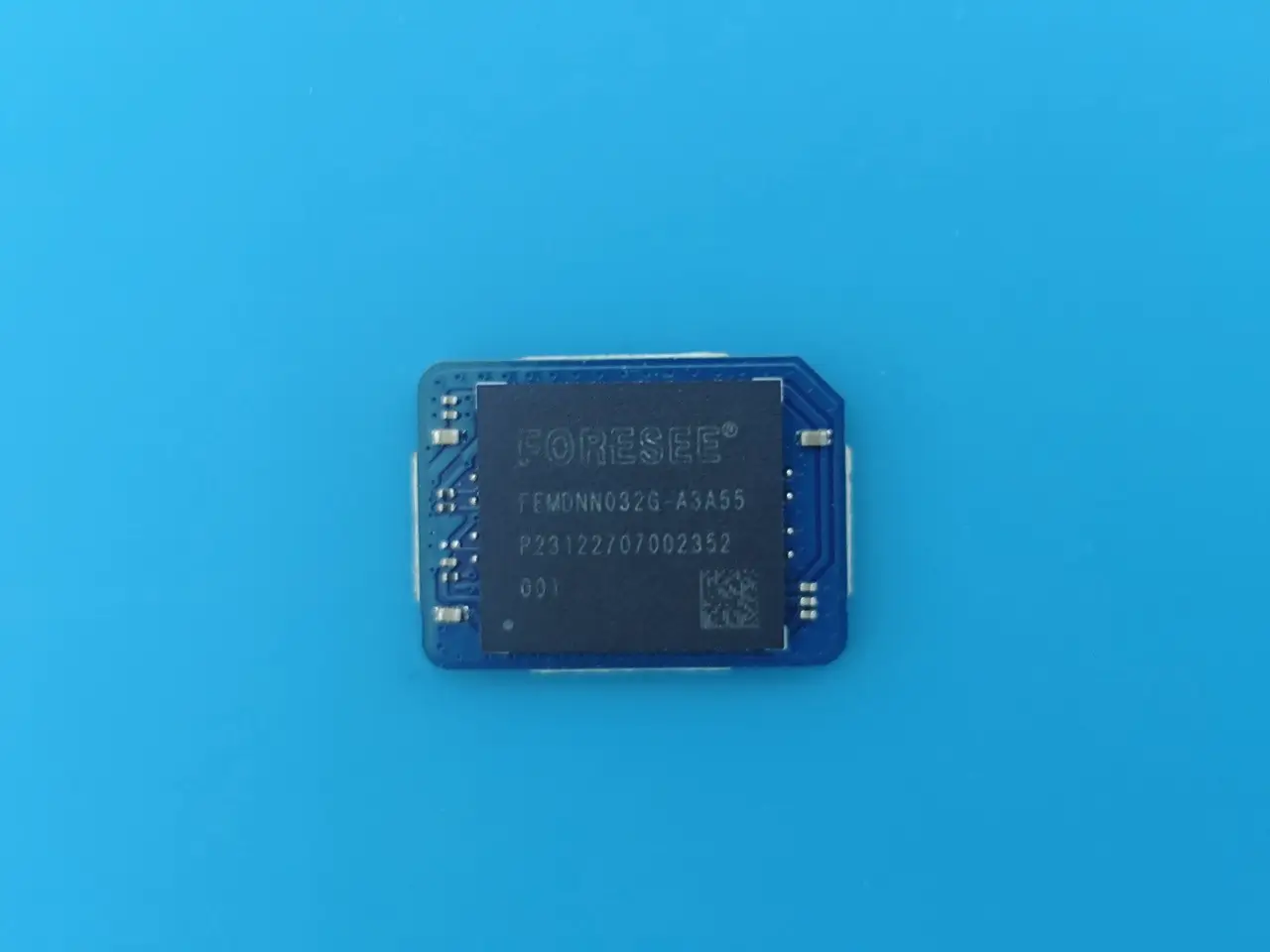
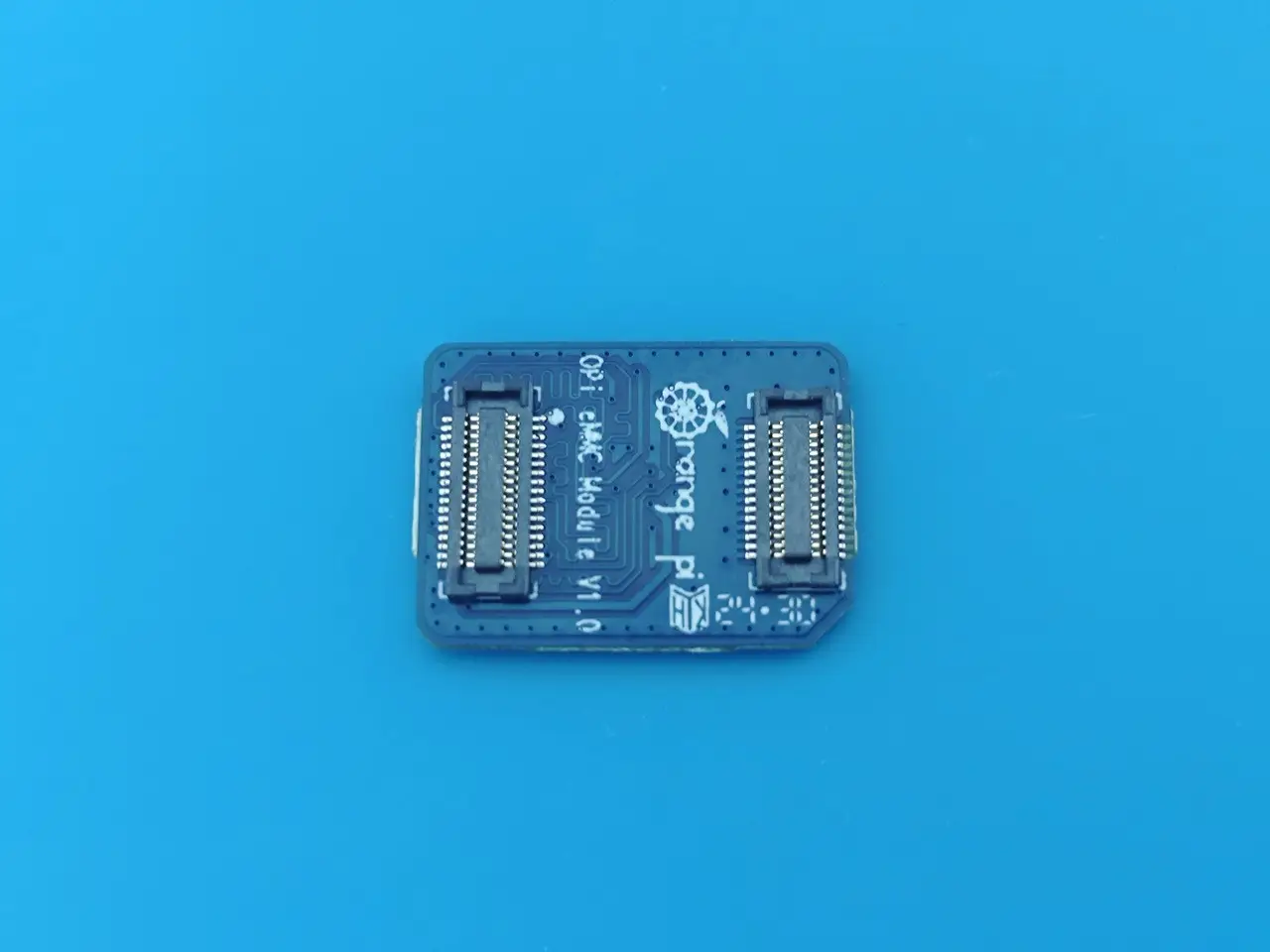
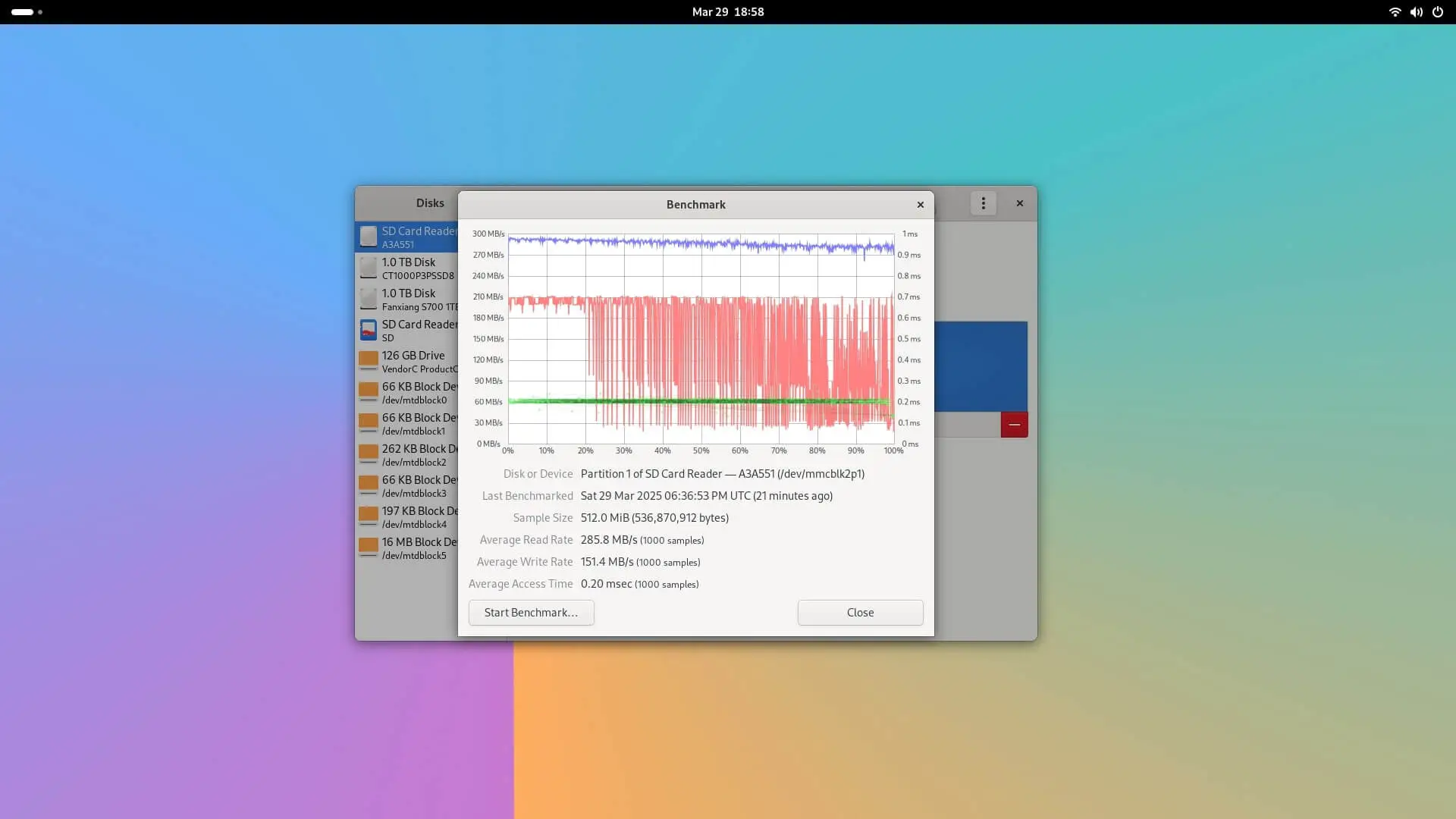
The eMMC module presents an excellent alternative for expanding your internal storage. While it may not deliver the same performance as an NVMe SSD, it effectively fulfills its purpose at a more budget-friendly price. Additionally, its detachable design allows for easy replacement through the eMMC socket located on the rear side of the RV2 board. If you’re looking for an affordable solution to store a secondary operating system, this is an excellent choice.

32GB eMMC Module (FORESEE FEMDNN032G-A3A55)
Putting it to the test

According to the manufacturer’s page, the FORESEE FEMDNN032G-A3A55 chip is classified as Type 5.1 and boasts impressive Sequential Read/Write speeds of up to 270/200 MB/s. Our testing results were reasonable, revealing read speeds of 285.8 MB/s and write speeds of 151.4 MB/s, demonstrating close alignment with the stated specifications.

Orange Pi offers a range of eMMC storage options, with prices beginning at an affordable $13.88 for the 32GB model, extending up to 128GB. While we did try to test a 256GB eMMC module, unfortunately, the operating system failed to recognize it correctly.
Our Test Results

Device No.Storage Device NameFlash TypeModelBrandCapacityNumber of SamplesSample Size (MiB)Average Read/Write speeds
1nvme0n12280 NVMe SSD
(PCIe Gen 4 x4)
CT1000P3PSSD8CRUCIAL1TB1000512Read: 802.1 MB/s
———–
Write: 652.1 MB/s
2nvme1n12230 NVMe SSD
(PCIe Gen 4 x4)
Fanxiang S700 1TBFanxiangTB1000512Read: 809.4 MB/s
———–
Write: 708.5 MB/s
3mmcblk0eMMC Module –Orange Pi32GB1000512Read: 285.8 MB/s
———–
Write: 151.4 MB/s
1 2 3 4 5 6 7 8 9 10 11 12
Share. Facebook Twitter Pinterest LinkedIn Tumblr Email
Previous ArticleOrange Pi R2S Review: RISC-V OpenWrt Router Board with x2(2.5Gb/1Gb) LAN Ports start at $30
Next Article Ugoos AM9 Review: The Ultimate 4K Android TV Box for 2025?
androidpimp
  • Website

Related Posts

Banana bpi r4 pro

Banana Pi BPI-R4 Pro Review: A new OpenWrt WiFi 7 router featuring dual 10GbE SFP+ ports

January 1, 2026
KICKPI K7 Development Board

Kickpi K7C RK3576 Edge AI SBC Launches with 6 TOPS AI Power & Dual Gigabit Ethernet

December 15, 2025
Raspberry Pi 5 Orange Pi 6

Raspberry Pi 5 vs Orange Pi 6: Which SBC is Best in 2026?

December 12, 2025
0 0 votes
Article Rating
Subscribe
Notify of
0 Comments
Oldest
Newest Most Voted
Inline Feedbacks
View all comments
Categories
PureVPN
PureVPN Ad Banner
VyprVPN – No. 1 in Anonymity
Vyprvpn 350x260
PrivadoVPN – No. 1 in Parental Control
PrivadoVPN 350x437
Recent Posts
  • Banana Pi BPI-R4 Pro Review: A new OpenWrt WiFi 7 router featuring dual 10GbE SFP+ ports
  • AliExpress New Promotions: Country-specific Promo Codes
  • CamThink NeoEyes NE301: An Ultra-Low Power Edge AI Camera with STM32N6 MCU (Review)
  • Kickpi K7C RK3576 Edge AI SBC Launches with 6 TOPS AI Power & Dual Gigabit Ethernet
  • Raspberry Pi 5 vs Orange Pi 6: Which SBC is Best in 2026?
  • Ugoos SK4 Review (2025): The Best Mid-Range Android TV Box for Value & Features
  • Orange Pi 6 Unveiled: The Affordable, Slimmed-Down SBC Alternative to the 6 Plus
  • Orange Pi 6 Plus Review: A 12-Core SBC Powerhouse (Benchmarks, Specs, and Pricing)
  • LattePanda IOTA Review: 4 Reasons It Beats Raspberry Pi 5
  • Ugoos GaN Fast Chargers (35W, 65W, 140W): USB‑C PD 3.1, Ultra‑Compact, High‑Speed Charging 2026
RSS The Latest RSS Feeds
  • Banana Pi BPI-R4 Pro Review: A new OpenWrt WiFi 7 router featuring dual 10GbE SFP+ ports
  • AliExpress New Promotions: Country-specific Promo Codes
  • CamThink NeoEyes NE301: An Ultra-Low Power Edge AI Camera with STM32N6 MCU (Review)
Facebook X (Twitter) Instagram Pinterest
@2026 - All Right Reserved. Designed by AndroidPIMP

Type above and press Enter to search. Press Esc to cancel.

Accessibility
Accessibility modes
Epilepsy Safe Mode
Dampens color and removes blinks
This mode enables people with epilepsy to use the website safely by eliminating the risk of seizures that result from flashing or blinking animations and risky color combinations.
Visually Impaired Mode
Improves website's visuals
This mode adjusts the website for the convenience of users with visual impairments such as Degrading Eyesight, Tunnel Vision, Cataract, Glaucoma, and others.
Cognitive Disability Mode
Helps to focus on specific content
This mode provides different assistive options to help users with cognitive impairments such as Dyslexia, Autism, CVA, and others, to focus on the essential elements of the website more easily.
ADHD Friendly Mode
Reduces distractions and improve focus
This mode helps users with ADHD and Neurodevelopmental disorders to read, browse, and focus on the main website elements more easily while significantly reducing distractions.
Blindness Mode
Allows using the site with your screen-reader
This mode configures the website to be compatible with screen-readers such as JAWS, NVDA, VoiceOver, and TalkBack. A screen-reader is software for blind users that is installed on a computer and smartphone, and websites must be compatible with it.
Readable Experience
Content Scaling
Default
Text Magnifier
Readable Font
Dyslexia Friendly
Highlight Titles
Highlight Links
Font Sizing
Default
Letter Spacing
Default
Left Aligned
Center Aligned
Right Aligned
Visually Pleasing Experience
Dark Contrast
Light Contrast
Monochrome
High Contrast
High Saturation
Low Saturation
Adjust Text Colors
Adjust Title Colors
Adjust Background Colors
Easy Orientation
Mute Sounds
Hide Images
Hide Emoji
Reading Guide
Stop Animations
Reading Mask
Highlight Hover
Highlight Focus
Big Dark Cursor
Big Light Cursor
Cognitive Reading
Virtual Keyboard
Navigation Keys
Voice Navigation

AndroidPIMP

Accessibility Statement

  • AndroidPIMP.com
  • 10/18/2025

Compliance status

We believe the internet should be open and accessible to everyone, and we’re dedicated to making our website usable for the widest audience possible, no matter their circumstances or abilities.

To achieve this, we follow the World Wide Web Consortium’s (W3C) Web Content Accessibility Guidelines 2.1 (WCAG 2.1) at the AA level as closely as possible. These guidelines outline how to make web content accessible for people with a variety of disabilities. By complying with them, we help ensure our website is usable by everyone, including those who are blind, have motor or visual impairments, cognitive disabilities, and more.

This website uses a range of technologies to stay accessible at all times. An accessibility interface lets people with specific disabilities customize the site’s UI and design to fit their personal needs.

The website also uses an AI-powered application that works in the background to constantly enhance its accessibility. This app fixes the site’s HTML, adjusts its features and behavior for screen readers used by blind users, and optimizes keyboard functions for people with motor impairments.

If you’ve found a malfunction or have ideas for improvement, we’ll be happy to hear from you. You can reach out to the website’s operators by using the following email [email protected]

Screen-reader and keyboard navigation

Our website implements the ARIA attributes (Accessible Rich Internet Applications) technique, alongside various different behavioral changes, to ensure blind users visiting with screen-readers are able to read, comprehend, and enjoy the website’s functions. As soon as a user with a screen-reader enters your site, they immediately receive a prompt to enter the Screen-Reader Profile so they can browse and operate your site effectively. Here’s how our website covers some of the most important screen-reader requirements, alongside console screenshots of code examples:

  1. Screen-reader optimization: we run a background process that learns the website’s components from top to bottom, to ensure ongoing compliance even when updating the website. In this process, we provide screen-readers with meaningful data using the ARIA set of attributes. For example, we provide accurate form labels; descriptions for actionable icons (social media icons, search icons, cart icons, etc.); validation guidance for form inputs; element roles such as buttons, menus, modal dialogues (popups), and others. Additionally, the background process scans all the website’s images and provides an accurate and meaningful image-object-recognition-based description as an ALT (alternate text) tag for images that are not described. It will also extract texts that are embedded within the image, using an OCR (optical character recognition) technology. To turn on screen-reader adjustments at any time, users need only to press the Alt+1 keyboard combination. Screen-reader users also get automatic announcements to turn the Screen-reader mode on as soon as they enter the website.

    These adjustments are compatible with all popular screen readers, including JAWS and NVDA.

  2. Keyboard navigation optimization: The background process also adjusts the website’s HTML, and adds various behaviors using JavaScript code to make the website operable by the keyboard. This includes the ability to navigate the website using the Tab and Shift+Tab keys, operate dropdowns with the arrow keys, close them with Esc, trigger buttons and links using the Enter key, navigate between radio and checkbox elements using the arrow keys, and fill them in with the Spacebar or Enter key.Additionally, keyboard users will find quick-navigation and content-skip menus, available at any time by clicking Alt+1, or as the first elements of the site while navigating with the keyboard. The background process also handles triggered popups by moving the keyboard focus towards them as soon as they appear, and not allow the focus drift outside it.

    Users can also use shortcuts such as “M” (menus), “H” (headings), “F” (forms), “B” (buttons), and “G” (graphics) to jump to specific elements.

Disability profiles supported in our website

  • Epilepsy Safe Mode: this profile enables people with epilepsy to use the website safely by eliminating the risk of seizures that result from flashing or blinking animations and risky color combinations.
  • Visually Impaired Mode: this mode adjusts the website for the convenience of users with visual impairments such as Degrading Eyesight, Tunnel Vision, Cataract, Glaucoma, and others.
  • Cognitive Disability Mode: this mode provides different assistive options to help users with cognitive impairments such as Dyslexia, Autism, CVA, and others, to focus on the essential elements of the website more easily.
  • ADHD Friendly Mode: this mode helps users with ADHD and Neurodevelopmental disorders to read, browse, and focus on the main website elements more easily while significantly reducing distractions.
  • Blindness Mode: this mode configures the website to be compatible with screen-readers such as JAWS, NVDA, VoiceOver, and TalkBack. A screen-reader is software for blind users that is installed on a computer and smartphone, and websites must be compatible with it.
  • Keyboard Navigation Profile (Motor-Impaired): this profile enables motor-impaired persons to operate the website using the keyboard Tab, Shift+Tab, and the Enter keys. Users can also use shortcuts such as “M” (menus), “H” (headings), “F” (forms), “B” (buttons), and “G” (graphics) to jump to specific elements.

Additional UI, design, and readability adjustments

  1. Font adjustments – users, can increase and decrease its size, change its family (type), adjust the spacing, alignment, line height, and more.
  2. Color adjustments – users can select various color contrast profiles such as light, dark, inverted, and monochrome. Additionally, users can swap color schemes of titles, texts, and backgrounds, with over seven different coloring options.
  3. Animations – person with epilepsy can stop all running animations with the click of a button. Animations controlled by the interface include videos, GIFs, and CSS flashing transitions.
  4. Content highlighting – users can choose to emphasize important elements such as links and titles. They can also choose to highlight focused or hovered elements only.
  5. Audio muting – users with hearing devices may experience headaches or other issues due to automatic audio playing. This option lets users mute the entire website instantly.
  6. Cognitive disorders – we utilize a search engine that is linked to Wikipedia and Wiktionary, allowing people with cognitive disorders to decipher meanings of phrases, initials, slang, and others.
  7. Additional functions – we provide users the option to change cursor color and size, use a printing mode, enable a virtual keyboard, and many other functions.

Browser and assistive technology compatibility

We aim to support the widest array of browsers and assistive technologies as possible, so our users can choose the best fitting tools for them, with as few limitations as possible. Therefore, we have worked very hard to be able to support all major systems that comprise over 95% of the user market share including Google Chrome, Mozilla Firefox, Apple Safari, Opera and Microsoft Edge, JAWS and NVDA (screen readers).

Notes, comments, and feedback

Despite our very best efforts to allow anybody to adjust the website to their needs. There may still be pages or sections that are not fully accessible, are in the process of becoming accessible, or are lacking an adequate technological solution to make them accessible. Still, we are continually improving our accessibility, adding, updating and improving its options and features, and developing and adopting new technologies. All this is meant to reach the optimal level of accessibility, following technological advancements. For any assistance, please reach out to [email protected]

wpDiscuz