- Maybe you missed it? Orange Pi 6 Plus Review (Raspberry Pi 5 vs Orange Pi 6)
The end of the Raspberry Pi era marks the beginning of an exciting new chapter for Chinese single-board computers.
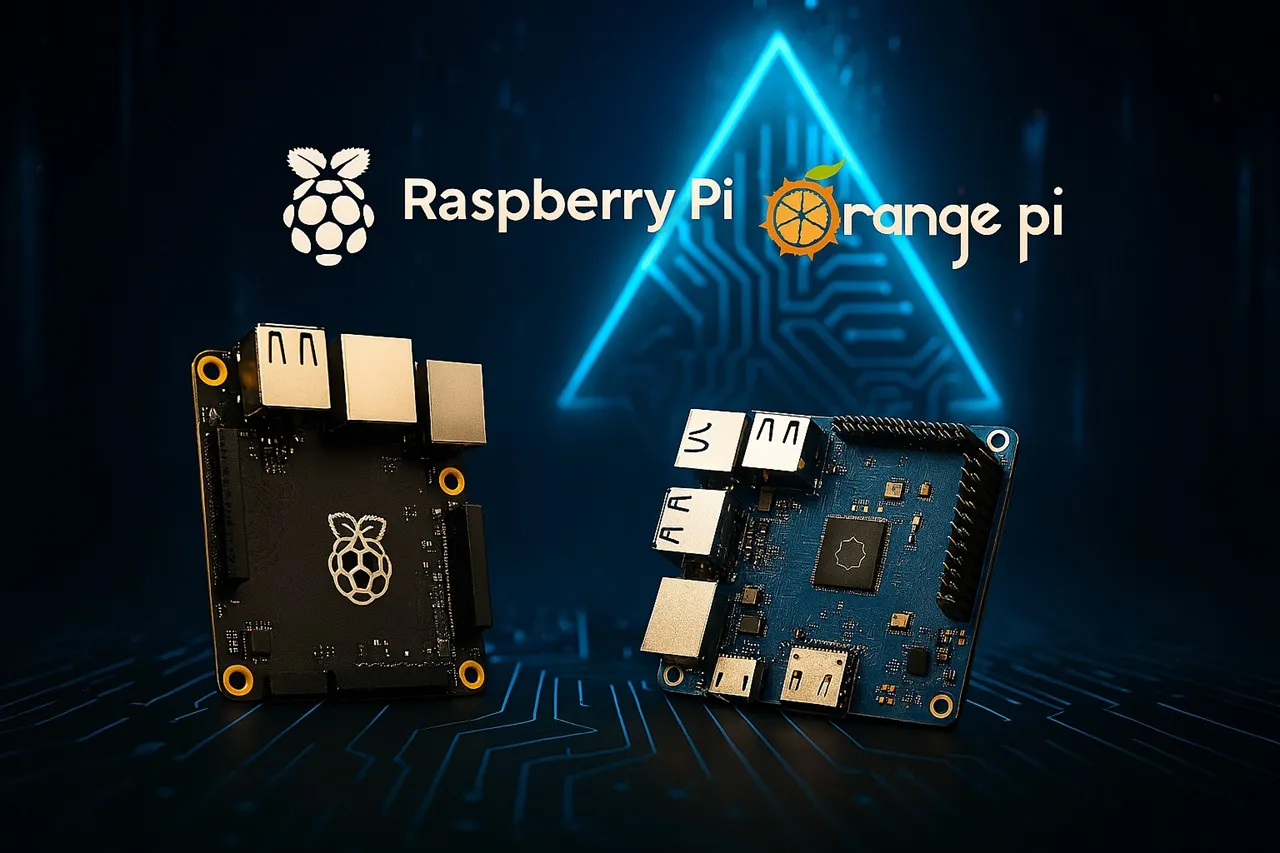
Single‑board computers (SBCs) have transformed the way we learn, build, and innovate. For years, the Raspberry Pi series has been the undisputed champion of this space, powering everything from classroom coding lessons to DIY robots and even small‑scale servers. But in 2025, the landscape is shifting. The Raspberry Pi 5, while still capable, feels like the last breath of a legendary line. Meanwhile, the upcoming Orange Pi 6 series is positioning itself as the future of SBCs, with specs that look more like a workstation than a tinkering board. And hovering on the horizon is the speculative Raspberry Pi 6, which may attempt to reclaim the crown.
This article explores why the Raspberry Pi 5 is struggling to stay relevant, why the Orange Pi 6 might redefine what we expect from a single‑board computer, and what the rumored Raspberry Pi 6 could bring to the table.
📜 A Brief History of SBCs
To understand why this moment feels like a turning point, it helps to look back. The Raspberry Pi Foundation launched the first Pi in 2012 with a simple mission: make computing affordable and accessible for education. At $35, the Pi was revolutionary. It allowed students, hobbyists, and even professionals to experiment with coding, electronics, and networking without breaking the bank.
Over the years, the Pi evolved. The Pi 2 and Pi 3 brought more processing power. The Pi 4 introduced USB 3.0, more RAM, and better networking. Each generation expanded what was possible, while keeping costs low. The Pi became the go‑to board for makers worldwide.
Meanwhile, competitors like Orange Pi, Banana Pi, and Odroid emerged. They often offered more powerful hardware but struggled to match the Pi’s ecosystem and affordability. For most users, the Raspberry Pi remained the default choice.
Raspberry Pi 5: A Veteran Showing Its Age
When the Raspberry Pi 5 launched in late 2023, it was hailed as the most powerful Pi yet. With a quad‑core ARM Cortex‑A76 CPU and the new RP1 I/O controller, it delivered a noticeable performance boost compared to the Pi 4. Tasks like running desktop environments, compiling code, or handling light server workloads became smoother. For hobbyists, this was a welcome upgrade.
But the excitement quickly faded. Here’s why:
- Supply Chain Struggles: Like its predecessors, the Pi 5 faced availability issues. Stock shortages frustrated buyers, and scalpers drove prices up. For a product meant to be affordable and accessible, this was a serious blow.
- Rising Costs: The Pi 5 lineup became more expensive than expected. The 8GB model now costs around $95, while the 16GB variant has jumped to $145. For many users, this price point erodes the Pi’s original appeal as a budget‑friendly board.
- Limited Future‑Proofing: The Pi 5 still relies on LPDDR4 memory and lacks dedicated AI acceleration. In a world increasingly driven by machine learning and edge computing, this makes it feel outdated.
- Community Reliance: The Pi’s greatest strength has always been its massive community and ecosystem. Tutorials, accessories, and software support are abundant. But even this advantage is being challenged as competitors grow their ecosystems.
In short, the Raspberry Pi 5 is still a solid choice for education and prototyping, but it no longer feels like the cutting edge of SBC innovation.
Orange Pi 6: The Chinese Challenger with Big Ambitions
While Orange Pi boards have been around for years, they often played second fiddle to Raspberry Pi. That’s changing with the Orange Pi 6 /Plus, which is designed not just for hobbyists but for serious developers, AI researchers, and edge computing professionals.
Here’s what makes the Orange Pi 6 stand out:
- Massive Processing Power: Powered by the CIX CD8160/CD8180 SoC, the Orange Pi 6 boasts a 12‑core 64‑bit ARM CPU. This is a huge leap compared to the Pi 5’s quad‑core setup.
- AI Acceleration: With up to 45 TOPS (trillions of operations per second) of combined AI computing power, the Orange Pi 6 is built for machine vision, robotics, and large‑model AI applications. This is a game‑changer for developers working on modern projects.
- Memory & Storage: Options range from 16GB to 64GB LPDDR5, paired with dual NVMe SSD slots. This puts the Orange Pi 6 closer to a workstation than a hobbyist board.
- Connectivity: Dual 5G Ethernet, USB‑C, HDMI, and DisplayPort make it versatile for networking and multimedia tasks.
- Operating System Support: Debian, Ubuntu, Android, Windows, and ROS2 are supported, broadening its appeal beyond hobbyists to professionals in robotics and AI.
The Orange Pi 6 isn’t just a minor upgrade — it’s a bold statement about where SBCs are headed in terms of hardware and computing power.
Raspberry Pi 6: What We Might See
Industry buzz hints that the Raspberry Pi 6 might deliver significant upgrades to keep the lineup ahead of the competition.
- Release Window: Expected between late 2025 and early 2027, following the Pi 5’s 2023 launch.
- CPU: Faster processor, possibly ARM Cortex‑A78 or newer cores.
- Memory: Support for up to 32GB RAM, a big jump from Pi 5’s 16GB limit.
- Connectivity: Wi‑Fi 6E and Bluetooth 5.3 for modern wireless standards.
- Storage: Potential NVMe SSD support, solving the Pi’s reliance on microSD cards.
- Price: Likely higher than Pi 5, but still aiming to stay under $150 for mainstream models.
- Community Focus: Expected to maintain strong educational and maker support, while adding features for advanced users.
If these rumors prove true, the Raspberry Pi 6 may reclaim some ground against Orange Pi 6, but the competition signals a new era where SBCs are no longer just hobbyist toys — they’re becoming powerful edge computing platforms.
📊 Side‑by‑Side Comparison
| Feature | Raspberry Pi 5 | Orange Pi 6 (Upcoming) | Raspberry Pi 6 (Speculative) |
|---|---|---|---|
| CPU | Quad‑core ARM Cortex‑A76 | 12‑core ARM CD8160/CD8180 | Faster ARM cores (A78 or newer) |
| Memory | 1GB–16GB LPDDR4 | 8GB–32GB LPDDR5 | Up to 32GB LPDDR5 (rumored) |
| AI Acceleration | Minimal | 45 TOPS NPU + GPU | Possible AI acceleration (uncertain) |
| Storage | microSD, limited USB | Dual NVMe SSD slots | NVMe SSD support (rumored) |
| Connectivity | Gigabit Ethernet, USB 3.0 | Dual 5G Ethernet, USB‑C, HDMI, DP | Wi‑Fi 6E, Bluetooth 5.3 (rumored) |
| Price Trend | Rising due to shortages | TBD, positioned as affordable | Likely $100–$150 range |
| Ecosystem | Mature, huge community | Growing, focused on AI/edge | Will continue strong community focus |
⚠️ Risks and Trade‑Offs
Of course, no product is flawless. Both boards come with their own trade‑offs:
- Raspberry Pi 5: Its ecosystem is unmatched. Beginners will find endless tutorials, accessories, and community support. But its rising costs and lack of AI features make it less appealing for advanced projects.
- Orange Pi 6: Its specs are jaw‑dropping, but its ecosystem is still growing. Early adopters may face driver issues, software bugs, or limited tutorials compared to Raspberry Pi. It’s powerful, but not yet as beginner‑friendly.
- Raspberry Pi 6 (Speculative): If it delivers NVMe storage, Wi‑Fi 6E, and more RAM, it could balance affordability with modern features. But speculation always carries risk — expectations may exceed reality.
🌐 The Changing Landscape
The world has changed. AI, robotics, and edge computing are no longer niche fields — they’re mainstream. Devices at the edge need to process data locally, run machine learning models, and connect seamlessly to modern networks. The Raspberry Pi 5, despite its improvements, wasn’t designed with these needs in mind. It feels like a product of the past decade, not the next one.
The Orange Pi 6 series is designed for today’s world, featuring AI acceleration, ample memory, and modern connectivity that make it ideal for tasks once limited to desktops or servers. It’s more than just a tinkerer’s toy — it’s a powerful computing platform.
🔮 The Future of SBCs
So, what’s next? In the coming years, SBCs will be increasingly used to run AI models both on-device and in the cloud, powering everything from robotics to a variety of other applications.