

Hardware
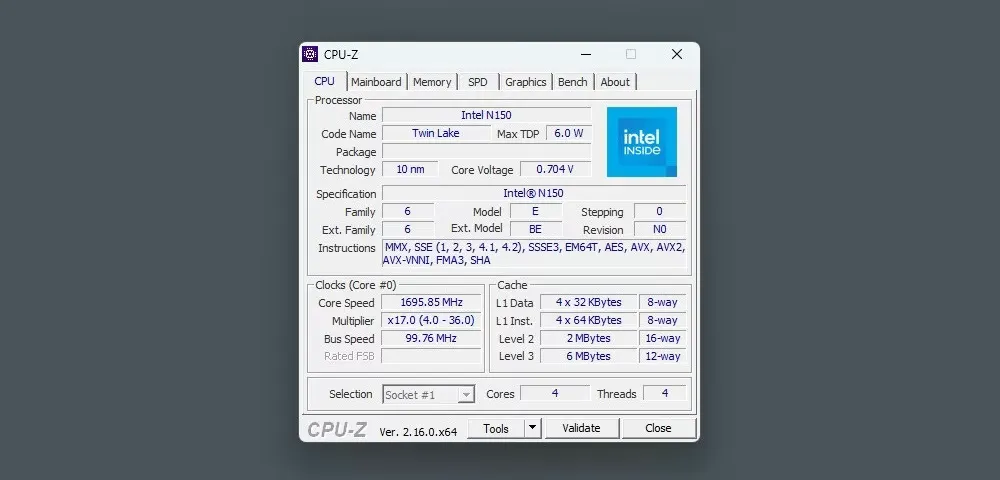
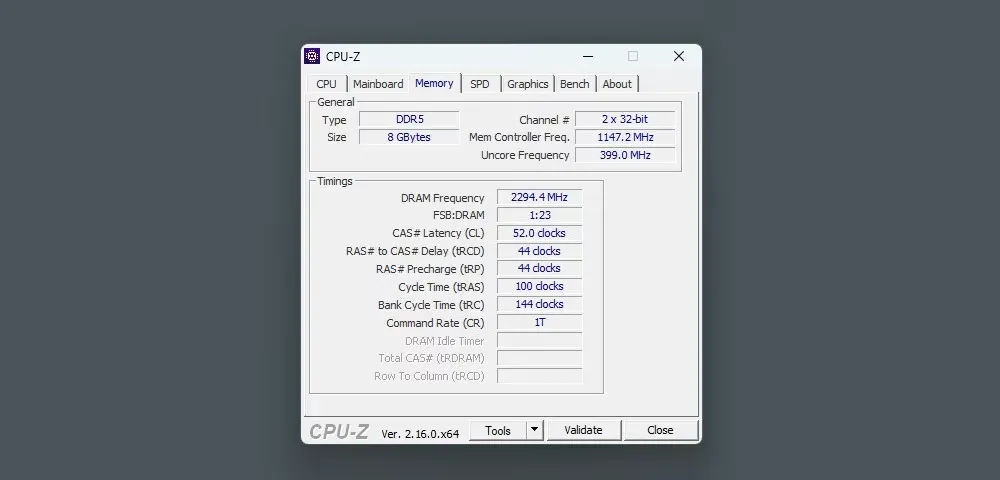
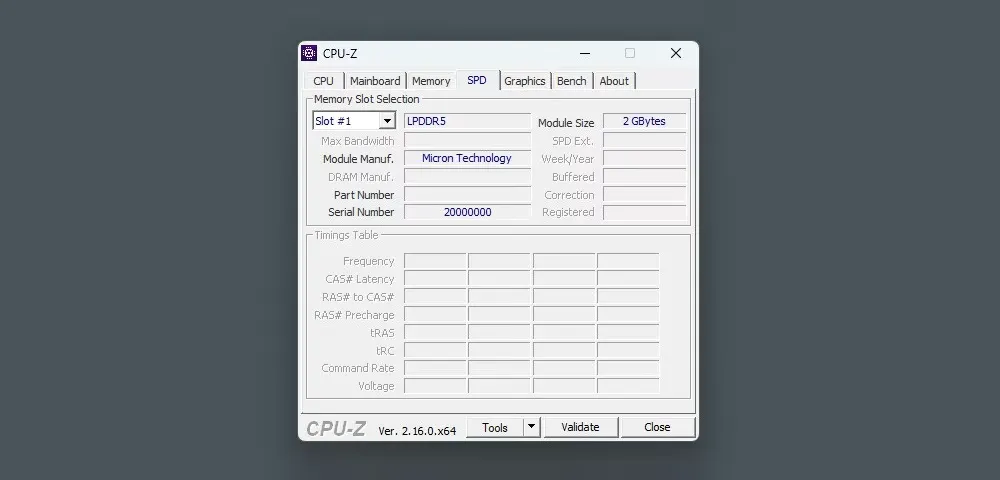
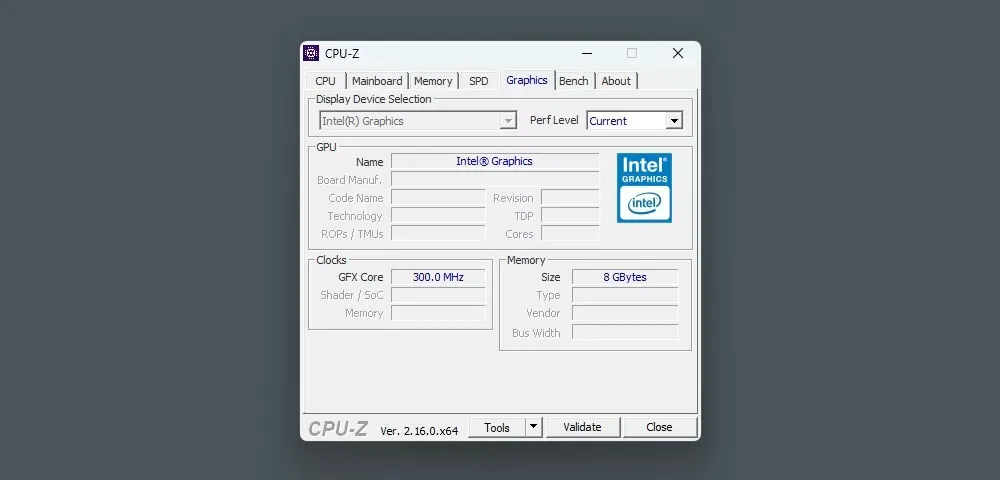
Powered by a low-end Intel N150 Processor, this device features a quad-core chip from Intel’s Twin Lake family. The CPU cores run at clock speeds ranging from 800MHz to 3.6GHz and come with integrated graphics boasting 24 execution units, making it suitable for light gaming, media, and multitasking. Additionally, the board supports LPDDR5 RAM configurations of up to 16GB. A low-end processor doesn’t mean the hardware can’t handle applications effectively. Based on our user experience, it offers a desktop-like feel, making it a great choice as a mini-PC or a compact media center device.
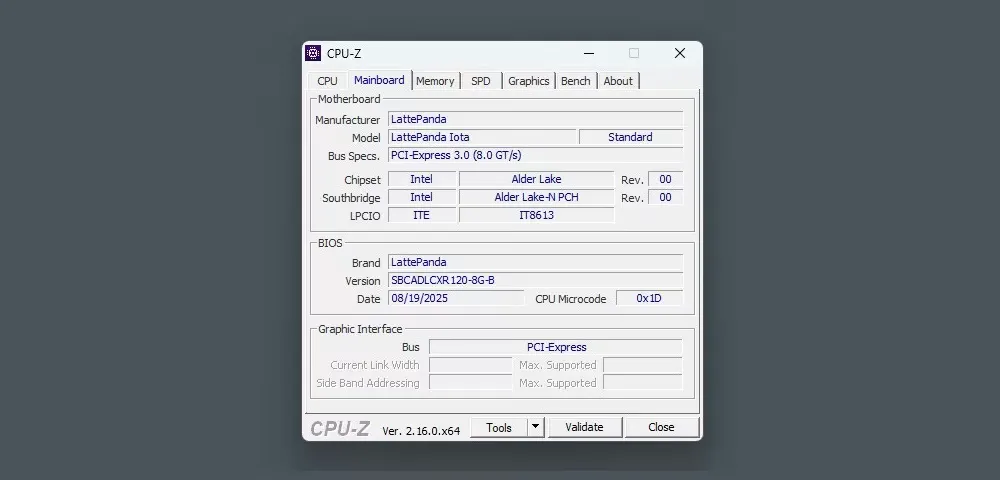
CPU-Z: Details about hardware components.
But wait, that’s not all!
The IOTA is a “hybrid” SBC (single-board computer), much like the youyeetoo X1 we reviewed earlier. It’s designed to work as both a mini-PC device and a development board, making it perfect for DIY projects. It combines an Intel N150 processor for tasks like AI, vision processing, and networking with a Raspberry Pi RP2040 co-processor for handling real-time motor, sensor, and GPIO control. With GPIO options such as UART, I2C, SPI, PWM, and digital I/O, it’s an excellent choice for DIY enthusiasts to connect peripherals like servos and sensors.
The integrated RP2040 microprocessor is likely the standout feature of this product, offering support for MicroPython and C/C++ to enable quick prototyping and accurate hardware control. The main board also features USB 3.2, HDMI, Ethernet, and optional WiFi/Bluetooth for seamless connectivity.
The IOTA board also comes with dual video output, featuring HDMI 2.1 and eDP 1.4 interfaces, so you can connect two displays at once. there is also an option to connect an external display via the eDP interface which is perfect for multitasking, running dashboards, or giving your robot or embedded system a visual interface, also can used in embedded systems like automotive or medical displays.
The IOTA board offers a range of configuration options with expandable modules like 4G LTE, UPS, and PoE, making it ideal for creating smart, autonomous robots for real-world use. The standout features are the PoE and UPS modules, which provide backup power supply and are especially useful for building a small server or essential in industrial settings during power outages.
GPU Performance
The Intel N150 comes with a standard Intel GPU running at a maximum frequency of 1.0 GHz, making it a reliable choice for light gaming. For example, it handles Android emulators and arcade-style games smoothly without any significant issues. Based on our testing, we had no issues playing videos in 4K resolution smoothly and without any hiccups.
Results from the Geekbench 6.5 test.
| Category | Score |
|---|---|
| OpenCL Score | 3869 |
| Background Blur | 2047 |
| Face detection | 1385 |
| Horizon Detection | 4733 |
| Edge Detection | 4569 |
| Gaussian Blur | 3651 |
| Feature Matching | 1357 |
| Stereo Matching | 12882 |
| Particle Physics | 12839 |
When you installed the IOTA Active Cooler, was there a gap between the CPU and the cooler? Mine seems to have an air gap that can’t be overcome with thermal paste.
Maybe, but I can’t say for sure. The thermal paste should help, even if there is a very small gap.
If you’re really annoyed with the gap, you can always try adding a thermal pad. What you should focus on is checking the temperatures to see if they are stable. If they are stable and reasonable in range, then everything is working as it should.