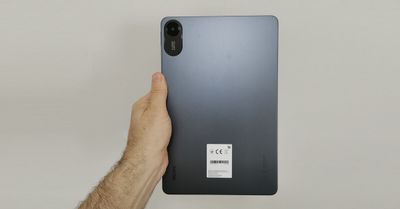
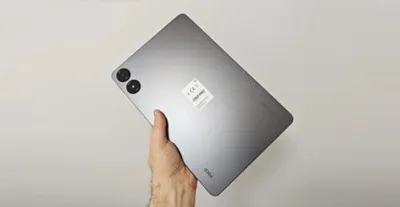
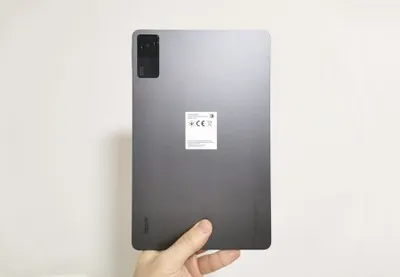
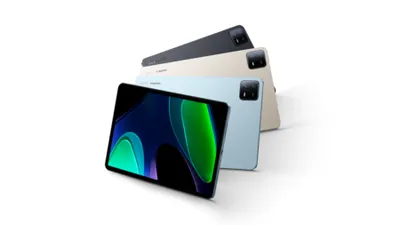
This awesome tablet is available in three configurations to suit different user needs. The WiFi models, featuring 4GB+128GB, 6GB+128GB, and 8GB+256GB configurations, start at a price of around €199.If you’re looking for the 4G model, it’s available in Graphite Gray and Mint Green. If you’re looking for the 4G model, it’s available in two nice colors: Graphite Gray and Mint Green. You can choose from three configurations here too: 4GB+128GB, 6GB+128GB, and 8GB+256GB, with prices kicking off at just €249.
You can purchase all models from various online retailers and physical stores. To save even more, we recommend checking Xiaomi office websites Across different regions, where you can utilize discount coupons to potentially knock off €5-10 from your purchase. For further details, please check the link below!
Early bird prices:
Configuration
Price
4GB+128GB, 6GB+128GB, and 8GB+256GB (WiFi)
Starting at €199
4GB+128GB, 6GB+128GB, and 8GB+256GB (4G)
Starting at €249
Overall thoughts after three months of testing the Tablet
The Redmi Pad 2 was launched on June 5, 2025, and as of September 25, 2025, about 3 months and 3 weeks have passed since its release. While not all features, like the stylus pen, have been explored, the overall user experience has been positive. While the 18W charging speed is a downside, the tablet delivers good performance for its price, with several hours of battery life. It’s an excellent option for those seeking a durable device for video streaming, YouTube, and other activities during long trips.
Yeah, it’s compatible with the Redmi Smart Pen (you have to buy that separately). So you can write and draw easily with a nice, smooth feel at a 60Hz refresh rate.
Does it have a headphone jack?
Yes, it includes a 3.5mm audio jack.
When was the Redmi Pad 2 released?
On June 5, 2025, the Redmi Pad 2 made its debut in select global markets, with its official launch in India scheduled for June 18, 2025.
What operating system does the Redmi Pad 2 run on?
The Redmi Pad 2 operates on Xiaomi’s HyperOS 2, which is built on the Android 15 platform.
What are the RAM and storage configurations available?
It is available with up to 8GB of LPDDR4x RAM and up to 256GB of UFS 2.2 built-in storage.
Is the storage expandable?
Absolutely! The built-in storage can be enhanced by up to 2TB using a microSD card slot.
Does it support fast charging?
Yes, it supports 18W fast charging, and a 15W charger is included in the box.
How does the Redmi Pad 2 compare to the Redmi Pad SE?
The Redmi Pad 2 significantly upgrades from the Redmi Pad SE with a sharper 2.5K display, brighter screen (600 nits), and a more powerful MediaTek Helio G100 Ultra processor. It features a larger 9000mAh battery and stylus support (Redmi Smart Pen sold separately). While both have an 11-inch 90Hz display, quad speakers, and an 8MP rear camera, the Redmi Pad 2 excels in visuals, performance, and battery life, making it the preferred option for those valuing these improvements.
What is the price of the Redmi Pad 2?
The price for the base variant (4GB RAM + 128GB storage, Wi-Fi only) is estimated to be around €199 (approximately $225 / Rs. 18,000). Prices will vary depending on the RAM/storage configuration and whether it includes 4G connectivity.
Is the Redmi Pad 2 good for gaming?
The Redmi Pad 2 is a good budget option for casual to moderate gaming, featuring a MediaTek Helio G100-Ultra processor and a 90Hz display. It handles popular games like Genshin Impact, Call of Duty Mobile, and PUBG well.
What color options are available for the Redmi Pad 2?
The Redmi Pad 2 comes in Graphite Gray, Mint Green, and Lavender Purple.
How long does the battery last?
Xiaomi advertises an impressive 19 hours of video playback and 234 hours of music playback. However, in reality, users can expect about 7 to 10+ hours of screen time, which varies based on usage intensity and the applications in use.
What are the camera specifications?
The Redmi Pad 2 has an 8MP rear camera (f/2.0) and a 5MP front camera (f/2.2) for selfies and video calls.
What are the display’s brightness and color capabilities?
Offers up to 500 nits peak brightness (600 nits outdoor), supports 1.07 billion colors with 10-bit depth, and has a 1500:1 contrast ratio.
Necessary cookies enable essential site features like secure log-ins and consent preference adjustments. They do not store personal data.
None
►
Functional cookies support features like content sharing on social media, collecting feedback, and enabling third-party tools.
None
►
Analytical cookies track visitor interactions, providing insights on metrics like visitor count, bounce rate, and traffic sources.
None
►
Advertisement cookies deliver personalized ads based on your previous visits and analyze the effectiveness of ad campaigns.
None
►
Unclassified cookies are cookies that we are in the process of classifying, together with the providers of individual cookies.
None
Accessibility
Accessibility modes
Epilepsy Safe Mode
Dampens color and removes blinks
This mode enables people with epilepsy to use the website safely by eliminating the risk of seizures that result from flashing or blinking animations and risky color combinations.
Visually Impaired Mode
Improves website's visuals
This mode adjusts the website for the convenience of users with visual impairments such as Degrading Eyesight, Tunnel Vision, Cataract, Glaucoma, and others.
Cognitive Disability Mode
Helps to focus on specific content
This mode provides different assistive options to help users with cognitive impairments such as Dyslexia, Autism, CVA, and others, to focus on the essential elements of the website more easily.
ADHD Friendly Mode
Reduces distractions and improve focus
This mode helps users with ADHD and Neurodevelopmental disorders to read, browse, and focus on the main website elements more easily while significantly reducing distractions.
Blindness Mode
Allows using the site with your screen-reader
This mode configures the website to be compatible with screen-readers such as JAWS, NVDA, VoiceOver, and TalkBack. A screen-reader is software for blind users that is installed on a computer and smartphone, and websites must be compatible with it.
Readable Experience
Content Scaling
Default
Text Magnifier
Readable Font
Dyslexia Friendly
Highlight Titles
Highlight Links
Font Sizing
Default
Letter Spacing
Default
Left Aligned
Center Aligned
Right Aligned
Visually Pleasing Experience
Dark Contrast
Light Contrast
Monochrome
High Contrast
High Saturation
Low Saturation
Adjust Text Colors
Adjust Title Colors
Adjust Background Colors
Easy Orientation
Mute Sounds
Hide Images
Hide Emoji
Reading Guide
Stop Animations
Reading Mask
Highlight Hover
Highlight Focus
Big Dark Cursor
Big Light Cursor
Cognitive Reading
Virtual Keyboard
Navigation Keys
Voice Navigation
Accessibility Statement
AndroidPIMP.com
10/18/2025
Compliance status
We believe the internet should be open and accessible to everyone, and we’re dedicated to making our website usable for the widest audience possible, no matter their circumstances or abilities.
To achieve this, we follow the World Wide Web Consortium’s (W3C) Web Content Accessibility Guidelines 2.1 (WCAG 2.1) at the AA level as closely as possible. These guidelines outline how to make web content accessible for people with a variety of disabilities. By complying with them, we help ensure our website is usable by everyone, including those who are blind, have motor or visual impairments, cognitive disabilities, and more.
This website uses a range of technologies to stay accessible at all times. An accessibility interface lets people with specific disabilities customize the site’s UI and design to fit their personal needs.
The website also uses an AI-powered application that works in the background to constantly enhance its accessibility. This app fixes the site’s HTML, adjusts its features and behavior for screen readers used by blind users, and optimizes keyboard functions for people with motor impairments.
If you’ve found a malfunction or have ideas for improvement, we’ll be happy to hear from you. You can reach out to the website’s operators by using the following email [email protected]
Screen-reader and keyboard navigation
Our website implements the ARIA attributes (Accessible Rich Internet Applications) technique, alongside various different behavioral changes, to ensure blind users visiting with screen-readers are able to read, comprehend, and enjoy the website’s functions. As soon as a user with a screen-reader enters your site, they immediately receive a prompt to enter the Screen-Reader Profile so they can browse and operate your site effectively. Here’s how our website covers some of the most important screen-reader requirements, alongside console screenshots of code examples:
Screen-reader optimization:we run a background process that learns the website’s components from top to bottom, to ensure ongoing compliance even when updating the website. In this process, we provide screen-readers with meaningful data using the ARIA set of attributes. For example, we provide accurate form labels; descriptions for actionable icons (social media icons, search icons, cart icons, etc.); validation guidance for form inputs; element roles such as buttons, menus, modal dialogues (popups), and others. Additionally, the background process scans all the website’s images and provides an accurate and meaningful image-object-recognition-based description as an ALT (alternate text) tag for images that are not described. It will also extract texts that are embedded within the image, using an OCR (optical character recognition) technology. To turn on screen-reader adjustments at any time, users need only to press the Alt+1 keyboard combination. Screen-reader users also get automatic announcements to turn the Screen-reader mode on as soon as they enter the website.
These adjustments are compatible with all popular screen readers, including JAWS and NVDA.
Keyboard navigation optimization:The background process also adjusts the website’s HTML, and adds various behaviors using JavaScript code to make the website operable by the keyboard. This includes the ability to navigate the website using the Tab and Shift+Tab keys, operate dropdowns with the arrow keys, close them with Esc, trigger buttons and links using the Enter key, navigate between radio and checkbox elements using the arrow keys, and fill them in with the Spacebar or Enter key.Additionally, keyboard users will find quick-navigation and content-skip menus, available at any time by clicking Alt+1, or as the first elements of the site while navigating with the keyboard. The background process also handles triggered popups by moving the keyboard focus towards them as soon as they appear, and not allow the focus drift outside it.
Users can also use shortcuts such as “M” (menus), “H” (headings), “F” (forms), “B” (buttons), and “G” (graphics) to jump to specific elements.
Disability profiles supported in our website
Epilepsy Safe Mode: this profile enables people with epilepsy to use the website safely by eliminating the risk of seizures that result from flashing or blinking animations and risky color combinations.
Visually Impaired Mode: this mode adjusts the website for the convenience of users with visual impairments such as Degrading Eyesight, Tunnel Vision, Cataract, Glaucoma, and others.
Cognitive Disability Mode: this mode provides different assistive options to help users with cognitive impairments such as Dyslexia, Autism, CVA, and others, to focus on the essential elements of the website more easily.
ADHD Friendly Mode: this mode helps users with ADHD and Neurodevelopmental disorders to read, browse, and focus on the main website elements more easily while significantly reducing distractions.
Blindness Mode: this mode configures the website to be compatible with screen-readers such as JAWS, NVDA, VoiceOver, and TalkBack. A screen-reader is software for blind users that is installed on a computer and smartphone, and websites must be compatible with it.
Keyboard Navigation Profile (Motor-Impaired): this profile enables motor-impaired persons to operate the website using the keyboard Tab, Shift+Tab, and the Enter keys. Users can also use shortcuts such as “M” (menus), “H” (headings), “F” (forms), “B” (buttons), and “G” (graphics) to jump to specific elements.
Additional UI, design, and readability adjustments
Font adjustments – users, can increase and decrease its size, change its family (type), adjust the spacing, alignment, line height, and more.
Color adjustments – users can select various color contrast profiles such as light, dark, inverted, and monochrome. Additionally, users can swap color schemes of titles, texts, and backgrounds, with over seven different coloring options.
Animations – person with epilepsy can stop all running animations with the click of a button. Animations controlled by the interface include videos, GIFs, and CSS flashing transitions.
Content highlighting – users can choose to emphasize important elements such as links and titles. They can also choose to highlight focused or hovered elements only.
Audio muting – users with hearing devices may experience headaches or other issues due to automatic audio playing. This option lets users mute the entire website instantly.
Cognitive disorders – we utilize a search engine that is linked to Wikipedia and Wiktionary, allowing people with cognitive disorders to decipher meanings of phrases, initials, slang, and others.
Additional functions – we provide users the option to change cursor color and size, use a printing mode, enable a virtual keyboard, and many other functions.
Browser and assistive technology compatibility
We aim to support the widest array of browsers and assistive technologies as possible, so our users can choose the best fitting tools for them, with as few limitations as possible. Therefore, we have worked very hard to be able to support all major systems that comprise over 95% of the user market share including Google Chrome, Mozilla Firefox, Apple Safari, Opera and Microsoft Edge, JAWS and NVDA (screen readers).
Notes, comments, and feedback
Despite our very best efforts to allow anybody to adjust the website to their needs. There may still be pages or sections that are not fully accessible, are in the process of becoming accessible, or are lacking an adequate technological solution to make them accessible. Still, we are continually improving our accessibility, adding, updating and improving its options and features, and developing and adopting new technologies. All this is meant to reach the optimal level of accessibility, following technological advancements. For any assistance, please reach out to [email protected]