
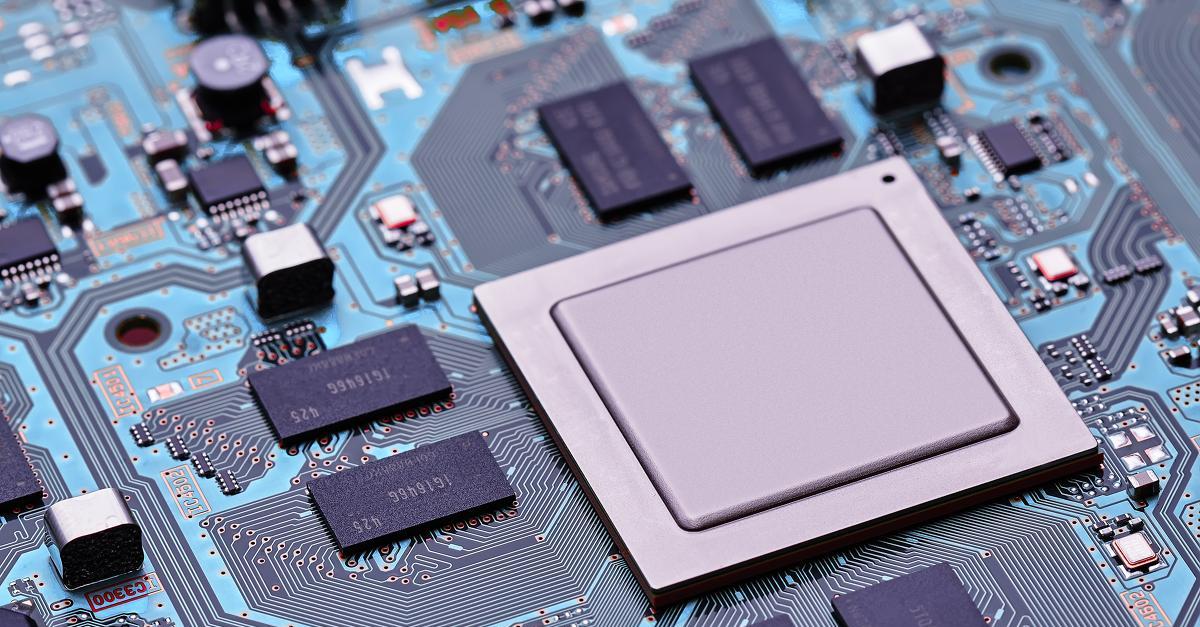
- Maybe you missed it? Orange Pi 5
- Best Single-Board Computers: Anticipated models for 2025 and beyond.
The Future of Single-Board Computers
What to Expect from the Latest Models
The world of single-board computing is rapidly evolving, and the latest models promise to bring a host of exciting new features and capabilities. In this article, we will explore the future of single-board computing and what to expect from the latest models launching in 2025 and beyond.
First, it is important to understand the basics of single-board computing. Single-board computers are small, low-cost computers that are designed to be used for a variety of tasks, such as embedded systems, robotics, and home automation. They are typically powered by a single processor, and they are often used in applications where space and power are limited.
The upcoming single-board computers will introduce a myriad of exciting new features and functionalities. These cutting-edge models will harness the power of the latest ARM processors, revolutionizing performance and energy efficiency. Moreover, they will push boundaries with their exceptional graphic capabilities, making them ideal for immersive gaming experiences and other visually demanding tasks.
In addition to improved performance and graphics capabilities, the latest single-board computers will also feature improved connectivity options. Many of the new models will feature built-in Wi-Fi and Bluetooth, allowing them to be connected to a variety of devices and networks. Additionally, many of the new models will feature USB ports, allowing them to be connected to a variety of peripherals.
Finally, the latest single-board computers will also feature improved security features. Many of the new models will feature built-in encryption and authentication protocols, allowing them to be used in security applications. Additionally, many of the new models will feature secure boot capabilities, allowing them to be used in secure environments.
In conclusion, the latest single-board computers launching in 2025 promise to bring a host of exciting new features and capabilities. With improved performance, graphics capabilities, connectivity options, and security features, the latest single-board computers will be well-suited for a variety of applications.
Best Single Board Computers Top List]
The Raspberry Pi is undisputedly the most common single-board computer (SBC) that came out in recent years since it was first announced in 2014 by the Raspberry Pi Foundation. The company is continually sticking to implementing its Broadcom system on a chip (SoC) solution across all board generations to achieve maximum compatibility with old and new images, but what about using more advanced hardware platforms designed by Chinese vendors?
Just for this purpose, this list was created. With respect to Broadcom SoC, Chinese vendors such as Rockchip and Amlogic in cooperation with local Chinese design companies are worthy contenders in terms of hardware when it comes to SBC with an excellent value-price specs ratio. You might not get the most extensive software support as the Raspberry Pi, but if you are willing to compromise and use 2-4 Linux distributions including Android, it might be a great low-cost alternative.
A system-on-chip (SoC)
A system-on-chip (SoC) is an integrated circuit that integrates all components of a computer or other electronic system. These components typically (but not always) include a central processing unit (CPU), memory, input/output ports, and secondary storage – all on a single substrate or microchip, the size of a coin.[1] It may contain digital, analog, mixed-signal, and often radio frequency signal processing functions, depending on the application. As they are integrated on a single substrate, SoCs consume much less power and take up much less area than multi-chip designs with equivalent functionality. Because of this, SoCs are very common in mobile computing (such as in Smartphones) and edge computing markets.
Systems on Chip are in contrast to the common traditional motherboard-based PC architecture, which separates components based on function and connects them through a central interfacing circuit board. Whereas a motherboard houses and connects detachable or replaceable components, SoCs integrate all of these components into a single integrated circuit.
(Source & Credits: Wikipedia)
Choosing a Single-Board Computer
Just like choosing a desktop PC, you have to pick the right specification suitable for your needs. The best approach is to do some research and check different brands of SBCs including their prices. Make a list of technical requirements based on specific needs such as the computing power needed, the minimum CPU cores needed, and the memory capacity needed to run applications & services, and select a good GPU if you are into gaming and video applications.
The external storage option is also an important factor worth considering in 2020. Newer SBCs have a built-in Onboard eMMC memory module socket, so you have much better flexibility in adding higher-capacity storage. Adding an SSD through an M.2 PCI Express adapter is maybe a top priority if you’re planning on using the SBC as a type of data such as multimedia files, apps, etc.
What Can you do with a Single Board Computer?
Like with any hardware platform, depending on hardware specifications it’s perfect for a variety of DIY projects, whether it’s connecting your 3D printer to a network, learning to code, or putting together a streaming media hub. Some SBCs with 2 up to 16GB RAM can also be used as a tiny PC that is not only quiet, without moving mechanical parts but also energy efficient, conserving minimal power.
Without further ado, here’s a selection of the best Raspberry Pi alternatives of Chinese SBC (Single-board computers) brands you can currently buy sorted by brand names, hardware platforms, websites, etc.
Best Single Board Computers Brands (Top Chinese Brands)
Brand | Company | Brands | Hardware | Company Website | AliExpress Store |
 | T-Chip Intelligent Technology Co., Ltd. | Firefly | Rockchip | – | |
 | Asuss | Tinker Board | Rockchip | – | |
 | FriendlyElec | NanoPi | Allwinner, Rockchip, Samsung, Amlogic | – | |
 | Zhiwei Robotics Corp. |
| Intel | ||
 | SINOVOIP CO., LIMITED | Banana Pi | Allwinner, MediaTek | ||
 | Xunlong Software CO.,Limited | Orange Pi | Allwinner, Rockchip | ||
 | ALLNET China | ROCK PI | Rockchip | ||
 | Shenzhen Wesion Technology Co. Ltd. | Khadas | Amlogic, Rockchip, Texas Instruments, XMOS | ||
 | PINE64 Inc. | PINE | Allwinner, Rockchip | – | |
 | Seeed Technology Co.,Ltd. | All Types | All Types | – |
How the Single Board Computer Market is Evolving
The single-board computer market is rapidly evolving, with new technologies and advancements being made every day. Single-board computers are becoming increasingly popular due to their small size, low cost, and high performance. They are used in a variety of applications, from embedded systems to robotics and automation.
In 2025, single-board computers are becoming more powerful and feature-rich. They are now capable of running multiple operating systems, such as Linux, Windows, and Android. They are also becoming more energy efficient, with some models consuming as little as 5 watts of power. This makes them ideal for applications that require low power consumption.
The single-board computer market is also becoming more competitive. Companies such as Raspberry Pi, Beagle Board, and Arduino are all competing for market share. This competition is driving down prices and increasing the availability of single-board computers.
In addition, the single-board computer market is becoming more specialized. Companies are now offering single-board computers that are tailored to specific applications. For example, some single-board computers are designed for industrial automation, while others are designed for robotics. This specialization allows companies to create products that are tailored to their specific needs.
Finally, the single-board computer market is becoming more connected. Companies are now offering single-board computers with built-in Wi-Fi and Bluetooth connectivity. This allows users to easily connect their single-board computers to the internet and other devices.
Overall, the single-board computer market is rapidly evolving in 2025. Companies are offering more powerful and feature-rich products, while prices are becoming more competitive. In addition, the market is becoming more specialized and connected, allowing users to easily connect their single-board computers to the internet and other devices.
Exploring the Benefits of Single Board Computers for Businesses
In the modern business world, technology is playing an increasingly important role in the success of organizations. As such, businesses are constantly looking for ways to leverage the latest technology to gain a competitive edge. One of the most promising developments in this area is the emergence of single-board computers (SBCs). In 2025, SBCs are expected to offer businesses a range of benefits that can help them stay ahead of the competition.
SBCs are small, low-cost computers that are designed to be used in a variety of applications. They are typically powered by a single processor and are equipped with a range of features, such as memory, storage, and networking capabilities. This makes them ideal for businesses that need to quickly and easily deploy a range of applications.
One of the key benefits of SBCs is their low cost. Compared to traditional computers, SBCs are much more affordable, making them an attractive option for businesses on a budget. Additionally, SBCs are highly energy efficient, which can help businesses reduce their energy costs.
Another advantage of SBCs is their flexibility. They can be used in a variety of applications, from embedded systems to robotics and automation. This makes them ideal for businesses that need to quickly and easily deploy a range of applications.
Finally, SBCs are highly reliable. They are designed to be robust and reliable, making them ideal for businesses that need to ensure their systems are always up and running.
In conclusion, SBCs offer businesses a range of benefits that can help them stay ahead of the competition in 2025. They are affordable, energy-efficient, flexible, and reliable, making them an attractive option for businesses of all sizes.
The Future of IoT Devices in 2025
The Impact of Emerging Technologies on the Single Board Computer Market in 2025
The single-board computer market is expected to experience significant growth in the coming years due to the emergence of new technologies. By 2025, the market is projected to reach a value of over $2 billion. This growth is largely attributed to the increasing demand for low-cost, high-performance computing solutions.
The emergence of new technologies such as artificial intelligence (AI), the Internet of Things (IoT), and 5G networks is expected to have a major impact on the single-board computer market. AI-enabled single-board computers are becoming increasingly popular due to their ability to process large amounts of data quickly and accurately. This technology is expected to be widely adopted in the coming years, as it can be used to automate various tasks and improve efficiency.
The Internet of Things (IoT) is also expected to have a major impact on the single-board computer market. IoT-enabled single-board computers are becoming increasingly popular due to their ability to connect to a wide range of devices and systems. This technology is expected to be widely adopted in the coming years, as it can be used to monitor and control various devices and systems remotely.
The introduction of 5G networks is also expected to have a major impact on the single-board computer market. 5G networks are expected to provide faster and more reliable connections, which will enable single-board computers to process data more quickly and accurately. This technology is expected to be widely adopted in the coming years, as it can be used to improve the performance of single-board computers.
Overall, the emergence of new technologies such as AI, IoT, and 5G networks is expected to have a major impact on the single-board computer market in 2025. These technologies are expected to drive market growth by providing low-cost, high-performance computing solutions.
How IoT Devices Will Transform the Way We Live
IoT devices are already changing the way we live, and by 2025, their impact will be even more significant. The proliferation of these devices will revolutionize everything from our daily routines to how we interact with the world around us. Smart homes will become the norm, with appliances, lighting, and temperature all managed seamlessly by IoT systems. Our cars will be connected, with autonomous driving and advanced safety features becoming standard. Healthcare will be transformed, with wearable devices monitoring our health and alerting doctors to any issues. The possibilities are endless, and the future looks bright for the IoT revolution.
The Impact of IoT Devices on Businesses in 2025
The Internet of Things (IoT) is a rapidly expanding technology that is revolutionizing business operations. By 2025, there will be an astounding 75 billion connected devices worldwide, with this number predicted to soar even higher. As a result, businesses must be proactive in harnessing the immense potential that IoT devices offer.
IoT devices can help businesses to improve their efficiency and productivity by providing real-time data and insights. For example, businesses can use IoT devices to monitor their inventory levels, track customer behavior, and optimize their supply chain. This data can be used to make informed decisions and improve operational efficiency. Additionally, IoT devices can be used to automate processes, such as scheduling, ordering, and customer service.
IoT devices can also help businesses to improve customer experience. By collecting data on customer behavior, businesses can gain valuable insights into their customers’ needs and preferences. This data can be used to create personalized experiences and improve customer satisfaction. Additionally, IoT devices can be used to provide customers with real-time updates and notifications, which can help to build trust and loyalty.
Finally, IoT devices can help businesses to stay competitive in the market. By leveraging the data collected from IoT devices, businesses can gain a better understanding of their competitors and the market as a whole. This data can be used to develop new products and services that meet customer needs and stay ahead of the competition.
In conclusion, IoT devices are transforming the way businesses operate and will continue to do so in the years to come. By leveraging the data and insights provided by IoT devices, businesses can improve their efficiency, productivity, customer experience, and competitiveness. As such, businesses must be prepared to take advantage of the opportunities that IoT devices can provide in order to remain successful in the future.
The Security Challenges of IoT Devices in 2025
The Internet of Things (IoT) is a rapidly growing technology that is transforming the way we interact with the world around us. By 2025, it is estimated that there will be over 75 billion connected devices in use worldwide. While this technology has the potential to revolutionize the way we live, it also presents a number of security challenges.
One of the primary security challenges of IoT devices is the lack of security protocols. Many IoT devices are not designed with security in mind, leaving them vulnerable to attack. Hackers can exploit these devices to gain access to sensitive data or to control the device itself. Additionally, many IoT devices are not equipped with the latest security updates, leaving them open to attacks from malicious actors.
Another security challenge of IoT devices is the lack of authentication protocols. Many IoT devices are not equipped with authentication protocols, leaving them open to attack from malicious actors. Without authentication protocols, hackers can easily gain access to the device and its data. Additionally, many IoT devices are not equipped with encryption protocols, leaving them vulnerable to data theft.
Finally, the lack of user education is a major security challenge for IoT devices. Many users are unaware of the security risks associated with IoT devices and do not take the necessary steps to protect their devices. Without proper user education, users are more likely to fall victim to malicious actors.
The security challenges of IoT devices in 2025 are significant. To ensure the safety of connected devices, it is essential that manufacturers design their devices with security in mind and that users take the necessary steps to protect their devices. Additionally, it is important that users are educated on the security risks associated with IoT devices and take the necessary steps to protect their data.
The Benefits of Connected Homes with IoT Devices in 2025
The Internet of Things (IoT) is a rapidly growing technology that is revolutionizing the way we live. By 2025, connected homes with IoT devices will offer a range of benefits that will make life easier and more efficient.
One of the most significant advantages of connected homes with IoT devices is the ability to automate everyday tasks. With the help of sensors, connected devices can be programmed to perform certain tasks, such as turning on lights or adjusting the thermostat, without any manual intervention. This can save time and energy, as well as reduce the risk of forgetting to do something.
Connected homes with IoT devices can also help to improve security. With the help of motion sensors, connected cameras, and other security devices, homeowners can monitor their homes from anywhere in the world. This can help to deter burglars and provide peace of mind.
In addition, connected homes with IoT devices can help to reduce energy consumption. Smart thermostats, for example, can be programmed to adjust the temperature according to the time of day and the weather outside. This can help to reduce energy costs and help the environment.
Finally, connected homes with IoT devices can help to improve the quality of life. Smart speakers, for example, can be used to play music, answer questions, and control other connected devices. This can make life more convenient and enjoyable.
In conclusion, connected homes with IoT devices offer a range of benefits that will make life easier and more efficient by 2025. Automation, improved security, reduced energy consumption, and improved quality of life are just some of the advantages that connected homes with IoT devices can provide.
The Potential of Autonomous Vehicles with IoT Devices in 2025
Autonomous vehicles have been a hot topic in recent years and are expected to revolutionize the transportation industry. With the integration of Internet of Things (IoT) devices, the potential of autonomous vehicles is set to increase even further. By 2025, autonomous vehicles with IoT devices will be able to communicate with each other and with smart infrastructure seamlessly. This will enable them to navigate roads more efficiently, avoid accidents, and reduce traffic congestion. Additionally, IoT devices will allow autonomous vehicles to gather real-time data on road conditions, weather, and traffic patterns, which will enable them to make smarter decisions and optimize their routes. Overall, the potential of autonomous vehicles with IoT devices is vast and will transform the transportation industry as we know it.
Can ARM single board computers run Windows?
Windows can be run on ARM single board computers, but it depends on the particular model and version. There are some ARM-based single board computers that can run Windows 11, such as the Raspberry Pi and Orange Pi 5. Windows 10 Home or Pro can be run on other ARM-based single board computers, such as those using Qualcomm Snapdragon processors. Running Windows on an ARM-based single board computer may require additional hardware and software support, as well as specific configurations and optimizations.
A categorized list of popular single-board computers.
Category: Rockchip-Based SBCs
Brand: FireFly
Model: ROC-RK3588S-PC
- Release: Q1 2024 (Widely available in 2025)
- SoC: Rockchip RK3588S (8-core Cortex-A76/A55)
- Key Features: 16GB RAM, PCIe 3.0, dual HDMI 2.1, USB4
Model: ROC-RK3568-PC
- Release: 2023 (Still relevant in 2025)
- SoC: RK3568 (4-core Cortex-A55)
- Key Features: 8GB RAM, SATA, dual Gigabit Ethernet
Brand: Radxa
Model: ROCK 5B
- Release: 2023 (Updated versions in 2025)
- SoC: RK3588
- Key Features: 16GB LPDDR5, USB4, 8K HDMI
Model: ROCK 5A
- Release: Q3 2024 (Budget RK3588 model)
- SoC: RK3588 (cut-down version)
- Key Features: 8GB RAM, M.2 NVMe
Brand: Orange Pi
Model: Orange Pi 5 Plus
- Release: Q2 2024 (Available until 2025)
- SoC: RK3588
- Key Features: 16GB RAM, USB4, 5G module support
Model: Orange Pi 5B
- Release: Q4 2023 (Still in production)
- SoC: RK3588
- Key Features: 8GB RAM, dual HDMI
Category: Allwinner & MediaTek-Based SBCs
Brand: Banana Pi
Model: Banana BPI-R4
- Release: Q1 2025
- Type: SBC/Router Board.
- SoC: MediaTek MT7988 (WiFi 7)
- Key Features: 2x 2.5GbE, PCIe 4.0
Model: Banana BPI-W3
- Release: Q3 2024
- SoC: Allwinner A523
- Key Features: Low power, 4K HDMI
Category: Budget & IoT SBCs
Brand: Espressif
Model: ESP32-S4
- Release: Q4 2024
- SoC: Dual core + AI accelerator
- Key Features: WiFi 6, USB-C
Model: ESP32-C6
- Release: Q1 2024
- SoC: Single-core RISC-V
- Key Features: Low-power IoT
Category: RISC-V SBCs
Brand: Loongson
Model: LoongPi 3A6000
- Release: Q3 2025
- SoC: LoongArch 3A6000
- Key Features: 8GB DDR4, PCIe 3.0
Brand: Orange Pi (RISC-V)
Model: Orange Pi RV
- Release: Q2 2025
- SoC: StarFive JH7110, 4 core RISC-V @ 1.5GHz
- RAM: 2GB/4GB/8GB DDR4
- Storage: MicroSD, SPI Flash
- Wireless Connectivity: Integrated WiFi5/BT.
- OS Support: Debian Linux
- Price: ~$40+ (ultra-budget)
- Use Case: IoT, lightweight Linux learning.
Interfaces:
- HDMI 2.0, 3.5mm headphone jack
- 4x USB 3.0, 1x 1GbE Ethernet
- 1x M.2 M-Key Sockets (2280)
- 40-pin GPIO
Model: Orange Pi RV2
- Release: Q2 2025
- SoC: Ky X1
- RAM: 2GB/4GB/8GB DDR4
- Storage: MicroSD, SPI Flash
- Wireless Connectivity: Integrated WiFi5/BT.
- OS Support: Debian Linux, OpenWRT
- Price: ~$30+ (ultra-budget)
- Use Case: IoT, lightweight Linux learning, router projects.
Interfaces:
- HDMI 2.0, 3.5mm headphone jack
- 1x USB 2.0, 3x USB 3.0, 2x 1GbE Ethernet
- 2x M.2 M-Key Sockets (2230+2280)
- 26-pin GPIO
Model: Orange Pi R2S
- Release: Q2 2025
- SoC: Ky X1
- RAM: 2GB/4GB/8GB DDR4
- Storage: MicroSD, SPI Flash
- Connectivity: Integrated WiFi/BT.
- OS Support: Debian Linux, OpenWRT
- Price: ~$30+ (ultra-budget)
- Use Case: IoT, lightweight Linux learning, router projects.
Interfaces:
- HDMI 2.0
- USB 2.0, USB 3.0, x2 1GbE + x2 2.5GbE
- 26-pin GPIO
Brand: Banana Pi (RISC-V)
Model: Banana Pi BPI-RV2
- Release: Q2 2025
- SoC: Siflower SF21H8898, 4 core RISC-V @ 1.25GHz
- RAM: 512MB DDR3
- Storage: MicroSD, 128 MiB NAND, 16 MiB NOR
- Connectivity: Integrated WiFi/BT.
- OS Support: Debian Linux, OpenWRT
- Price: ~$30+ (ultra-budget)
- Use Case: IoT, lightweight Linux learning, router projects.
Interfaces:
- USB 2.0, USB 3.0, x1 2.5GbE + x5 1GbE
- M.2 2242/2230 interface support NVMe SSD
- MikroBUS expansion module socket
- Support PoE module (Optional)
- 26-pin GPIO
Model: Banana Pi BPI-F3
- Release: Q2 2024
- SoC: SpacemiT K1, 8 core RISC-V @ 1.6GHz
- RAM: 2GB/4GB/8GB/16GB DDR4
- Storage: MicroSD, 32 MiB NAND, 4 MiB NOR, eMMC (8GB / 16GB / 32GB / 128GB)
- Connectivity: Integrated WiFi/BT.
- OS Support: Debian Linux, OpenWRT
- Price: ~$73+ (ultra-budget)
- Use Case: IoT, lightweight Linux learning, router projects.
Interfaces:
- USB 2.0, USB 3.0, x1 2.5GbE + x5 1GbE
- M.2 2242/2230 interface support NVMe SSD
- MikroBUS expansion module socket
- Support PoE module (Optional)
- 26-pin GPIO
You left out the actual best which is the Odroid line of boards from Hardkernel.
I don’t know them. I tried asking for samples, but zero replies from their side.