Comparing Poco X6 and Poco X6 Pro
The X6 is a great value for its price, even for non-gamers. Its Qualcomm hardware has many advantages that will appeal to a variety of users. It also has a headphone jack and an attractive price.
MediaTek Dimensity 8300 Ultra vs. Snapdragon 7s Gen 2
Performance
The X6 Pro features the powerful MediaTek Dimensity 8300 Ultra chipset, outperforming the POCO X6’s Qualcomm SM7435-AB Snapdragon 7s Gen 2 4+4 processor setup with a responsive Mali G615-MC6 GPU and an impressive 1+3+4 processor setup. This makes it the ultimate choice for gamers looking for high-end hardware and performance.
The X6, equipped with the state-of-the-art Snapdragon 7s Gen 2, unleashes the remarkable power of a cutting-edge 5 nm process. Its octa-core CPU running at an impressive 3.0 GHz delivers lightning-fast performance. With the inclusion of the potent Adreno 730 GPU, this device delivers outstanding graphics capabilities, delivering an immersive experience for the most demanding gaming and multimedia applications.
However, the Dimensity 8300 Ultra stands out as a powerhouse in its own right. Built on a cutting-edge 5nm process, this chipset boasts an octa-core CPU, clocking speeds up to a blistering 3.0 GHz. Accompanied by the Arm Mali-G615 GPU, the Dimensity 8300 Ultra takes graphics rendering to new heights, producing visuals that leave a lasting impression. Whether you’re tackling resource-intensive tasks or simply enjoying your everyday activities, this chipset effortlessly delivers the power and performance needed for a seamless user experience.
Power Efficiency
Efficient power management is crucial for prolonging smartphone battery life. The Snapdragon 7s Gen 2 is designed to optimize power consumption through advanced power-saving features and intelligent performance scaling. Qualcomm’s AI Engine also contributes to power efficiency by intelligently managing tasks and resources.
Similarly, the Dimensity 8300-Ultra incorporates MediaTek’s power-efficient architecture, which aims to strike a balance between performance and power consumption. Both chipsets offer power-saving features and technologies to maximize battery life without compromising performance.
Connectivity
Connectivity plays a crucial role in the functionality of modern smartphones, and both chipsets offer powerful connectivity features. The Snapdragon 7s Gen 2 showcases the Snapdragon X65 5G Modem-RF System, which not only supports lightning-fast multi-gigabit 5G connectivity but also provides advanced Wi-Fi 6E capabilities. This means users can experience high-speed internet wherever they go. In addition, the Snapdragon 7s Gen 2 offers Bluetooth 5.2, NFC, and GPS options, ensuring a comprehensive range of connectivity possibilities.
On the other hand, the Dimensity 8300-Ultra offers integrated 5G connectivity, allowing users to effortlessly connect to 5G networks with the convenience of dual SIM 5G technology. This ensures smooth, uninterrupted connectivity in the world of 5G. Moreover, the chipset features Wi-Fi 6, Bluetooth 5.2, and GNSS capabilities, guaranteeing users a wide range of flexible connectivity options for their everyday needs.
Features
Both chipsets offer a wide range of features that enhance the overall user experience. The Snapdragon 7s Gen 2 incorporates Qualcomm’s Spectra 570 ISP, which supports high-resolution camera sensors and advanced imaging capabilities. It also includes the Hexagon 780 DSP for AI and machine learning tasks.
The Dimensity 8300-Ultra features MediaTek’s Imagiq 6.0 ISP for exceptional camera performance and supports high-resolution camera sensors. It also includes MediaTek’s APU 4.0 for AI and multimedia processing.
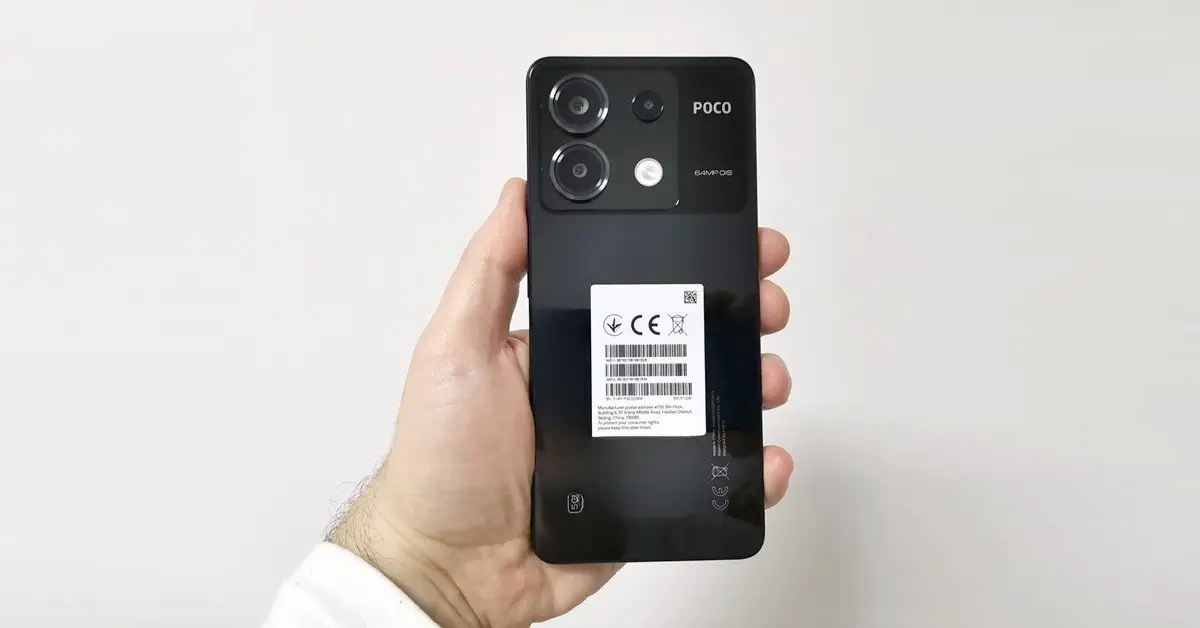
Ultimately, the choice between the two chipsets may come down to specific device implementations, manufacturer preferences, and user priorities. As technology continues to evolve, these chipsets represent the cutting edge of mobile processing power and connectivity. The table below will provide a thorough comparison of the hardware specifications of X6 and X6 Pro, making it easier to analyze and understand their differences.
POCO X6 vs. POCO X6 Pro – Specs showdown
POCO X6 vs. POCO X6 Pro – (Product specifications) | ||
Brand | POCO | |
Model | POCO X6 | POCO X6 Pro |
Class | Mid-range | High-end |
Released | Jan 11th 2024 | |
Design | ||
Design type | Bar | |
Waterproof | IP54 dust/water splash resistant | |
Display | ||
Display Type | CrystalRes 120Hz Flow AMOLED DotDisplay | |
Size | 6.67 inches | |
Resolution | 2712 x 1220 pixels | |
Refresh rate | 120Hz (max) | |
Display ratio: | 20:9 | |
Contrast ratio | 5,000,000:1 | |
Touch Screen | Yes, Capacitive, Multi-touch | |
Touch Points | 10 Point Multi-touch | |
Display Colors | 68 billion colors | |
Pixel Density | 446 PPI | |
Brightness | Brightness: 500 nits (typ), | |
Glass front Protection | Corning Gorilla Glass Victus | Corning® Gorilla® Glass 5 |
Display Protection | ||
Other Features | Dolby Vision | |
Hardware | ||
SoC / Chipset | Qualcomm SM7435-AB Snapdragon 7s Gen 2 (4 nm) | Mediatek Dimensity 8300 Ultra (4 nm) |
CPU | Octa-Core (8 cores) 64-bit 4nm processor.
| Octa-Core (8 cores) 64-bit 4nm processor.
|
GPU | Adreno 710@940 MHz | Mali G615-MC6@1,400 MHz |
Storage & Ram Configurations | • LPDDR4X RAM • UFS 2.2 storage • 8GB RAM + 256GB • 12GB RAM + 256GB / 512GB | • LPDDR5 RAM • UFS 4.0 storage • 8GB + 256GB • 12GB + 512GB |
Micro SD Card Expansion |  | |
Sensors | • Fingerprint (In-screen fingerprint sensor). • Gyro • Accelerometer • Proximity • Color spectrum | |
IR Blaster |  | |
WildBoost Optimization 2.0 | | |
x16 super resolution touch | | |
Double gaining antennas for low latency connectivity (Ideal for gaming). | ? | |
Software | ||
OS: Powered by Xiaomi HyperOS | ||
Cameras | ||
Main Camera (Rear) | Triple Array: • 64 MP, (wide), 1/2″, PDAF, OIS • 8 MP, 120˚ (ultrawide) • 2 MP, (macro) • 16 MP, (Font camera) | |
Selfie Camera (Front-facing) | 16MP ultra-wide front camera | |
Image Stabilization: OIS & EIS | Yes, Included | |
LED Rear flash | Yes, Included | |
Video features | • Main Camera: 4K@30fps, 1080p@30/60fps • Selfi Camera: 1080p@30/60fps | • Main Camera:4K@24/30fps, 1080p@30/60/120/240/960fps, 720p@1920fps. • Selfi Camera: 1080p@30/60fps |
Features | • Slow Motion | |
Speakers | Dual speakers | |
3.5mm jack | | |
Network | SIM: Nano SIM | |
WiFi Support | Wi-Fi 802.11 a/b/g/n/ac | Wi-Fi 802.11 a/b/g/n/ac/ax |
Connectivity | • USB Type-C 2.0, OTG | |
Bluetooth | 5.2 | 5.4 |
GPS | GPSGPS (L1+L5), GLONASS (G1), BDS (B1I+B1c+B2a), GALILEO (E1+E5a), QZSS (L1+L5), NavIC (L5) | |
Data | • 4G LTE: LTE | |
Bands | Supports 5G/4G/3G/2G:
• 4G LTE FDD: B1/2/3/4/5/7/8/12/13/17/18/19/20/26/28/32/66 • 3G WCDMA: B1/2/4/5/6/8/19 • 2G GSM: 850/900/1800/1900MHz | |
Charging | • USB Type-C 2.0 Interface (Power/Charging) | • USB Type-C 2.0 Interface (Power/Charging) |
Battery Capacity | Non-removable Li-Po 5100mAh (type) | • Non-removable Li-Po 5000mAh (type) |
Materials | Plastic with corning gorilla glass on the front | |
Colors | Black, White, and Blue | Black, Yellow, and Grey |
Dimensions | 161.15mm x 74.24mm x 7.98mm | 160.45mm x 74.34mm x 8.25mm (plastic) / 8.35mm(vegan leather) |
Weight | 181g | 186g (plastic) |
Launch price | Starting at $229 | Starting at $299 Base variant: (8GB+256GB) |
Universal Flash Storage (UFS) Comparison – POCO X6 vs. POCO X6 Pro
Universal Flash Storage (UFS) is a type of high-speed flash memory storage that is widely utilized in smartphones, tablets, and various electronic devices due to its fast data transfer rates and reliability. UFS provides a significant improvement in performance compared to traditional eMMC storage, offering faster read and write speeds, making it ideal for handling demanding applications and multitasking on mobile devices. UFS storage systems are crucial for device performance and user experience. Their speed and efficiency greatly impact the overall functionality and responsiveness of the device, making them a critical component for ensuring a smooth and seamless user experience. UFS 2.2 and UFS 4.0 are two prominent iterations of this technology, each offering distinct advantages in terms of speed, efficiency, and functionality.
The new Poco X6 model incorporates UFS 2.2, an improved version of the UFS 2.1 standard, aimed at delivering superior performance and reliability. With faster data transfer speeds, enhanced power efficiency, and advanced features, UFS 2.2 is perfect for demanding tasks like 4K video recording, high-resolution gaming, and multitasking. Furthermore, it minimizes latency and optimizes input/output operations for a smoother and more responsive user experience.
UFS 4.0 is the cutting-edge advancement in UFS technology, bringing a multitude of improvements over its previous versions. One of its most notable enhancements is it’s significantly faster data transfer rates, providing rapid access to stored data and diminishing loading times for applications and files. These improvements are particularly advantageous for tasks that demand Swift data retrieval, such as loading large multimedia files, accessing high-resolution images, and running resource-intensive applications.
UFS 4.0 incorporates cutting-edge power-saving features that optimize energy usage in mobile devices, leading to extended battery life. Through efficient power management during read and write operations, UFS 4.0 enhances device efficiency and battery runtime, meeting the increasing need for sustainable and eco-friendly technology solutions.
Furthermore, UFS 4.0 presents significant improvements in terms of reliability and durability. It introduces advanced error correction features and optimized wear leveling algorithms, further enhancing the already robust storage system. These advancements not only reduce the risk of data corruption or loss but also significantly prolong the lifespan of devices using UFS technology.
In terms of compatibility, UFS 4.0 is designed to support the latest generation of high-performance mobile processors and system-on-chips, ensuring seamless integration with cutting-edge hardware platforms. This compatibility enables device manufacturers to leverage the full potential of UFS 4.0, delivering superior performance and responsiveness in their products.
When comparing UFS 2.2 and UFS 4.0, it is evident that both standards offer substantial performance enhancements over their predecessors. UFS 4.0, however, represents a significant leap forward in terms of speed, efficiency, and reliability, making it an ideal choice for next-generation mobile devices that demand exceptional storage performance.
To sum up, UFS 2.2 and UFS 4.0 represent crucial advancements in flash storage technology, bringing significant upgrades in speed, efficiency, and reliability. While UFS 2.2 offers commendable performance enhancements, UFS 4.0 stands out as a cutting-edge solution that delivers unparalleled data transfer speeds, power efficiency, and durability, making it a compelling choice for high-performance mobile devices and other advanced electronics.