
The Orange Pi 6 Plus is a powerful board packed with features, built for high-end users. Here’s a quick rundown of its pros and cons:
- Excellent Design.
- Video outputs: HDMI, DP, eDP, and Type-C.
- x2 M.2 2280 Slots (For NVMe).
- x2 2.5Gbps Ethernet ports.
- Good thermal design (No overheating)
- RAM options: 16GB, 32GB, up to 64GB.
- 12-core 64-bit processor + NPU processor
- 2x USB 3.0 HOST + 2x USB 2.0 ports
- Software support could use some improvements.
- Maybe you missed it? Orange Pi RV2 Review.
- Orange Pi 6 Plus Overview: Introduction, full specifications, and features.
Part I: Introduction to the Orange Pi 6 Plus
A powerful ARM Board featuring a 12-core CPU
Orange Pi team recently launched the Orange Pi 6 Plus, a cutting-edge development board featuring an impressive 12-core ARM CPU. This new board is set to capture the attention of both enthusiasts and professionals, delivering enhanced performance and versatility that promises to elevate DIY and embedded projects. The board is also equipped with an integrated NPU that achieves an impressive 30 TOPS, making it highly appealing for edge computing applications in artificial intelligence.
The Orange Pi 6 Plus stands out not just for its impressive core count but also for its cutting-edge design by Cix Technology Group Co., Ltd. Technology company, a rising star in the Chinese semiconductor sector. This less familiar company is backed by a highly talented technical team, boasting an average of over 20 years of industry experience, making it a contender to watch closely.
Key takeaways
| 12-Core High-End Processor | CIX CD8180/CD8160 SoC with 12-core CPU. |
| RAM Configurations | LPDDR5 options — 16GB, 32GB, or 64GB. |
| GPU | Arm Immortalis-G720 MC10 with 8K video decoding. |
| Integrated NPU | Up to 45 TOPS AI performance |
| USB Ports | 2× USB 3.0, 2× USB 2.0, 2× USB Type-C (data, video, power). |
| Display | HDMI 1.4 (4K @ 60Hz), DisplayPort 1.4 (4K @ 120Hz), eDP, Type-C DP |
| Wired Networking | Dual 5G Ethernet ports |
| Storage Options | MicroSD card slot, SPI Flash (64 Mbit), 2× M.2 Key-M (2280) slots for NVMe SSD expansion |
Hardware
Yet another Chinese SoC designed and produced domestically
The CIX CD8180 is a high-performance 12-core Armv9.2-based processor developed by CIX Technology, a Chinese semiconductor company focused on advanced SoCs for AI, edge computing, and multimedia applications. This chip features a tri-cluster CPU architecture with 4 Cortex-A720 “Big” cores clocked up to 2.8 GHz, 4 Cortex-A720 “Medium” cores up to 2.4 GHz, and 4 Cortex-A520 “LITTLE” cores up to 1.8 GHz, delivering a balance of speed and efficiency. It integrates an Arm Immortalis-G720 MC10 GPU with hardware ray tracing and support for Vulkan 1.3, OpenGL ES 3.2, and OpenCL 3.0, alongside a powerful NPU capable of up to 30 TOPS using INT4/8/16, FP16, and TF32 precision.
The CD8180 supports LPDDR5 memory with a 128-bit bus and speeds up to 5500 MT/s and offers robust video capabilities including 8K@60fps decoding and 8K@30fps encoding across formats like AV1, H.265, and VP9. It is featured in boards such as the Radxa Orion O6, which leverage its full capabilities for AI inference, edge workloads, and Linux-based development, and is part of CIX’s flagship “P1” series, which also includes the CD8160—a binned variant with slightly lower clock speeds.
1. NPU with 30TOPS computing power
The NPU delivers 30 TOPS, boosting development and deployment efficiency. It supports various mainstream AI models, catering to generative AI needs in edge scenarios like chatbots and AI-assisted programming. The Orange Pi 6 Plus is seen as comparable to the AMD Ryzen AI 9 HX 370 in AI performance, as both feature NPUs capable of up to 45 TOPS, making them ideal for running advanced AI models locally. Additionally, paired with the Arm G720 MC10 GPU, it offers high-end graphics performance, including 8K video decoding and hardware-accelerated ray tracing, making it perfect for graphics-intensive applications.
2. Graphics performance
The glmark2 is a useful benchmarking tool designed to assess the performance of OpenGL ES 2.0 on systems utilizing the Wayland display server protocol. It effectively measures a system’s capability in managing graphics rendering tasks, including vertex arrays, textures, and shaders. This test proves invaluable for developers looking to enhance graphics performance in embedded systems or Linux-based devices. The latest benchmark report we go out hands-on reveal very high performance, showcasing glmark2 scores of 1105 in the glmark2-wayland test and an outstanding 5851 in the glmark2-es2-wayland test.
3. Power Consumption
- Idle Power Draw: Around 5–7 watts, depending on connected devices and background processes.
- Typical Load: During moderate usage (e.g., browsing, light AI inference), it draws 10–15 watts.
- Peak Load: Under full CPU/GPU/NPU utilization, especially with peripherals like NVMe SSDs and dual Ethernet, power usage can spike to 18–20 watts.
- Power Supply Requirement: The board is typically powered via a USB-C PD (Power Delivery) input, and a 20W or higher adapter is recommended for stable operation.
4. Additional Interfaces and applications
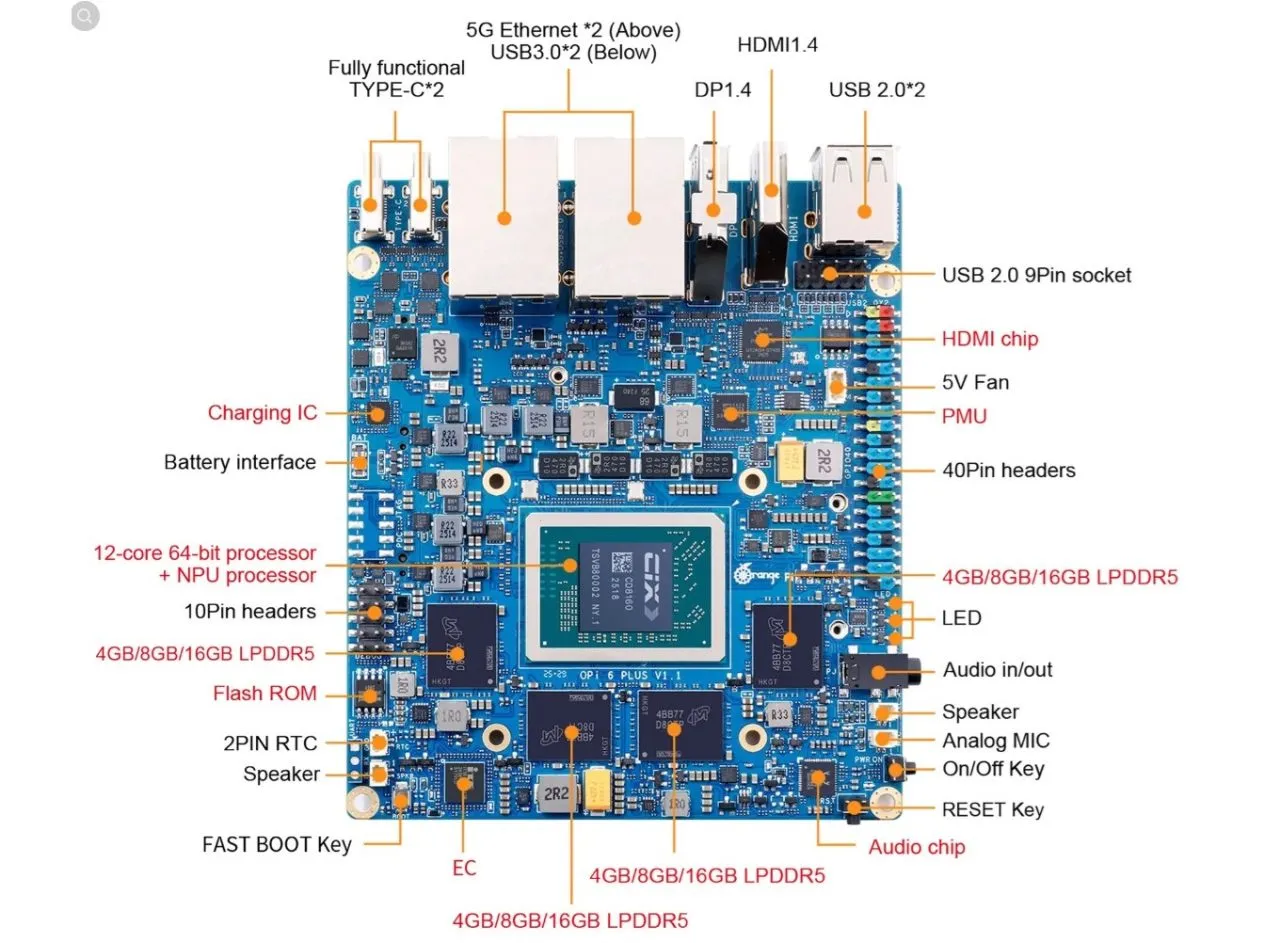
The Orange Pi 6 Plus boasts an extensive array of interfaces, including USB 3.0, USB 2.0, HDMI, 5G Ethernet, a MIPI camera interface, a TF slot, a Type-C power supply port, a 40-pin expansion connector, and a fan connector. This diverse connectivity greatly enhances the user experience by accommodating various peripheral devices. Its robust computing capabilities make the board ideal for a multitude of applications, such as smart office setups, edge computing, smart security systems, industrial automation, smart retail, home servers, AI development workstations, and high-performance personal computing. As an open source-based motherboard, it empowers developers with unparalleled freedom and flexibility, paving the way for deeper exploration and fostering technological innovation.
Orange Pi 6+ (Front view)
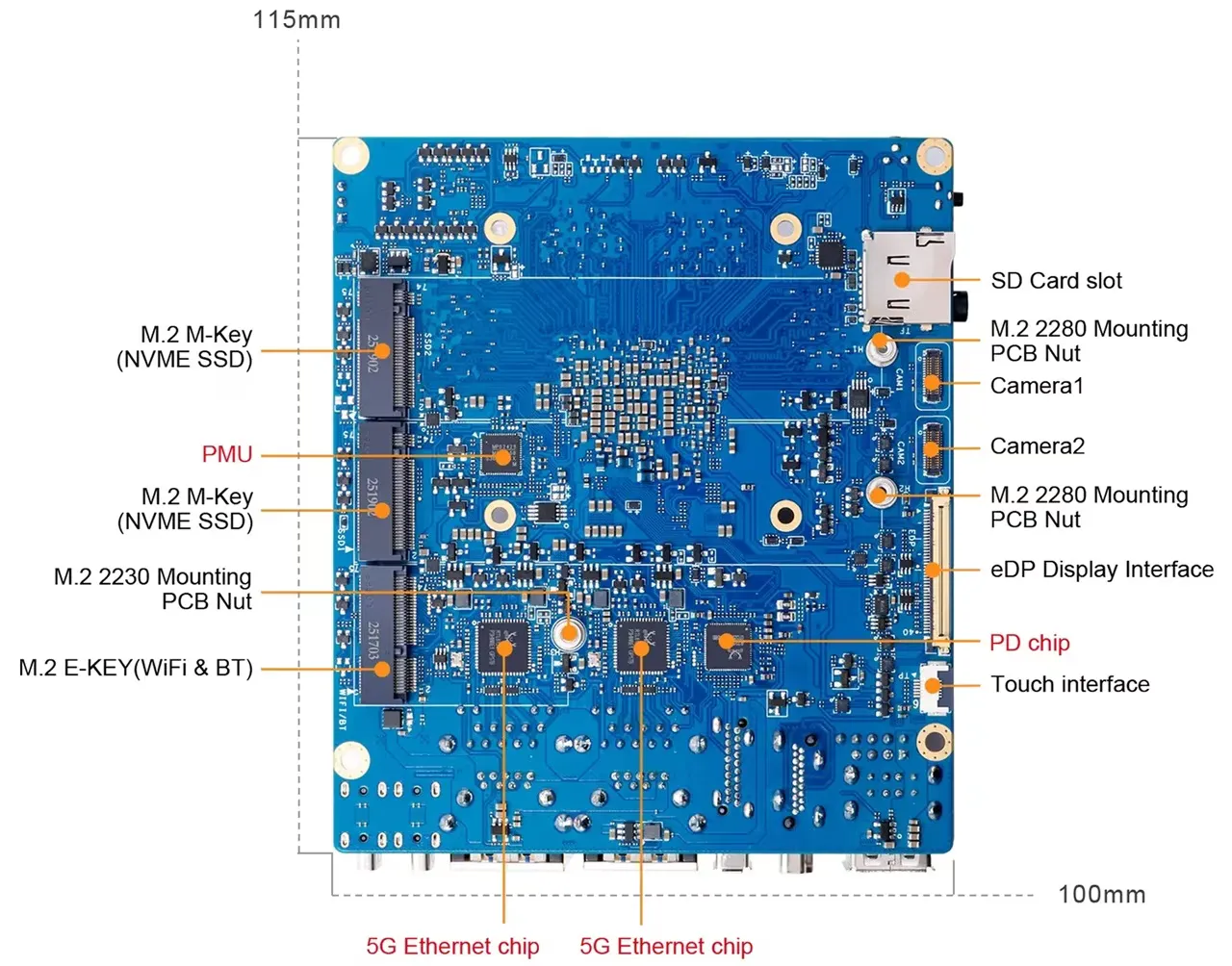
Orange Pi 6+ (Back view)
Video and audio
The HDMI port is capable of delivering a resolution up to 4K at 60Hz, but that’s just the beginning. Two DisplayPort connections over USB-C are also available, each also supports up to 4K at 60Hz playback. Additionally, you’ll find a 3.5 mm headphone jack for audio output, along with 40-pin header designed for connecting external sensors and additional devices.
Extensive options for memory and storage expansion.
The board supports 128-bit LPDDR5 memory with up to 64GB capacity and features two M.2 2280 interfaces for NVMe SSDs, catering to various user needs for memory and storage capacity.
Additional interfaces
The board comes with an impressive array of display output options including HDMI, DisplayPort, Type-C DP, and eDP; this unit can achieve breathtaking 4K 120Hz visuals (DP). Enhanced by dual 5G Ethernet ports and an M.2 KEY-E slot compatible with Wi-Fi modules, it guarantees exceptional network reliability and speed, in addition to multiple USB ports for seamless connections to various external devices.
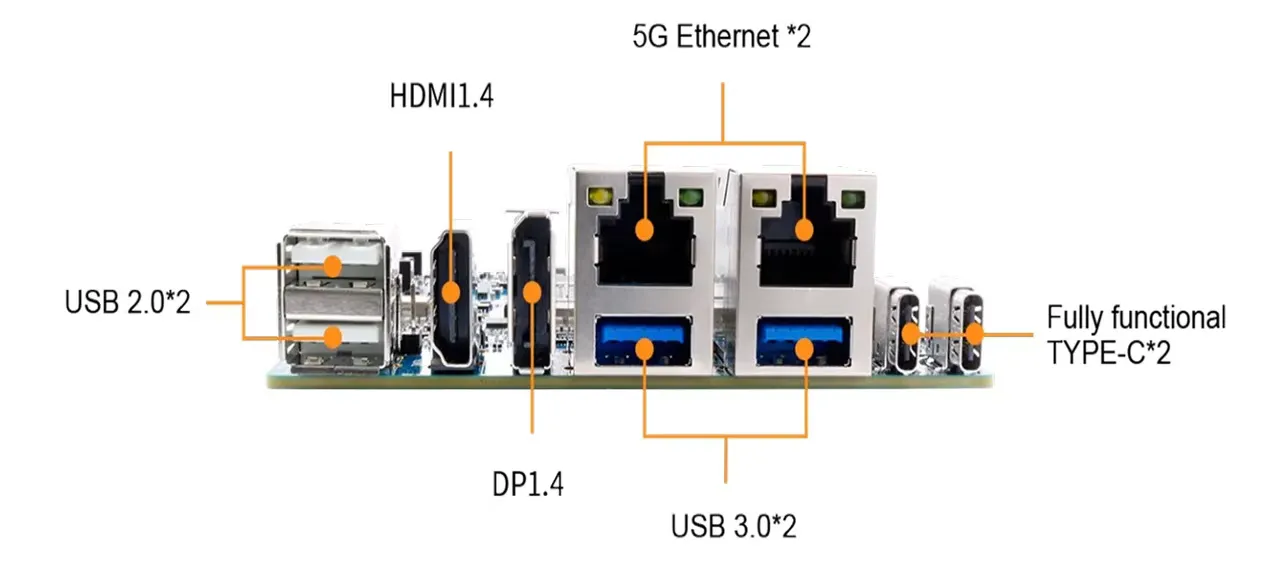
Orange Pi 6+ Interfaces and ports – Side view
Connectivity
Connectivity is a vital area in which the Orange Pi 6 Plus truly stands out. It provides both wired and wireless options, ensuring that you remain effortlessly connected at all times.
Wired and Wireless Connectivity Options:
- Two 5GbE ports ensure rapid and stable Internet connectivity.
- Upgradable Wi-Fi Option: The M.2 NGFF slot offers enhanced flexibility for adding and upgrading Wi-Fi and Bluetooth capabilities in the future.
🧾Orange Pi 6 Plus vs. Radxa Orion O6: Comparing hardware specs
| Feature | Radxa Orion O6 | Orange Pi 6 Plus |
|---|---|---|
| SoC | CIX CD8180 | CIX CD8180/CD8160 |
| CPU | 12-core ARMv9.2: 4× Cortex-A720 @ 2.8GHz 4× Cortex-A720 @ 2.4GHz 4× Cortex-A520 @ 1.8GHz | CIX CD8180: 12-core ARMv9.2 4× Cortex-A720 @ 2.8GHz 4× Cortex-A720 @ 2.4GHz 4× Cortex-A520 @ 1.8GHz CIX CD8160: 12-core ARMv9.2 4x Cortex-A720 @2.6 GHz 4x Cortex-A720 @ 2.4 GHz 4x Cortex-A520 1.8 GHz |
| Computing Power | 30 TOPS (Max) | 45 TOPS (Max) |
| RAM | Up to 64GB | Up to 64GB |
| Arm Immortalis G720 MC10 GPU | ✔ | ✔ |
| Storage Options | 1x M.2 M-Key 1x SATA 1x eMMC 1x SPI-Flash 1x microSD | 2x M.2 M-Key 1x microSD |
| Wi-Fi/BT Card Expansion slot | 1x M.2 E-Key | 1x M.2 E-Key 2230 |
| USB | 2x USB Type-C Ports – Port 1: USB 3.2 Gen 2 (10Gbps) + Power Delivery – Port 2: USB 3.2 Gen 2 (10Gbps) + DP Alt Mode (4K@60Hz) + Power Delivery 2x USB 3.2 HOST Type-A 2x USB 2.0 HOST Type-A Ports 2x USB 2.0 HOST via Front Panel Header | • 2x USB 3.0 HOST Type-A • 2x USB2.0 HOST Type-A • 1x Reserved USB 2.0 9-pin socket • 2x USB Type-C 3.0 |
| Camera interface | 2x 4-lane MIPI CSI camera interface | 2x 4-lane MIPI CSI camera interface |
| Video Output | • 1x HDMI1.4 4K@60HZ • 1x DP1.4 4K@120HZ • 1x USB Type-C DP • 1x eDP 4K@60HZ • 1x Touch interface | • 1x HDMI1.4 4K@60HZ • 1x DP1.4 4K@120HZ • 2x TYPE-C DP • 1x eDP 4K@60HZ • 1x Touch interface |
| Audio | 1x Audio front panel 1x 3.5mm Combo Jack 2x Speakers Interface | 1x 3.5mm Combo Jack 1x Analog MIC interface 2x Speakers Interface |
| Headers | 40 pin headers | 40 pin headers |
| Ethernet | Dual 5GbE Ethernet (PCIe 4.0 x1 each) | Dual 5GbE Ethernet (PCIe 4.0 x1 each) |
| PCIe Slot | x16 PCIe slot | ❌ |
| eDP Display Interface | ✔ | ✔ |
| RTC Battery | ✔ Integrated battery socket. | ✔ Connector |
| Power interface | 24 pin ATX Power supply interface | ❌ |
| Power source | Standard ATX PSU from the ATX power connector. USB C PD power supply with 20V voltage support | Type-C PD 20V, standard 100W |
| Form Factor | Mini-ITX (170mm x 170mm) | SBC board (115mm x 100mm) |
Specifications (Official)
| Component | Specification |
|---|---|
| SoC | CIX CD8180 |
| CPU Architecture | 12 core Armv9 processor: 4x Cortex®-A720 (Big cores) up to 2.8GHz 4x Cortex®‑A720 (Medium cores) up to 2.4GHz 4x Cortex®‑A520 (LITTLE cores) 1.8GHz |
| AI Computing Power | The total processing capability is 45 TOPS, combining the CPU, NPU, and GPU. |
| NPU | Integrated NPU with 30 TOPS computing power |
| GPU | Arm Immortalis G720 MC10 GPU • Hardware ray tracing • OpenGL® ES3.2 • OpenCL® 3.0 • Vulkan® 1.3® |
| RAM | LPDDR5: 128-bit x 32; 4 chips/module; 4GB/8GB per chip; Available in 16GB/32GB |
| 💾 Storage | 1x TF slot 1x SPI FLASH: 64Mbit 2x NVMe SSD (M.2 2280) |
| 📶 Wi-Fi Module | M.2 KEY-E socket (NGFF slot for Wi-Fi/BT expansion). |
| 🌐 Ethernet | 2× 5GbE ports |
| 🔌 USB Ports | 2x USB 3.0 HOST 2x USB 2.0 Reserved USB 2.0 9-pin socket 2x USB Type-C 3.0 HOST |
| 📷 Camera Interface | 2× 4-lane MIPI CSI |
| 🖥️ Display Interface | 1× DP1.4 (4K@120Hz) 2× Type-C DP (4K@60Hz) 1× HDMI1.4 (4K@60Hz) 1× eDP (4K) |
| 🔊 Audio | 3.5 mm headphone jack audio input/output, speakers2, analog MIC1 |
| 🔧 Expansion Interface | 40-pin function expansion interface, supporting the following interface types: GPIO, UART, I2C, SPI, PWM |
| Indicator Light | Power-on indicator light, system entry indicator light; supports breathing (ventilation) mode |
| Buttons | 1x Reset button 1x power button (power on or button-activated startup). |
| Fan Interface | 1x fan interface PWM connected to EC |
| Reserved Interface | 4-pin battery interface compatible with handheld device batteries; 2- pin RTC interface |
| Power Supply | Type-C PD 20V IN*2, standard 100W |
| 💻 OS Support | compatible with Debian, Ubuntu, Android, Windows, ROS2 |
| 🧪 Benchmark Scores | ✅ glmark2-wayland: 1105 ✅ glmark2-es2-wayland: 5851 |
| Dimensions | 120*100mm |
The board comes in two SoC configurations: the CIX CD8160 and CD8180. These SoCs vary in architecture and PCIe support, as outlined in the table below. The CD8180 is a more high-performance, feature-rich SoC, great for demanding tasks and advanced integration. Meanwhile, the CD8160 is a streamlined version, perfect for basic tasks or budget-friendly designs.
📊 CIX CD8180 vs CD8160 Comparison Table
| SoC | CIX CD8180 | CIX CD8160 |
|---|---|---|
| CPU Architecture | 12-core: 4x Cortex-A720 @2.8 GHz 4x Cortex-A720 @ 2.4 GHz 4x Cortex-A520 1.8 GHz | 12-core: 4x Cortex-A720 @2.6 GHz 4x Cortex-A720 @ 2.2 GHz 4x Cortex-A520 1.8 GHz |
| GPU | Arm Immortalis G720 MC10 (Ray tracing, Vulkan 1.3) | Arm Immortalis G720 MC10 (Ray tracing, Vulkan 1.3) |
| NPU (AI Engine) | 30 TOPS (INT4/8/16, FP16, TF32) | 30 TOPS (INT4/8/16, FP16, TF32) |
| Video Encoding | 8K @ 30fps | 8K @ 30fps |
| Video Decoding | 8K @ 60fps | 8K @ 60fps |
| Memory Support | LPDDR5, up to 64GB, 128-bit bus @ 5500MT/s | LPDDR5, up to 64GB, 128-bit bus @ 5500MT/s |
| PCIe Support | PCIe Gen4 x8 | PCIe Gen4 x4 |
| System Integration | Advanced (Radxa Orion O6 board, SystemReady certified) | Basic (fewer peripherals, lower integration) |
| Use Case | High-performance embedded systems, edge AI | Mid-range applications, cost-sensitive deployments |
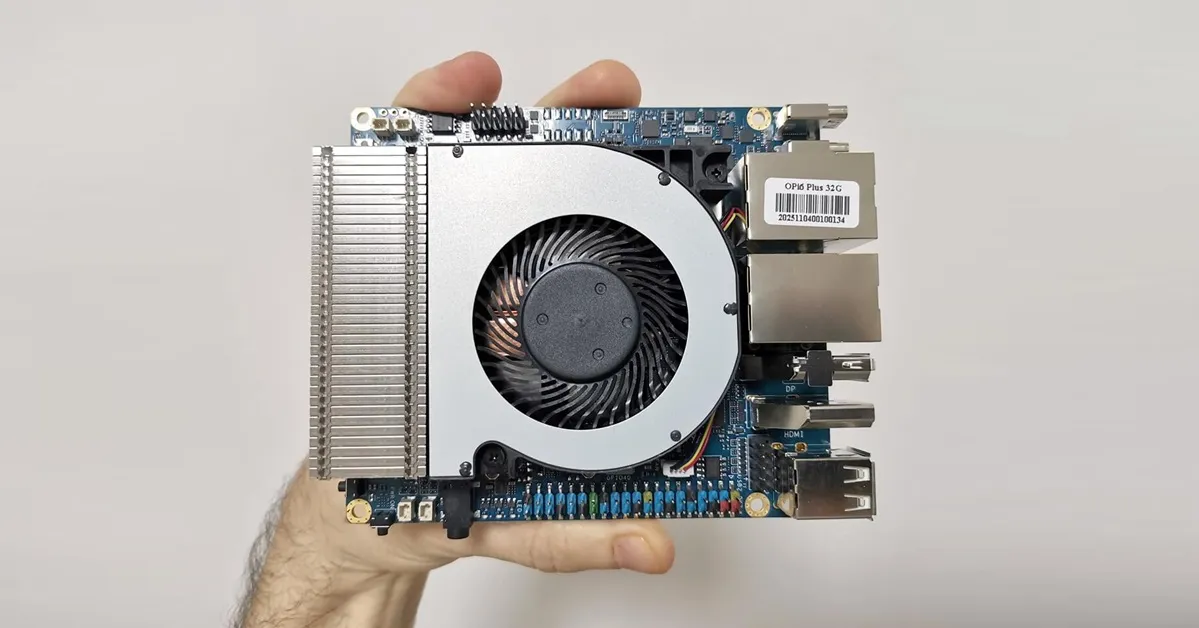
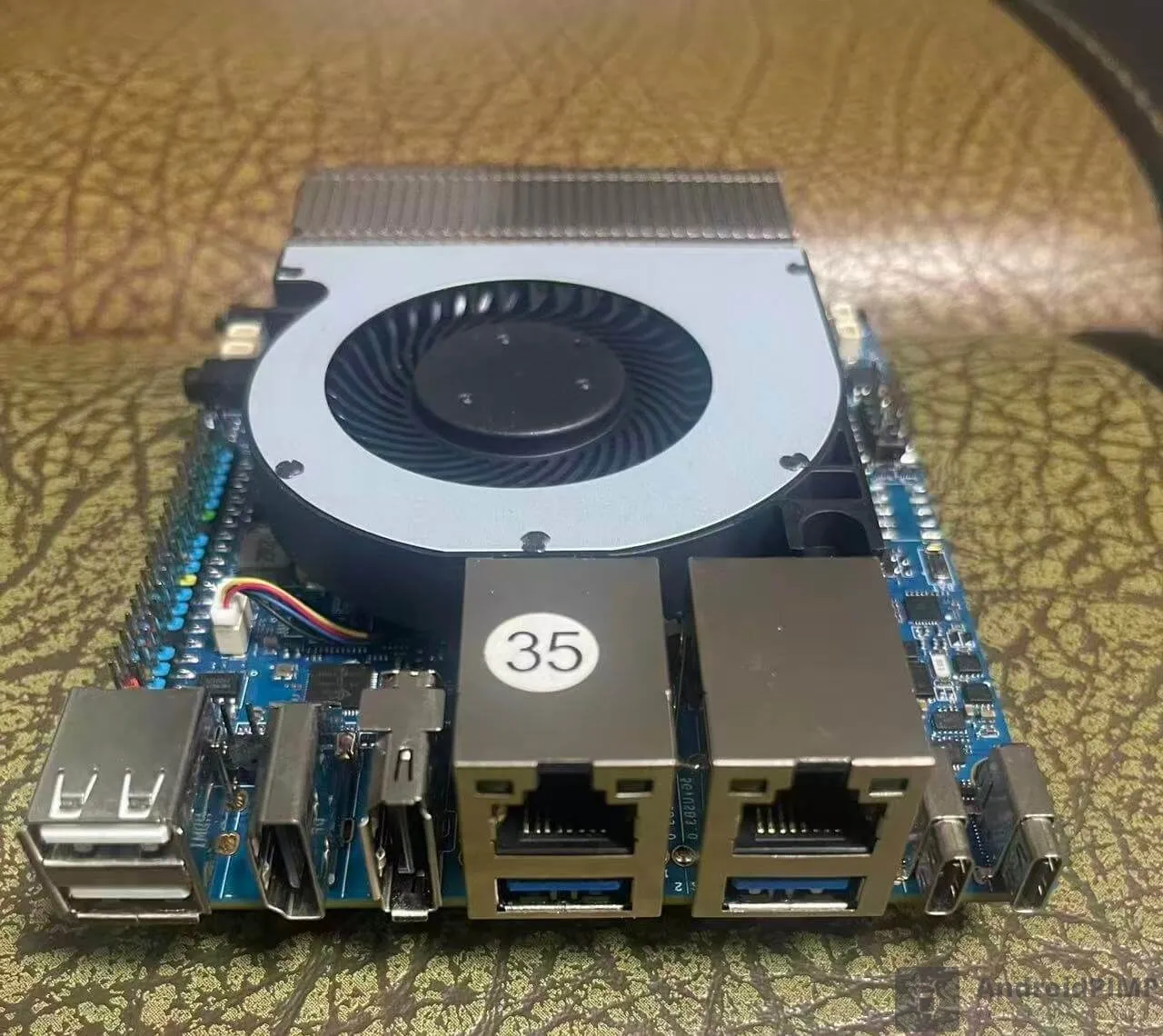
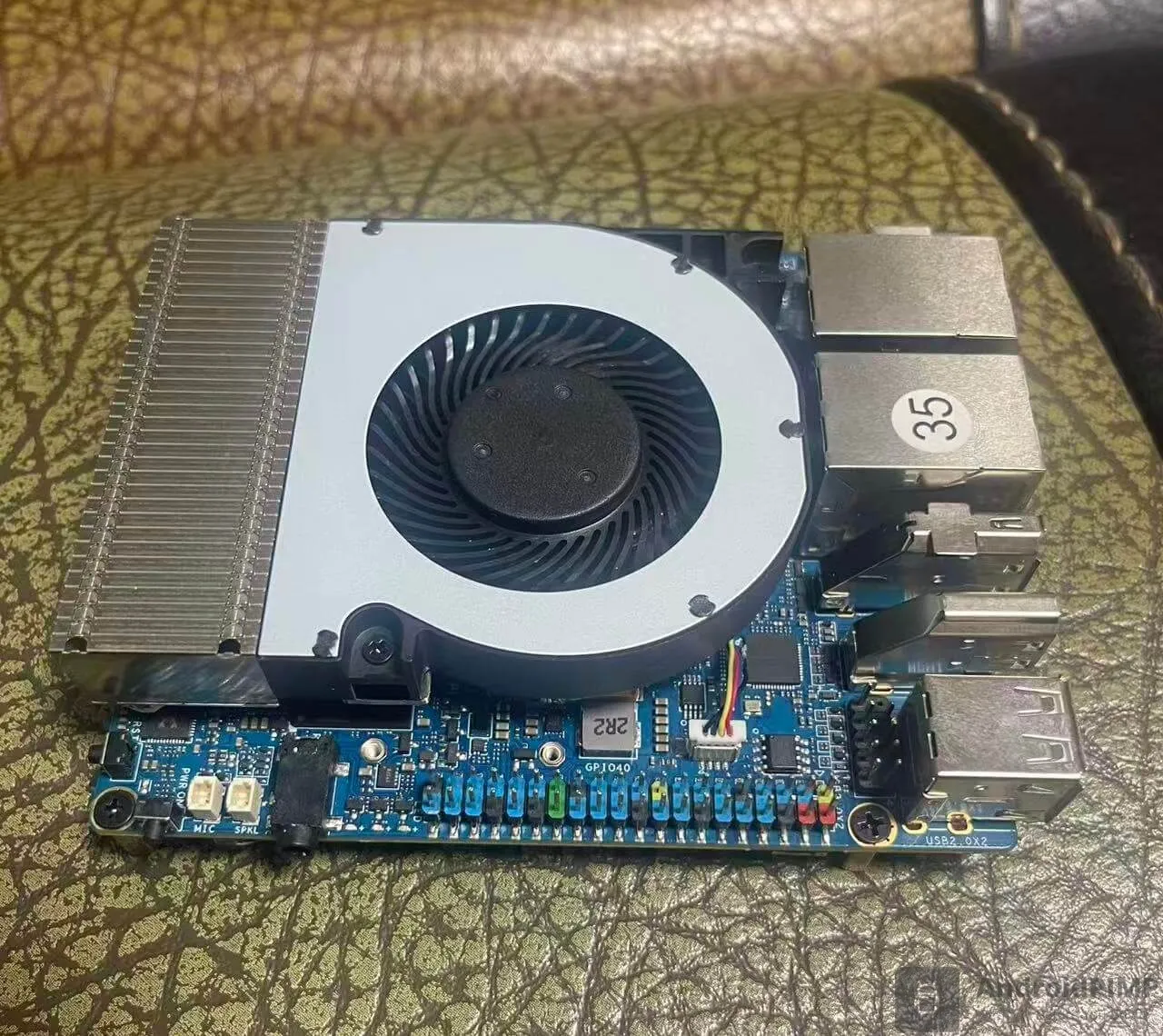
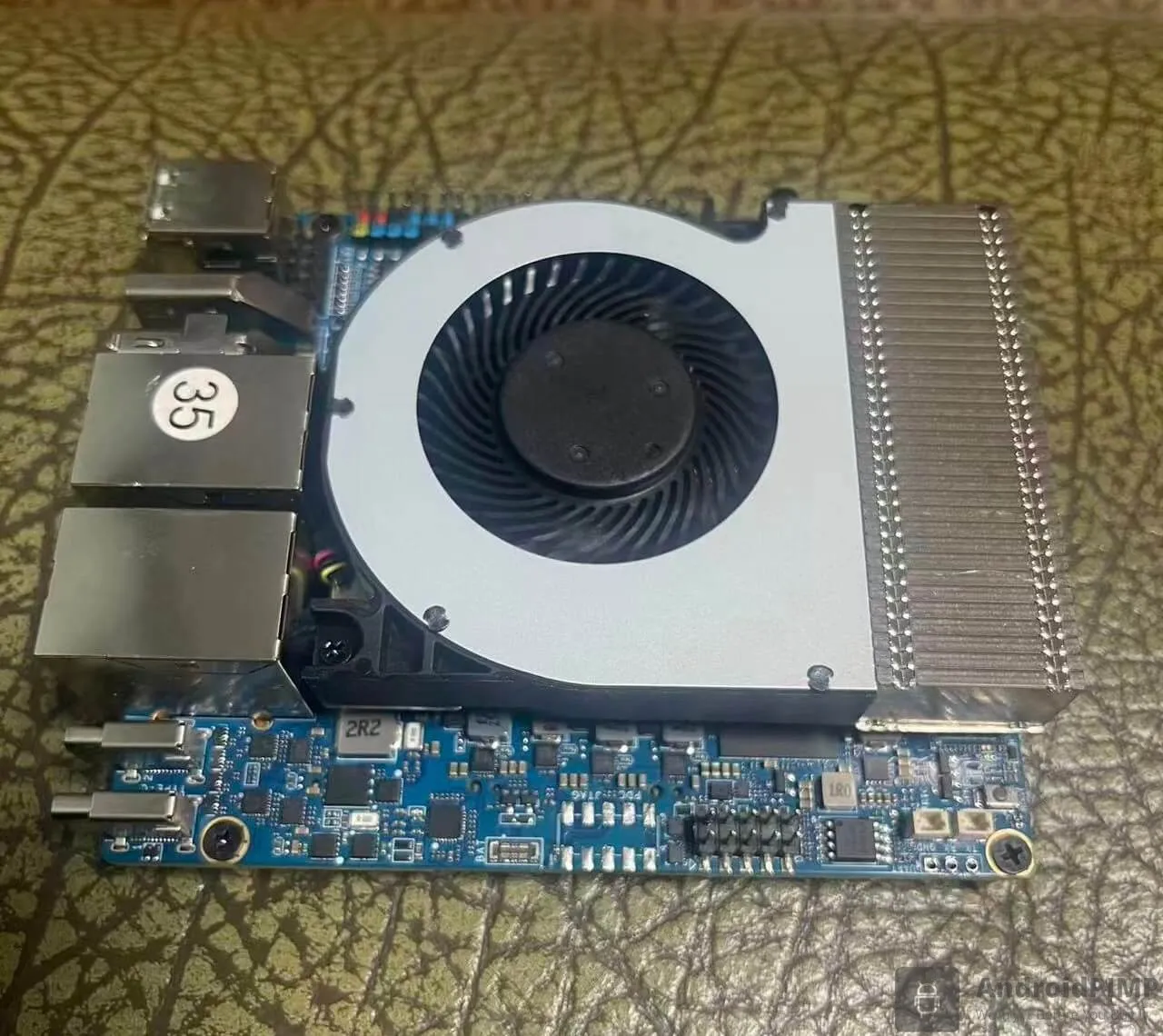
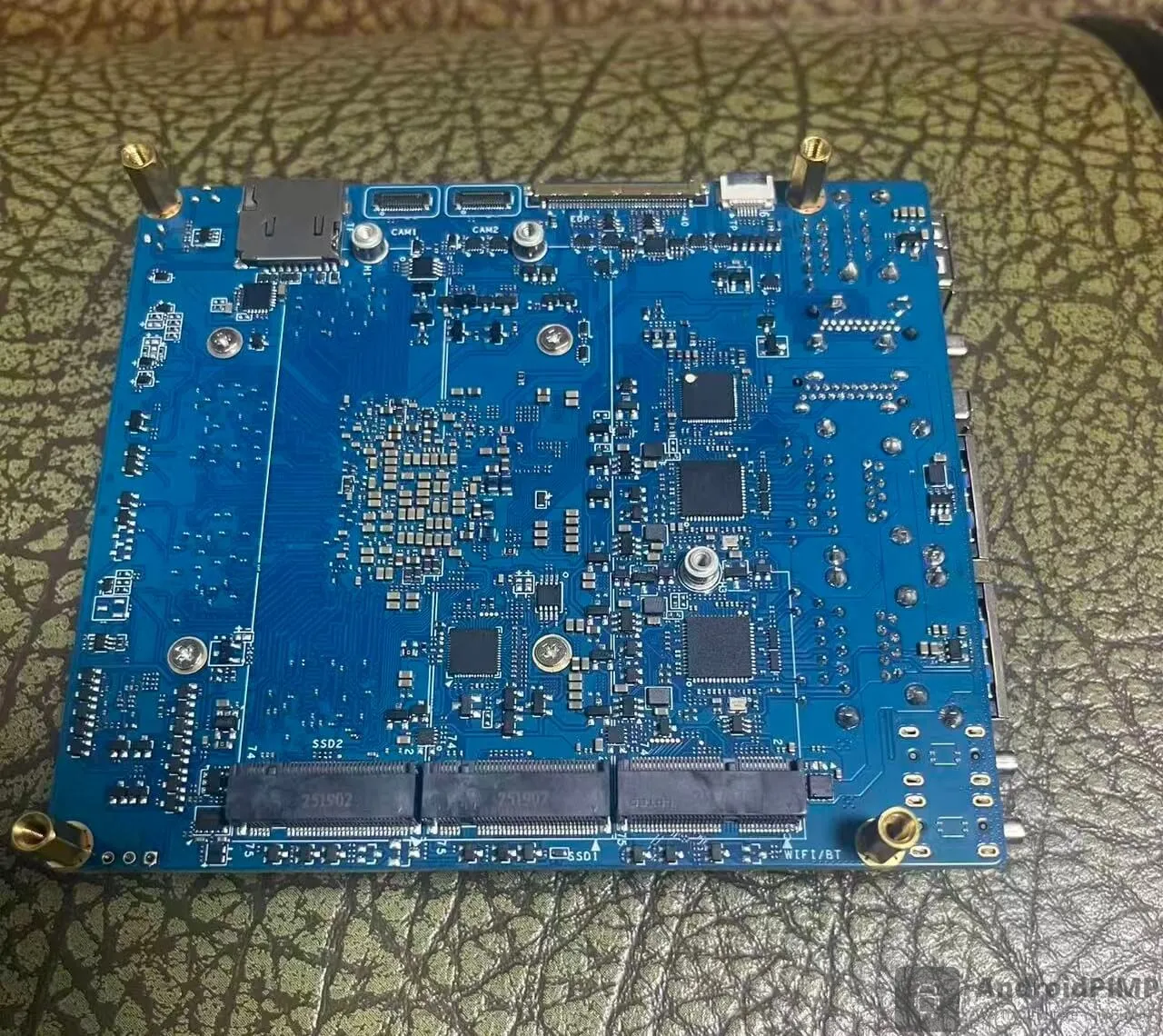
Exclusive first-hand photos [final sample] (Dated: October 10, 2025)
Featuring powerful hardware, the Orange Pi 6 Plus board is designed with an integrated active cooling system, ensuring that the majority of its electronic components remain cool (as shown in the photos below).
A Quick Overview of Orange Pi Series
The Orange Pi Series is a highly regarded collection of single-board computers, celebrated for their exceptional performance and versatility. These boards serve a wide array of applications, spanning from fundamental educational projects to sophisticated automation systems. With each new iteration, the series continues to introduce great features with high value for the buck.
- Variety of Models: Starting from simpler models like the Orange Pi Zero, which offered just enough performance for basic tasks, to more robust versions like the Orange Pi 5 with enhanced processing power and adaptability.
- User-Friendly: Emphasizing user accessibility, the boards are often structured to be easy to set up and run with widely available operating systems such as Linux and Android.
- Community Support: A vibrant community backed by a plethora of online resources makes it a go-to choice for enthusiasts looking to tinker and explore the realms of IoT and prototyping.
Potential Applications of Orange Pi 6 Plus
Whether you’re a hobbyist, an educator, or a developer, there’s a fascinating application waiting just for you. Let’s explore the exciting avenues this board has to offer.
1. Home Automation and IoT
The Orange Pi 6 Plus is poised to become an essential element of your home automation and IoT ecosystem. With its impressive 12-core processing power, it allows for flawless integration of numerous smart devices, ensuring that your thermostats, lights, and other systems work together in perfect synchronization.
Whether it’s controlling appliances, securing the home with smart locks, or automating curtains to open with the morning sun, the Orange Pi 6 Plus hardware can handle it with ease. Its versatility can turn any home into a smart home effortlessly. Moreover, the ability to connect and communicate with various IoT protocols makes it extremely adaptable for future technologies.
2. Educational Purposes
The Orange Pi 6 Plus stands out as an exceptional educational resource, transforming the way we engage students in STEAM (Science, Technology, Engineering, Arts, and Mathematics) subjects. Its open architecture and robust capabilities make it an ideal tool for everything from introductory programming lessons to intricate electronics projects, offering an unparalleled learning experience.
Teachers can engage students with computer science concepts by utilizing the Orange Pi 6 Plus to run a variety of educational software and programming environments. Its support for multiple operating systems enables students to explore different software ecosystems, providing invaluable experience. Through hands-on practice, learners can not only grasp theoretical concepts but also connect them to real-world applications.
3. Prototyping and Development
For developers and DIY professionals, the Orange Pi 6 Plus functions as a dynamic tool for prototyping and development. Whether you’re working on the next big IoT device or creating innovative applications, the board’s robust processing and connectivity options make it ideal for prototyping.
Its flexible architecture allows easy adjustment and customization for specific development needs. You can experiment with new software, test real-time scenarios, and even run complex algorithms, thanks to its powerful 12-core RISC-V architecture. Combining this board’s features with a range of available developer resources propels your ideas from conception to realization faster than ever.
In conclusion, the Orange Pi 6 Plus presents exceptional possibilities in a multitude of domains. Whether you’re looking to automate your home, educate future generations, or innovate the technology of tomorrow, this board stands out as your ultimate solution.
This is great, but i have a Orange Pi 5 Max almost a year and still there is only first versions of few images for that board and few beta on some forums. So support for that is like zero after board is released.
From my checking, the Orange Pi 5 Max supports around 3-4 distributions. There’s often a delay for new images after hardware release, but the popular RK3588 SoC has solid support. You can always upgrade your existing distribution and install a newer kernel with the latest packages. You can always switch to an RP5 that has less powerful hardware but comes with better software support.
I think this is BS, no announcements form the Orange PI, nothing on the forums.
I would definitely buy this with 32GB or 64GB, now that would be a decent platform
It’s not ready yet, but the news is reliable, and the company has also shared some updates about it.
Well, if they truly on this, this will be a great SBC, I would buy one immediately.
This should be marketed using like 5$ vouchers in ARACE, OrangePI would immediately gauge the interest and get some early revenue o produce the board