Close Menu
  • Home
  • About
  • Wearables
  • Earbuds
  • Computer Accessories
    • Routers
    • Remotes
  • Embedded
    • Single Board Computers
    • Addon Boards
    • Raspberry Pi
  • Wireless Routers
  • Contact
Facebook X (Twitter) Instagram Threads
Trending
  • RiiTek RK807 Pro Review: The Best Budget Apple Magic Keyboard Alternative?
  • RiiTek RK808 Review: The Best Foldable Travel Keyboard?
  • Rii RS201 Review: $69 16-Inch Portable Monitor Tested
  • AliExpress Promo Codes: August 2026 (100% Verified)
  • Orange Pi 6 Review: Is It Suitable for Running Local LLMs? We Checked.
  • Youyeetoo NestDisk Mini PC/Router: Is This Pocket-Sized 3-in-1 NAS Worth It?
  • DFRobot Unveils seeMote Cube: A 6DoF Physical Controller for Apple Vision Pro
  • Orange Pi X2 Mini PC Is Officially in the Works – Here’s What We Know
AndroidPIMP
Facebook X (Twitter) Instagram
  • Home
  • About
  • Wearables
  • Earbuds
  • Computer Accessories
    • Routers
    • Remotes
  • Embedded
    • Single Board Computers
    • Addon Boards
    • Raspberry Pi
  • Wireless Routers
  • Contact
AndroidPIMP
Embedded Computers

Banana Pi BPI-R3 Mini Review: A Tiny & Fast 2.5GbE router board

By androidpimpDecember 2, 2023Updated:October 13, 20253 Comments21 Mins Read
Facebook Twitter Pinterest LinkedIn Tumblr Email
Follow Us
Google News Flipboard
Table of contents
  1. Part I: Banana Pi BPI-R3 Mini – Features and introduction
  2. Highlights
  3. Banana Pi BPI-R3 Mini (Eng. sample test)
  4. Hardware Interfaces & Layout
  5. Practical Applications
  6. Cybersecurity
    1. Portable router
  7. Hardware and Software Compatibility
  8. Part II: Banana Pi R3 Mini review
  9. Unboxing all items (Before being assembled).
  10. Included packages:
  11. Let’s take a closer look at the board.
  12. Case design
  13. Exhaust fan
  14. A Closer Look
  15. Dive deeper into the internals of the case (Grey Color Edition)
  16. Metal Case (White background photos)
    1. Board & Metal Case
  17. Assembling all the items together.
  18. Operation
  19. Hardware
    1. Checking Available system resources
    2. CPU Information
    3. Finding all storage devices
    4. More detailed information about the storage devices
  20. Banana Pi BPI-R3 Mini specifications
  21. Banana Pi BPI-R3 vs. Banana Pi BPI-R3 Mini
  22. Software
  23. Burning the OpenWrt image
  24. Installing an NVMe SSD
  25. Checking the M.2 NVMe SSD Performance
  26. Benchmarking NVMe Using hdparm
  27. Connectivity
  28. iPerf Throughput test (Wired connection)
  29. iPerf Throughput test (Wireless connection)
  30. 5G & 4G LTE Ready
  31. Banana Pi R3 Mini: Review Summary
  32. Price and Availability
    1. BPI-R3 Mini Router Board
    2. BPI-R3 Mini Router Board

Software

One of the standout features of the Banana Pi BPI-R3 Mini is its support for multiple operating systems. The router can run on various systems such as Ubuntu, Debian, and OpenWrt, giving users more flexibility in terms of customization and configuration. This makes it an ideal choice for businesses and individuals who require a high degree of flexibility in their network setup.

Burning the OpenWrt image

When deciding where to store system software files and packages, there are two primary choices: an 8GB eMMC or a 128MB Nand flash. What sets the SinVoip team apart is their brilliant addition of a jumper switch that makes selecting your preferred option a breeze. In almost all cases, the eMMC option is the clear winner, thanks to its remarkable and generous storage capacity.

In order to complete the installation, you will first need to boot from the Nand and flash the image file using dd command from a USB stick, and lastly switch to eMMC. Our board came with the latest version of OpenWrt snapshot 21.02 pre-installed.


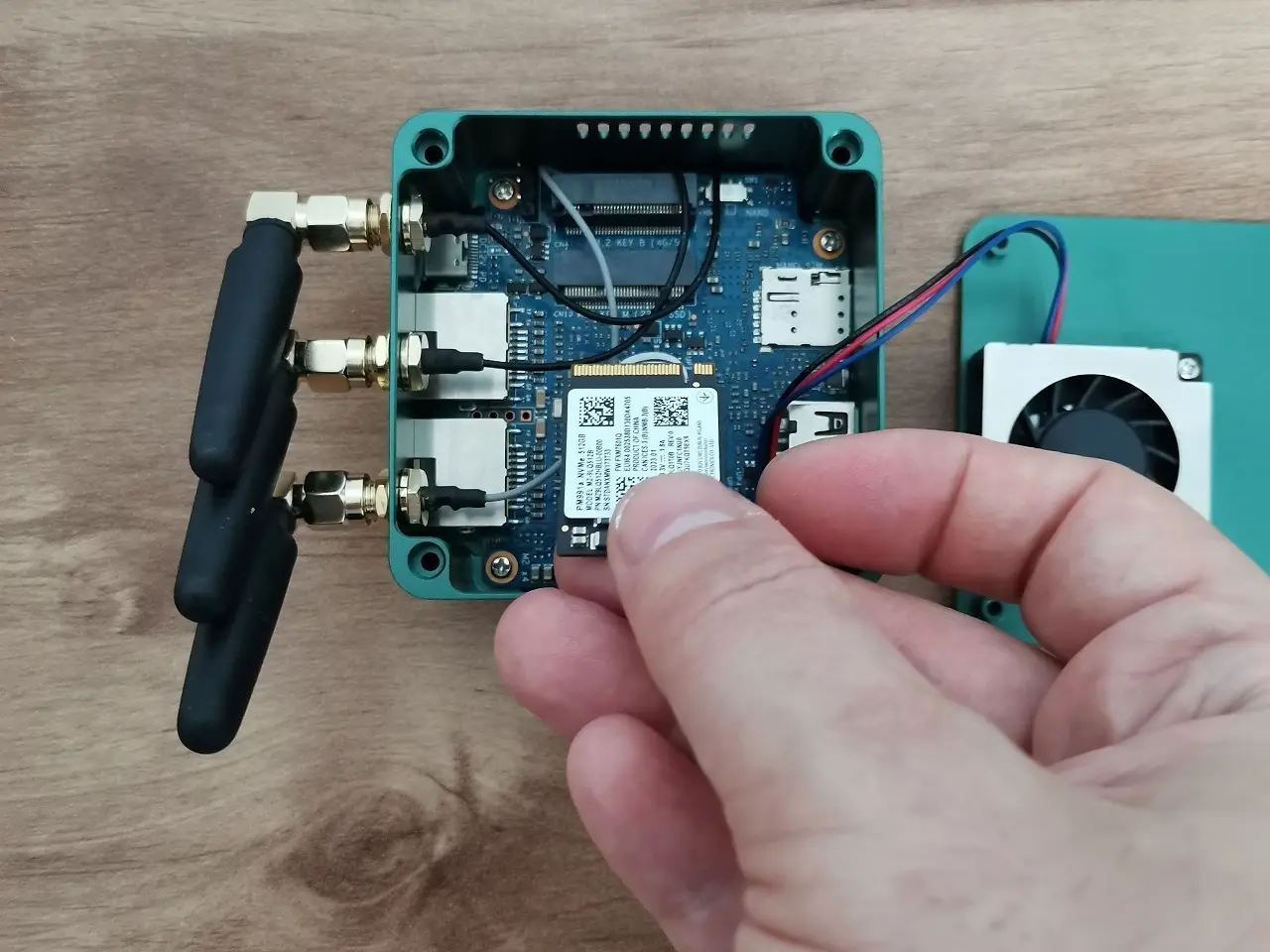
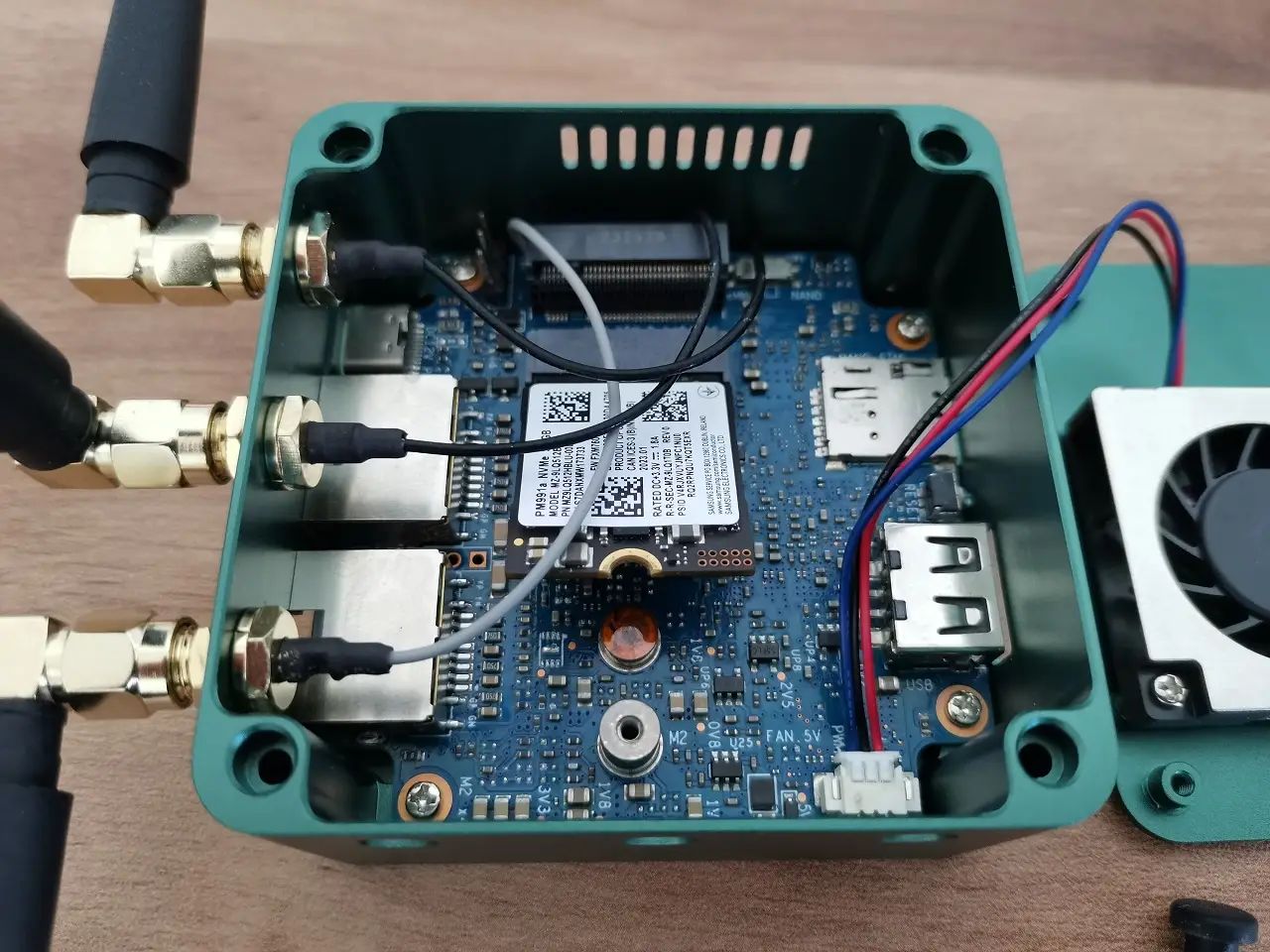
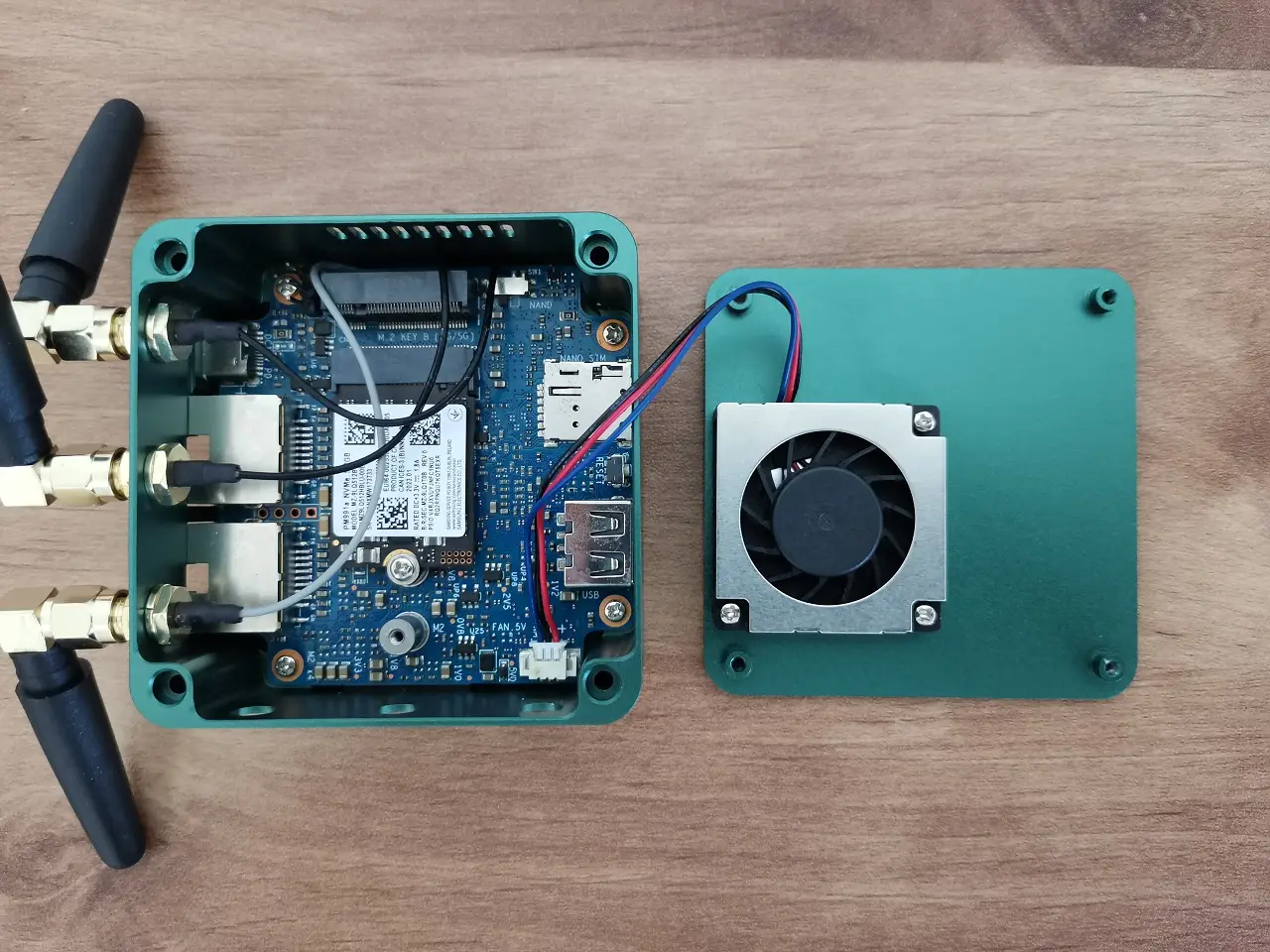
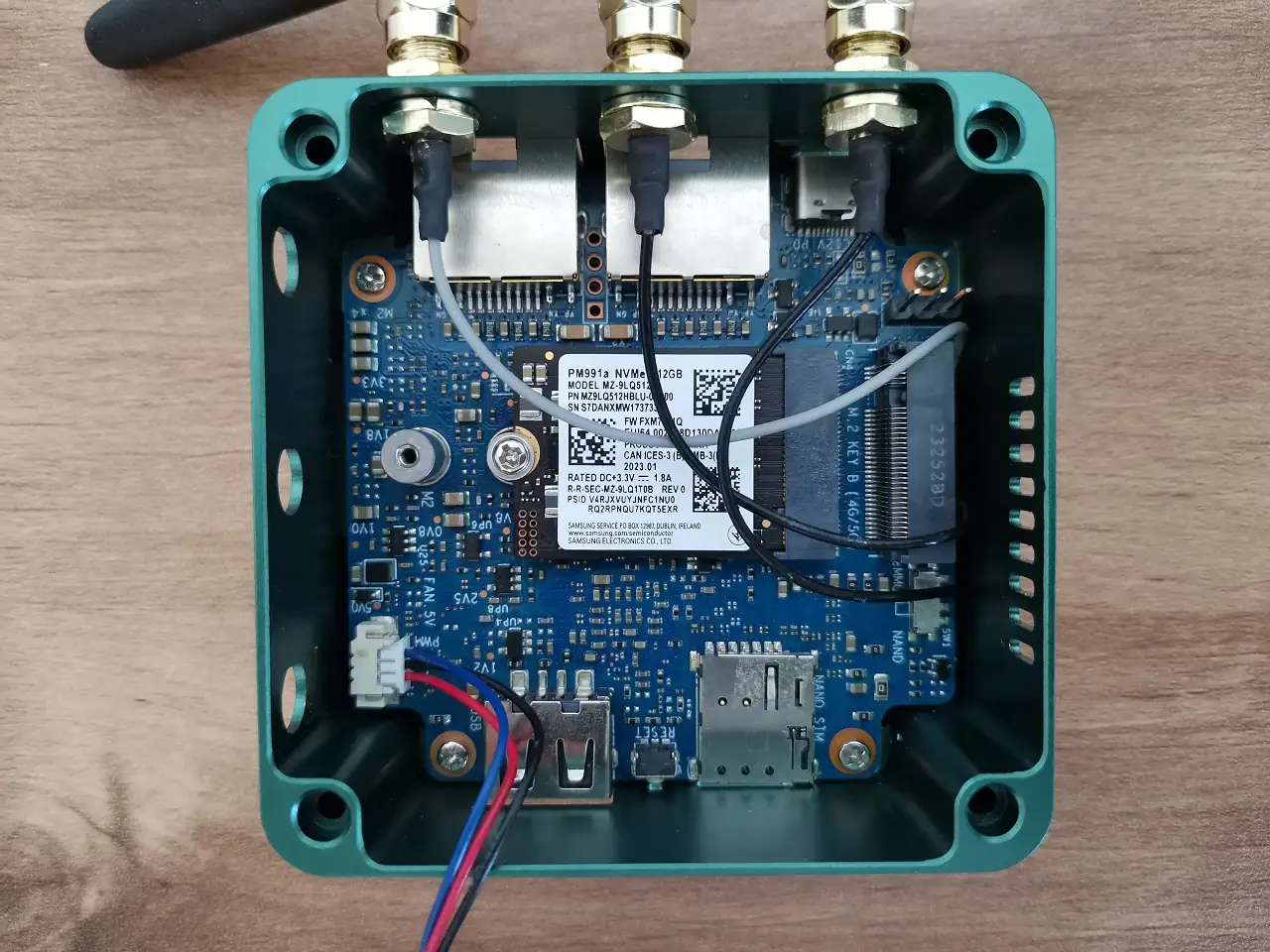
Installing an NVMe SSD

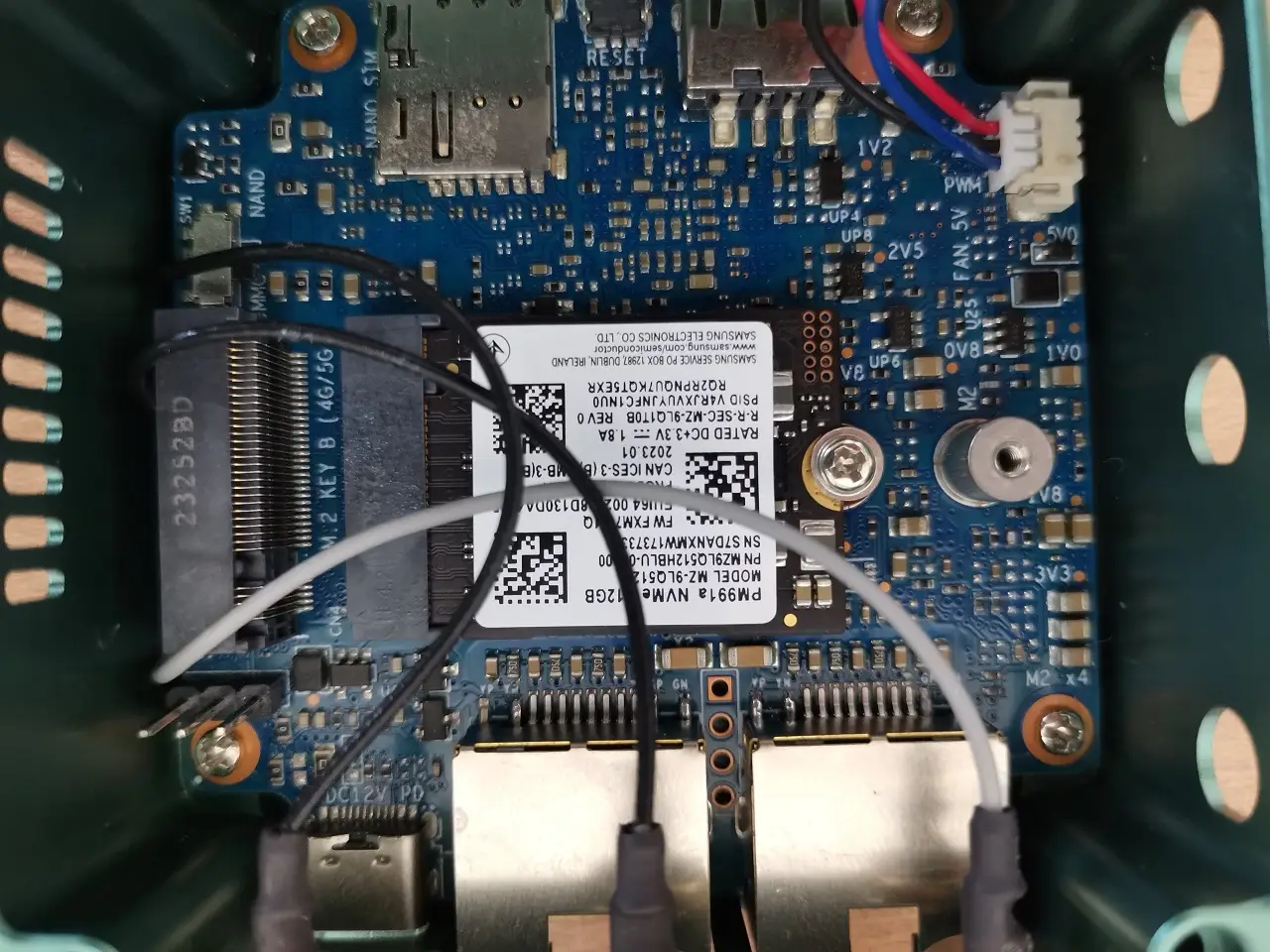
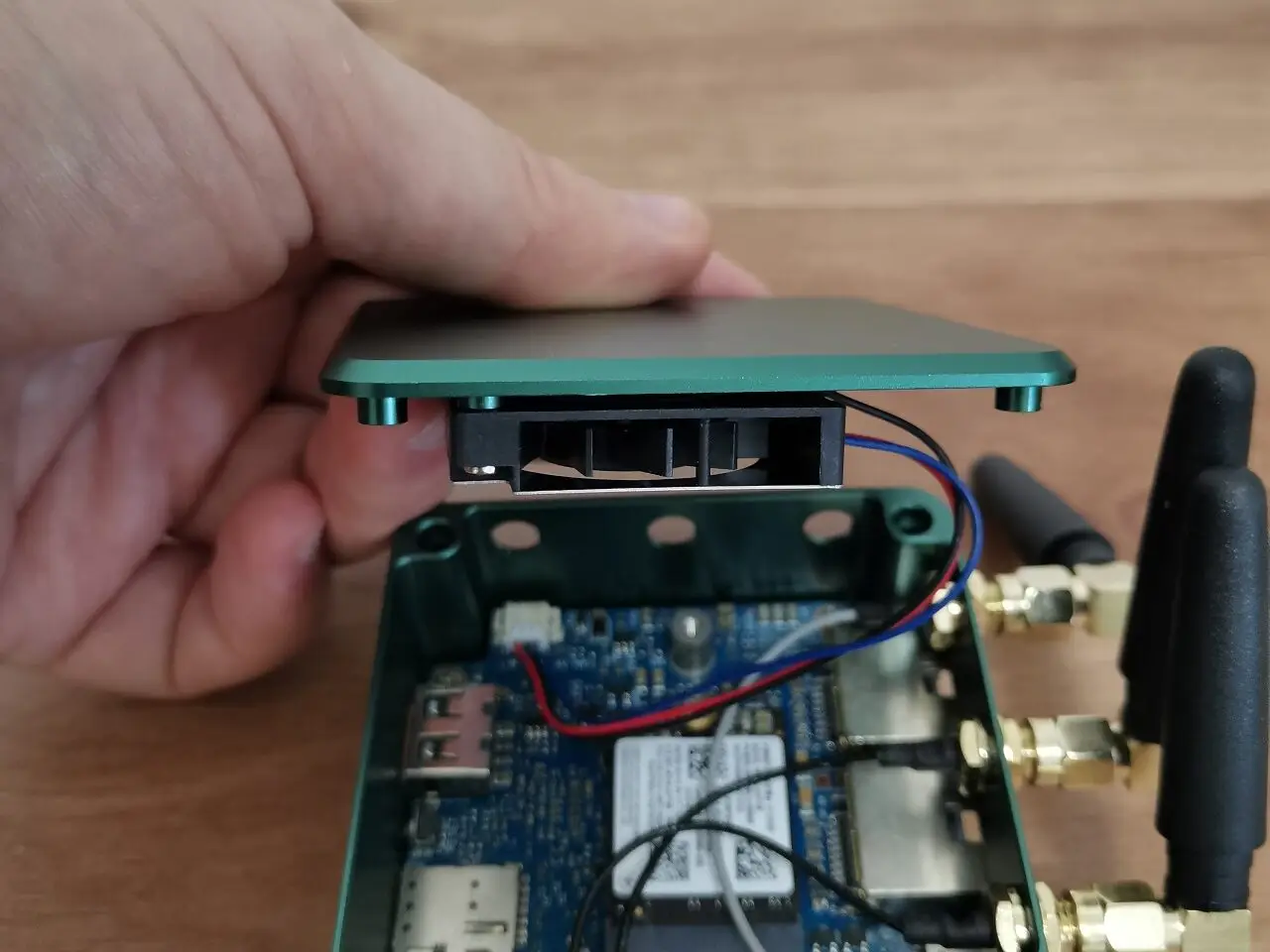
This is where things start to get trickier. The board comes with two M.2 interfaces. One is KEY B designed for 4/5G Module and the second is KEY M which is designed for storage mainly. The KEY B socket is slightly higher. The limited size of the board dimensions poses certain constraints on this design concept, which could potentially lead to heat issues, particularly when both sockets are being used simultaneously. The most practical solution we can consider is to install a heat isolation pad. This will act as a buffer between the two boards and effectively prevent them from overheating each other.

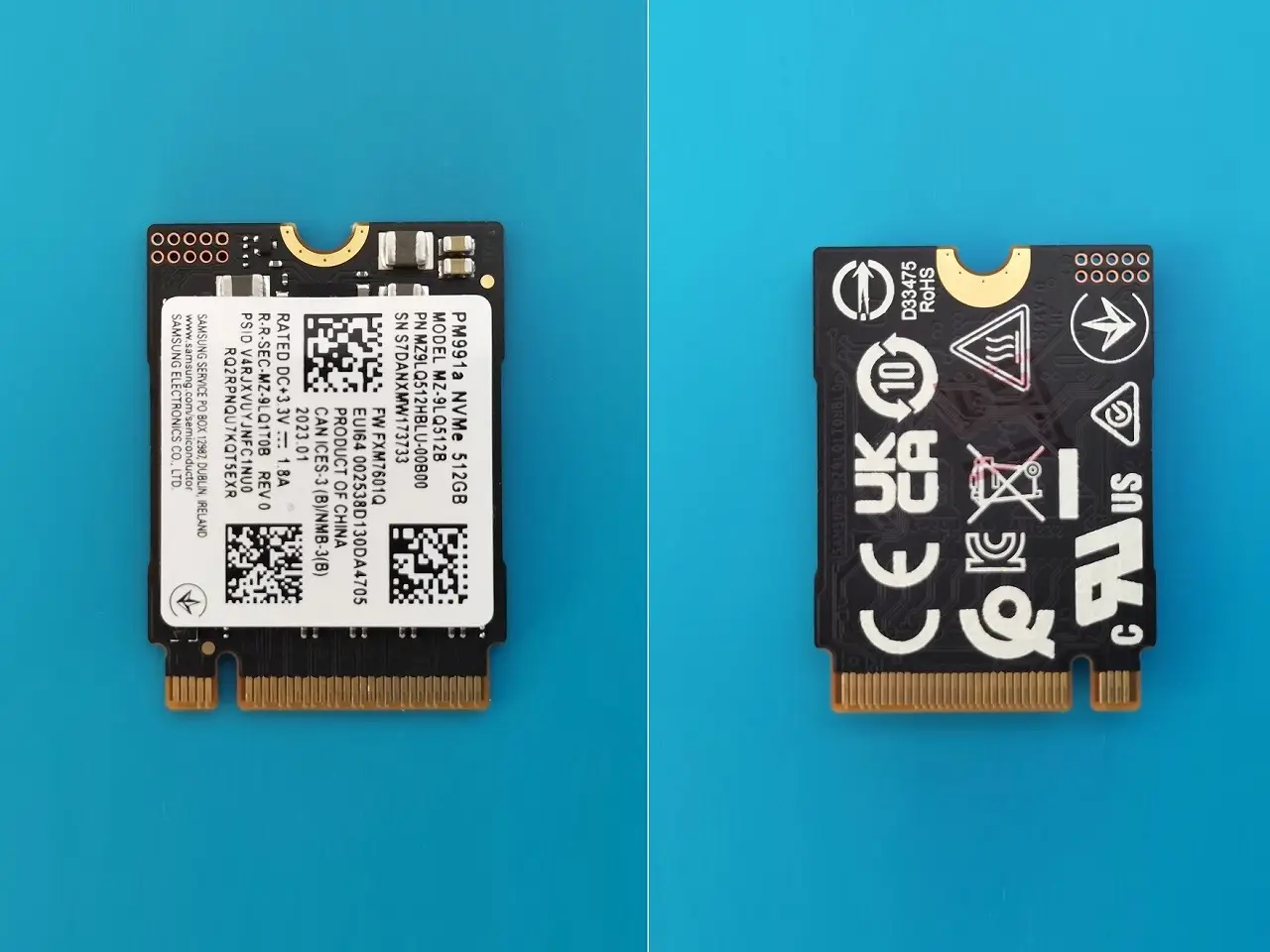
Assembling a Samsung SSD PM991a NVMe 512GB (M.2 2230).

(To get a closer look, click on the image)
Checking the M.2 NVMe SSD Performance

Once the NVMe is formatted to the ext4 file system and successfully mounted under the OpenWrt LuCI web interface, it will be appropriately identified as “nvme0n1” with available capacity of 473G.

Display details about block devices: 

root@OpenWrt:/mnt# lsblk
NAME         MAJ:MIN RM   SIZE RO TYPE MOUNTPOINT
mtdblock0     31:0    0   128M  0 disk
mtdblock1     31:1    0     1M  1 disk
mtdblock2     31:2    0   512K  0 disk
mtdblock3     31:3    0     2M  0 disk
mtdblock4     31:4    0     2M  0 disk
mtdblock5     31:5    0   4.5M  1 disk
mtdblock6     31:6    0     2M  0 disk
mtdblock7     31:7    0     2M  1 disk
mtdblock8     31:8    0    32M  0 disk
mtdblock9     31:9    0     1G  0 disk /rom
mtdblock10    31:10   0 980.3M  0 disk /overlay
mtdblock11    31:11   0     2G  0 disk
mtdblock12    31:12   0   4.2G  0 disk
mmcblk0      179:0    0   7.3G  0 disk
├─mmcblk0p1  179:1    0    17K  0 part
├─mmcblk0p2  179:2    0   512K  0 part
├─mmcblk0p3  179:3    0     2M  0 part
├─mmcblk0p4  179:4    0     2M  0 part
├─mmcblk0p5  179:5    0    32M  0 part
└─mmcblk0p6  179:6    0   256M  0 part
mmcblk0boot0 179:8    0     4M  1 disk
mmcblk0boot1 179:16   0     4M  1 disk
nvme0n1      259:0    0 476.9G  0 disk
├─nvme0n1p1  259:1    0     4M  0 part
├─nvme0n1p2  259:2    0     6M  0 part
├─nvme0n1p3  259:3    0     4M  0 part
├─nvme0n1p4  259:4    0     4M  0 part
├─nvme0n1p5  259:5    0     4M  0 part
├─nvme0n1p6  259:6    0     1M  0 part
├─nvme0n1p7  259:7    0    40M  0 part
├─nvme0n1p8  259:8    0    96M  0 part
├─nvme0n1p9  259:9    0   384M  0 part
├─nvme0n1p10 259:10   0   384M  0 part /mnt/nvme0n1p10
├─nvme0n1p11 259:11   0    16M  0 part /mnt/nvme0n1p11
├─nvme0n1p12 259:12   0     1M  0 part
├─nvme0n1p13 259:13   0     3G  0 part
└─nvme0n1p14 259:14   0   473G  0 part

Benchmarking NVMe Using hdparm

Read transfer rate test:

root@OpenWrt:/mnt/nvme0n1# hdparm -tT --direct /dev/nvme0n1
 Timing O_DIRECT cached reads:   1222 MB in  2.00 seconds = 610.45 MB/sec
 Timing O_DIRECT disk reads:  16 MB in  0.03 seconds = 479.72 MB/sec

Read transfer rate test: bypassing the hard drive’s buffer cache memory

root@OpenWrt:/mnt/nvme0n1# hdparm -t --direct /dev/nvme0n1
 
/dev/nvme0n1:
 Timing O_DIRECT disk reads:  16 MB in  0.03 seconds = 481.96 MB/sec
1 2 3 4 5 6 7 8 9 10 11
Share. Facebook Twitter Pinterest LinkedIn Tumblr Email
Previous ArticleFriendlyELEC CM3588 NAS Kit features x4 M.2 Key-M 2280 PCIe Gen 3 x1 sockets.
Next Article Orange Pi Plus 2E SET5 Review: Open Source Development Kit
androidpimp
  • Website

Related Posts

Orange Pi Review

Orange Pi 6 Review: Is It Suitable for Running Local LLMs? We Checked.

August 12, 2026
BPi Wi Fi 7 NIC BE14(V2.1)

BPI-R4 Wi-Fi 7 NIC (BE14): OpenWrt Setup & Optimal WiFi Power Guide

July 27, 2026
Raspberry Pi Zero 3W SBC

Orange Pi Zero 3W Review: $25 Dual Video Pi Zero 2W Killer?

June 26, 2026
5 1 vote
Article Rating
Subscribe
Notify of
3 Comments
Oldest
Newest Most Voted
zhang
2 years ago

5G外壳 ,希望能采纳

0
Reply
R.
1 year ago

Any idea what is the purpose of the four holes between the RJ45 jacks?

0
Reply
Author
androidpimp
1 year ago
Reply to  R.

According to ChatGPT, the holes are like designed for cooing/ventilation ,to improve airflow on the PCB components.

0
Reply
Categories
PureVPN
PureVPN Ad Banner
PrivadoVPN – No. 1 in Parental Control
PrivadoVPN 350x437
Recent Posts
  • RiiTek RK807 Pro Review: The Best Budget Apple Magic Keyboard Alternative?
  • RiiTek RK808 Review: The Best Foldable Travel Keyboard?
  • Rii RS201 Review: $69 16-Inch Portable Monitor Tested
  • AliExpress Promo Codes: August 2026 (100% Verified)
  • Orange Pi 6 Review: Is It Suitable for Running Local LLMs? We Checked.
  • Youyeetoo NestDisk Mini PC/Router: Is This Pocket-Sized 3-in-1 NAS Worth It?
  • DFRobot Unveils seeMote Cube: A 6DoF Physical Controller for Apple Vision Pro
  • Orange Pi X2 Mini PC Is Officially in the Works – Here’s What We Know
  • BPI-R4 Wi-Fi 7 NIC (BE14): OpenWrt Setup & Optimal WiFi Power Guide
  • How to install OpenWrt on Xiaomi AX3000T Router (A Quick Guide)
RSS The Latest RSS Feeds
  • RiiTek RK807 Pro Review: The Best Budget Apple Magic Keyboard Alternative?
  • RiiTek RK808 Review: The Best Foldable Travel Keyboard?
  • Rii RS201 Review: $69 16-Inch Portable Monitor Tested
Facebook X (Twitter) Instagram Pinterest
@2026 - All Right Reserved. Designed by AndroidPIMP

Type above and press Enter to search. Press Esc to cancel.

wpDiscuz