Close Menu
  • Home
  • About
  • Wearables
  • Earbuds
  • Computer Accessories
    • Routers
    • Remotes
  • Embedded
    • Single Board Computers
    • Addon Boards
    • Raspberry Pi
  • Wireless Routers
  • Contact
Facebook X (Twitter) Instagram Threads
Trending
  • AliExpress Promo Codes: June 2026 (100% Verified)
  • Orange Pi Zero 3W Review: $25 Dual Video Pi Zero 2W Killer?
  • DFRobot 6.67″ Flexible AMOLED Review: Curved Display for Raspberry Pi & LattePanda
  • Banana Pi BPI-SM10 Review: 60 TOPS RISC-V Jetson Orin Nano Alternative
  • SpacemiT K3 Pico-ITX Review: 60-TOPS RISC-V Powerhouse for LLMs?
  • Banana Pi BPI-R4 Pro Review: The Best WiFi 7 OpenWrt Router? We Checked!
  • DFRobot ESP32-S3 LoRaWAN & Gateway Review: Build a Private IoT Network
  • WaveNote AI Review 2026: An Honest Pro/Con Comparison (Tested)
AndroidPIMP
Facebook X (Twitter) Instagram
  • Home
  • About
  • Wearables
  • Earbuds
  • Computer Accessories
    • Routers
    • Remotes
  • Embedded
    • Single Board Computers
    • Addon Boards
    • Raspberry Pi
  • Wireless Routers
  • Contact
AndroidPIMP

Banana Pi BPI-R4 Review: Wi-Fi 7 OpenWrt Router board with dual SFP+ ports

4
By androidpimp on February 25, 2025 Embedded Computers
Table of contents
  1. Part I: Banana Pi BPI-R4 – Product introduction
  2. Interfaces
  3. Key Features
  4. Hardware Specifications
  5. Enhanced Performance
  6. Comparative Analysis: Banana Pi R3 vs. Banana Pi R4 Hardware Specifications
  7. More simple to operate
  8. New features and better connectivity
  9. Model 1: Banana Pi BPI-R4 Layout (x2 SFP+ Cages)
  10. Model 2: Banana Pi BPI-R4 Layout (x1 SFP+ Cage)
  11. A Closer Look at the R4 Wi-Fi 7 NIC (Network Interface Card)
    1. Tri-band Connectivity explained
    2. Two design choices
    3. Design No.1: Banana Pi R4 Wi-Fi 7 NIC (4T4R & 4T5R Design)
    4. Design No.2: Banana Pi R4 Wi-Fi 7 NIC (3T3R Design)
    5. WiFi7 iPA NIC Module (BPI-R4-NIC-BE14)
    6. What is 3T3R?
  12. Enhanced connectivity
  13. Embedded Routers: What are the advantages?
  14. Practical Applications
  15. Cost-Effective Solution for Small and Medium-Sized Businesses
  16. Part II: Banana Pi BPI-R4 Review (Current status: pending review)
    1. Unboxing (Bare board only)
  17. Let’s take a closer look at the Banana Pi BPI-R4.
  18. The process of installing a heat sink
    1. Heat sink dimensions
  19. Purchasing an Active Heat sink
  20. Replacing the active heat sink connector
  21. Ensuring proper cooling for the SFP+ cages
    1. FAN Wiring
  22. Wait, there is a simpler method.
  23. Making a UART Serial extension cable.
    1. Measuring CPU temperatures
  24. Operating the R4 fan effectively through setting a trip point.
    1. Purpose of the Command
  25. If your Banana Pi R4 is experiencing serious overheating problems. How can I fix this issue?
  26. Testing temperatures
  27. Choosing the right power supply adapter
    1. Banana Pi R4 Power Adapter
  28. Wired cable Data Transfer Rate
    1. How many Ethernet 2.5G PHYs are needed to achieve a real throughput of 10Gbps?
    2. Performing iPerf throughput test with 10GBASE-T SFP+ Copper RJ-45 transceivers.
    3. Checking Network Interface Properties:
    4. SFP+ RJ45 Transceivers
    5. Our network topology
  29. Desktop PC network interface card (NIC) + x2 RJ45 SFP+ Transceivers
    1. Testing the Network Bandwidth and Throughput.
  30. Installing an M.2 NVMe SSD
    1. Preforming a hdparm speed test
  31. Software support and Installation
  32. Switch jumper
  33. The updating process
  34. Flashing the OpenWrt Snapshot Image to Nand and eMMC
  35. Step No. 1
  36. Step No. 2
  37. Step No. 3
  38. Step No. 4
  39. Step No. 5
  40. Step No. 6
  41. Step No. 7
  42. Step No. 8
  43. Step No. 9
  44. Step No. 10
  45. Step No. 11
  46. Step No. 12
  47. Step No. 13
  48. Step No. 14
  49. Step No. 15
  50. Step No. 16
  51. Step No. 17
  52. The easiest way to install OpenWrt
  53. Banana Pi R4 Metal Case (Recommended optional accessory)
  54. Assembling the case parts
  55. Replacing and customizing the R4 Metal Case upper cover
  56. What are the benefits of opting for a plastic cover instead?
  57. Here’s a guide on how to set up a 6-bay NAS rack for 2.5-inch HDD/SSDs using the Banana Pi R4 Board!
    1. Step-by-Step Guide for Installing a NAS Drive Rack (HDD 2.5″)
    2. Can you use the existing metal case for this project?
    3. Performing some basic calculations:
    4. The PSU’s total wattage capacity is the sum of the individual rail wattage:
    5. The following is a list of components needed to construct the NAS:
    6. Olmaster MR-6601 NAS Rack
    7. DB8234 HDD PSU Module
    8. Choosing the right 12V power adapter for the PSU Board
  58. What are the power requirements?
    1. 5-port M.2 NVME to SATA 3.0
  59. 5-port M.2 (Key M+B) NVMe to SATA 3.0 converter
  60. Installing the 5-port M.2 (Key M+B) NVMe to SATA 3.0 converter onto the Banana-Pi-R4
    1. 5-Pin Moldex Power-Cables
  61. Assembling all the parts together
    1. Modifying the case
  62. The end result.
  63. It’s time for the final check to make sure everything is working properly.
    1. Checking if the SSDs are functioning correctly
    2. Conclusions
  64. Enhancing the design
  65. More Optional NAS Racks are available.
  66. Setting Up the Banana Pi BE14000 Wireless NIC Expansion Card
    1. Unboxing the Item
    2. A closer look at the board
  67. WIFI antennas
    1. Installation
    2. The wireless connectivity capabilities of the Banana BPI-R4-NIC-BE14.
      1. What should you expect?
    3. Utilizing the 6GHz band
    4. What are the benefits of WiFi 7?
  68. Checking wireless network interfaces, access point names, and frequency bands.
  69. An alternative Wi-Fi configuration
    1. Installing the necessary drivers
  70. Final words
  71. Frequently Asked Questions & Purchase Options.
    1. Which operating system is compatible with the Banana Pi R4?
    2. Is it possible to use 2.5GbE SFP modules with the Banana Pi R4?
    3. Does the Banana Pi 4 support GPON connectivity?
    4. What is the maximum data transfer speed of the SFP+ ports on the Banana Pi 4?
    5. Can the Banana Pi R4 be used with 4G/5G Modules?
    6. Can I install an NVMe SSD on the Banana Pi R4?
    7. How much does the Banana Pi R4 cost?
    8. Is it necessary for me to purchase the entire kit that includes the metal case?
  72. Price and Availability
    1. Banana Pi R4

Measuring CPU temperatures

The temperature readings recorded when tested without a case ranged between 27°C and 29°C.

cat /sys/class/thermal/thermal_zone*/temp
29063

Operating the R4 fan effectively through setting a trip point.

echo 35000 > /sys/class/thermal/thermal_zone0/trip_point_2_temp

The command “echo 35000 > /sys/class/thermal/thermal_zone0/trip_point_2_temp” configures a thermal trip point at 35°C for the designated thermal zone in a Linux system. This plays a vital role in the thermal management system, safeguarding the hardware components by effectively regulating the system temperature and averting overheating. Ultimately, this practice bolsters the system’s stability and enhances the longevity of its hardware components.

Purpose of the Command

  • Setting a Trip Point:
  • By writing 35000 (which translates to 35 °C) to trip_point_2_temp, you are configuring the system to use this temperature as a threshold for thermal management. When the temperature of the thermal zone reaches this point, the system takes action as activating our fan.

Here’s a detailed breakdown of what this command does:

  • echo 35000:
  • This part of the command is used to send the value 35000 to a file. In the context of temperature, this value is usually in millidegrees Celsius. In our case, which translates to 35°C).
  • The > operator utilized to direct the output of the echo command to a file is known as “redirection.” In this case, it writes the value to the specified path.
  • /sys/class/thermal/thermal_zone0/trip_point_2_temp:
  • This is the path to a special file in the sysfs interface, which is used by the Linux kernel to expose kernel parameters to user space.
  • thermal_zone0 refers to a specific thermal zone monitored by the system, and trip_point_2_temp is one of the trip points for that thermal zone. Trip points are temperature thresholds that trigger specific actions when reached.

If your Banana Pi R4 is experiencing serious overheating problems. How can I fix this issue?

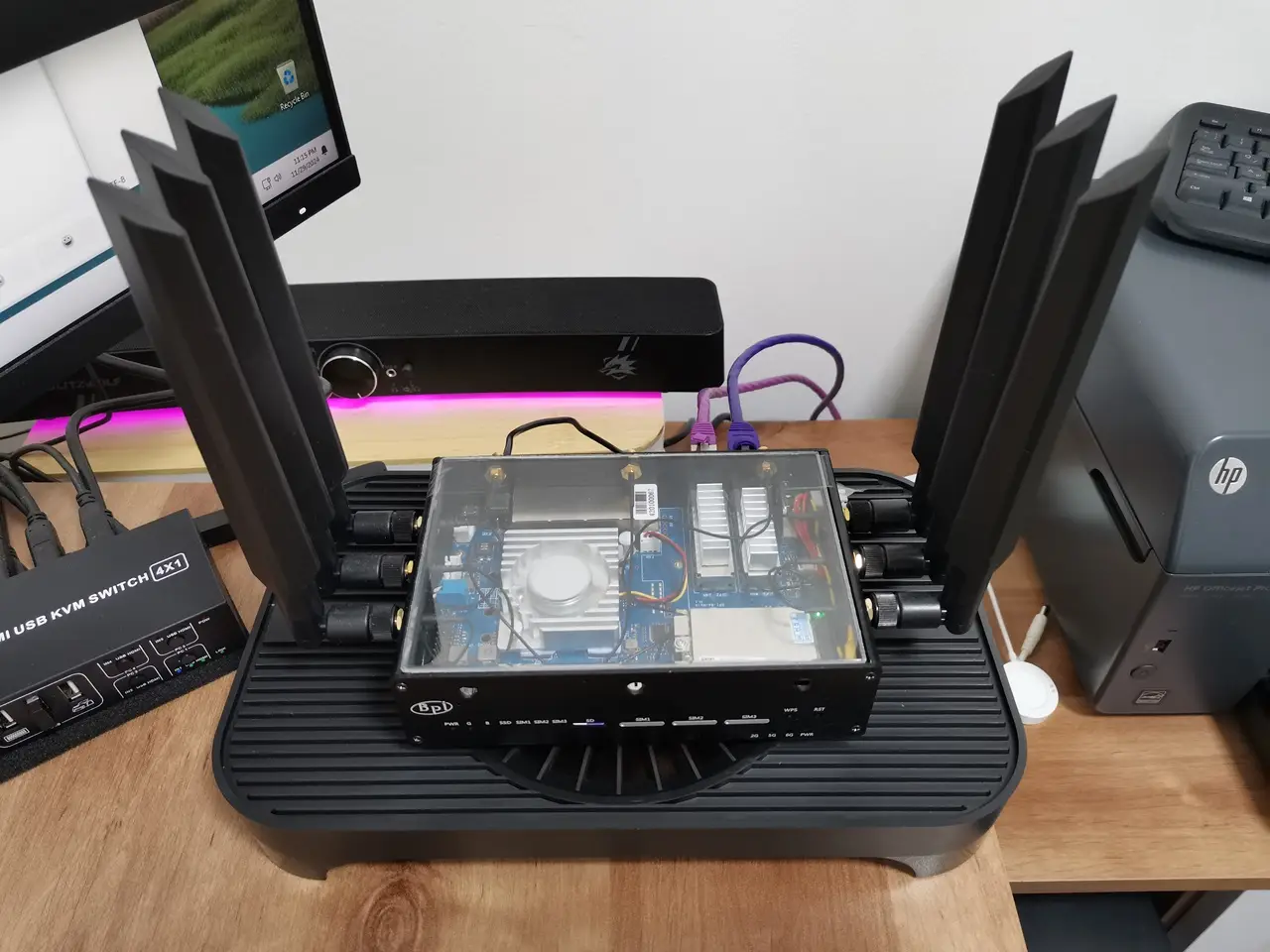
The issue lies in the design of the Wi-Fi NIC card, which relies on the case to dissipate excess heat. Unfortunately, this approach is ineffective since the lower case lacks any fins or proper ventilation holes. While there are numerous solutions, including modifying the case and making other adjustments, we believe in simplifying the solution!

A straightforward solution is always effective.

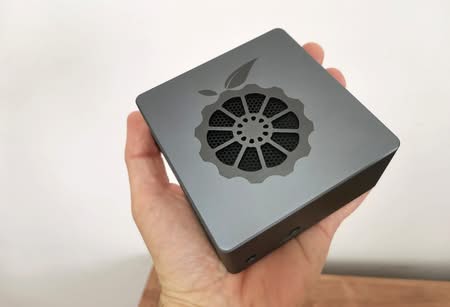
Strategically placing a fan or multiple fans under the Banana 4R case significantly enhances cooling, particularly for the Wi-Fi NIC card. This creative approach not only improves the internal temperature management of the case but also plays a crucial role in preventing CPU overheating.

A diverse range of products is readily available, particularly on AliExpress, tailored for cooling routers, often referred to as cooling pads. While it’s possible to make a DIY version, we chose to invest in a pre-made option featuring a large fan for enhanced efficiency.

Testing temperatures

# CPU temperature
cat /sys/class/thermal/thermal_zone0/temp
43515
# Wireless network card interfaces
cat /sys/class/thermal/thermal_zone0/temp
38000
38000
32000
BPI Banana Pi 4 Cooling
1 2 3 4 5 6 7 8 9 10 11
Share. Facebook Twitter Pinterest LinkedIn Tumblr Email
Previous ArticleOrange Pi AIPro powered by Huawei Ascend SoC, launched globally
Next Article Xiaomi Watch S3 Review: Great design, but is it worth the HyperOS hype?
androidpimp
  • Website

Related Posts

Raspberry Pi Zero 3W SBC

Orange Pi Zero 3W Review: $25 Dual Video Pi Zero 2W Killer?

June 12, 2026
DFRobot Flexible AMOLED Display

DFRobot 6.67″ Flexible AMOLED Review: Curved Display for Raspberry Pi & LattePanda

June 8, 2026
Banana Pi SM10 Kit

Banana Pi BPI-SM10 Review: 60 TOPS RISC-V Jetson Orin Nano Alternative

June 3, 2026
5 1 vote
Article Rating
Subscribe
Notify of
4 Comments
Oldest
Newest Most Voted
joise meerde
2 years ago

Good Job

0
Reply
Author
androidpimp
2 years ago
Reply to  joise meerde

Thanks

0
Reply
Dimitris B.
6 months ago

That’s the most in-depth review I’ve seen of the BPI-R4. However, the benchmark and Wi-Fi testing sections are noticeably missing. Any reason why?

0
Reply
Author
androidpimp
6 months ago
Reply to  Dimitris B.

Thanks. Probably at that time I didn’t have the extra patience to wait until they fixed the bugs/problems. Hopefully a few months have passed and it should be fine now.

0
Reply
PureVPN
PureVPN Ad Banner
VyprVPN – No. 1 in Anonymity
Vyprvpn 350x260
PrivadoVPN – No. 1 in Parental Control
PrivadoVPN 350x437
Recent Posts
  • AliExpress Promo Codes: June 2026 (100% Verified)
  • Orange Pi Zero 3W Review: $25 Dual Video Pi Zero 2W Killer?
  • DFRobot 6.67″ Flexible AMOLED Review: Curved Display for Raspberry Pi & LattePanda
  • Banana Pi BPI-SM10 Review: 60 TOPS RISC-V Jetson Orin Nano Alternative
  • SpacemiT K3 Pico-ITX Review: 60-TOPS RISC-V Powerhouse for LLMs?
  • Banana Pi BPI-R4 Pro Review: The Best WiFi 7 OpenWrt Router? We Checked!
  • DFRobot ESP32-S3 LoRaWAN & Gateway Review: Build a Private IoT Network
  • WaveNote AI Review 2026: An Honest Pro/Con Comparison (Tested)
  • CamThink NE301 Review: 25 FPS YOLOv8 on STM32 Edge AI
  • PrivadoVPN Review 2026: Is the Best Free VPN Still Good for Streaming?
RSS The Latest RSS Feeds
  • AliExpress Promo Codes: June 2026 (100% Verified)
  • Orange Pi Zero 3W Review: $25 Dual Video Pi Zero 2W Killer?
  • DFRobot 6.67″ Flexible AMOLED Review: Curved Display for Raspberry Pi & LattePanda
Facebook X (Twitter) Instagram Pinterest
@2026 - All Right Reserved. Designed by AndroidPIMP

Type above and press Enter to search. Press Esc to cancel.

Powered by
►
Necessary cookies enable essential site features like secure log-ins and consent preference adjustments. They do not store personal data.
None
►
Functional cookies support features like content sharing on social media, collecting feedback, and enabling third-party tools.
None
►
Analytical cookies track visitor interactions, providing insights on metrics like visitor count, bounce rate, and traffic sources.
None
►
Advertisement cookies deliver personalized ads based on your previous visits and analyze the effectiveness of ad campaigns.
None
►
Unclassified cookies are cookies that we are in the process of classifying, together with the providers of individual cookies.
None
Powered by
wpDiscuz