Video Playback Performance
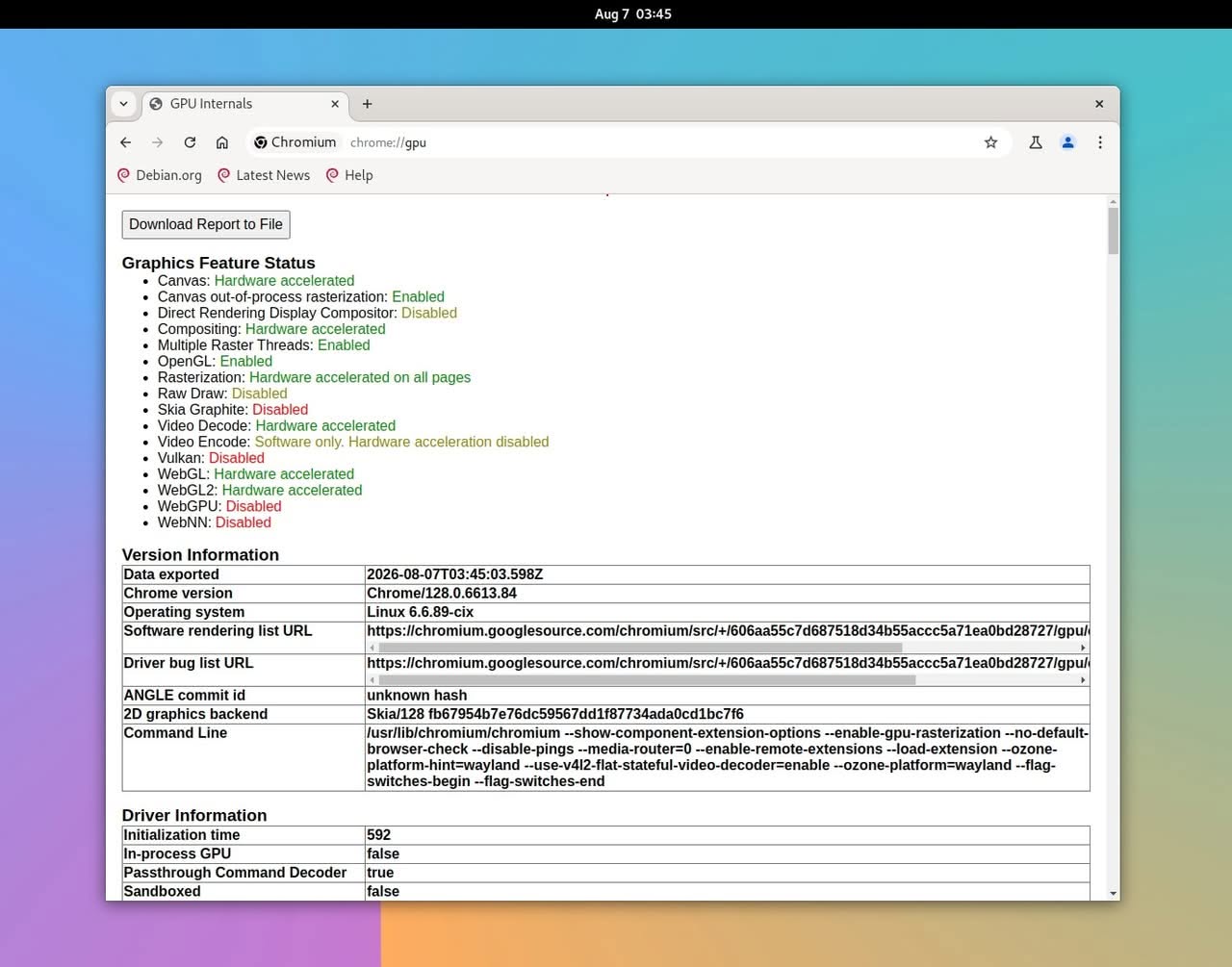
In this area, the Opi 6 comes with all the necessary GPU drivers pre-installed, including support for Vulkan drivers. We also verified the supported GPU settings in the Chrome browser, and it has been confirmed that hardware acceleration support is fully enabled.
Chrome browser gpu settings
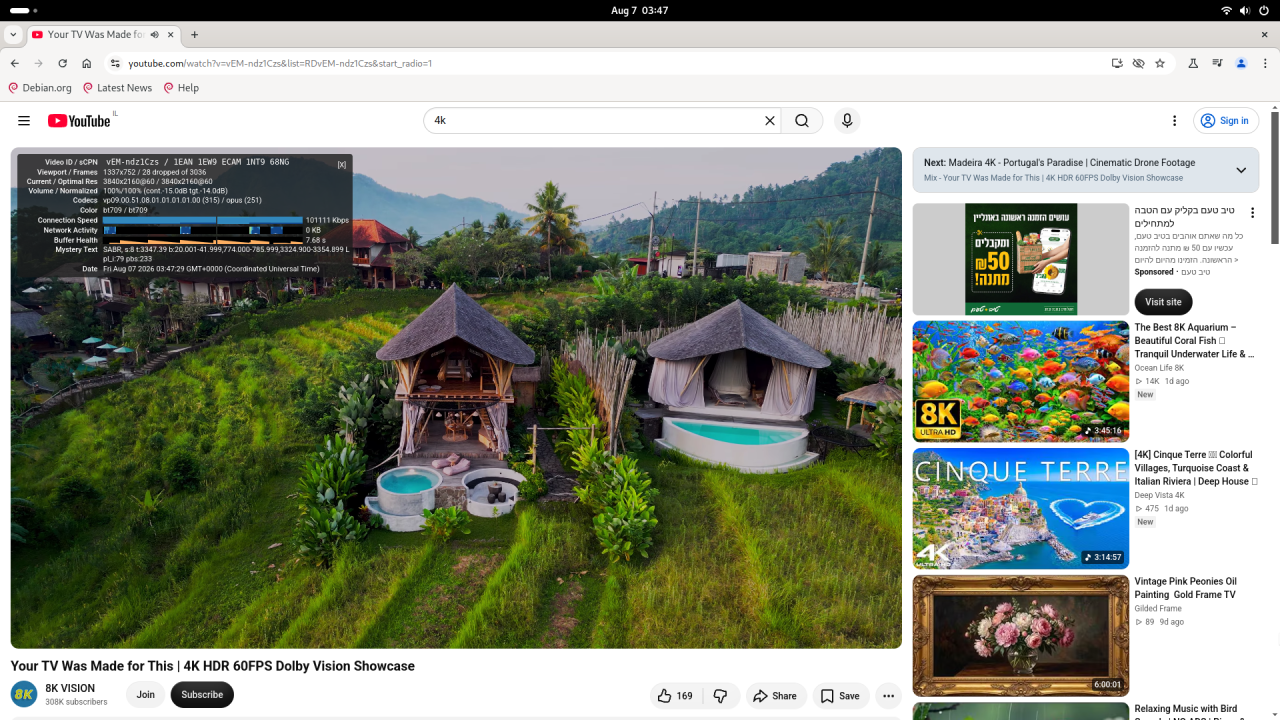
Testing video playback using the Chrome web browser.
Testing 4K video playback wasn’t too bad either. Most of the videos played pretty smoothly, with few frame drops, as shown in the screenshot below.
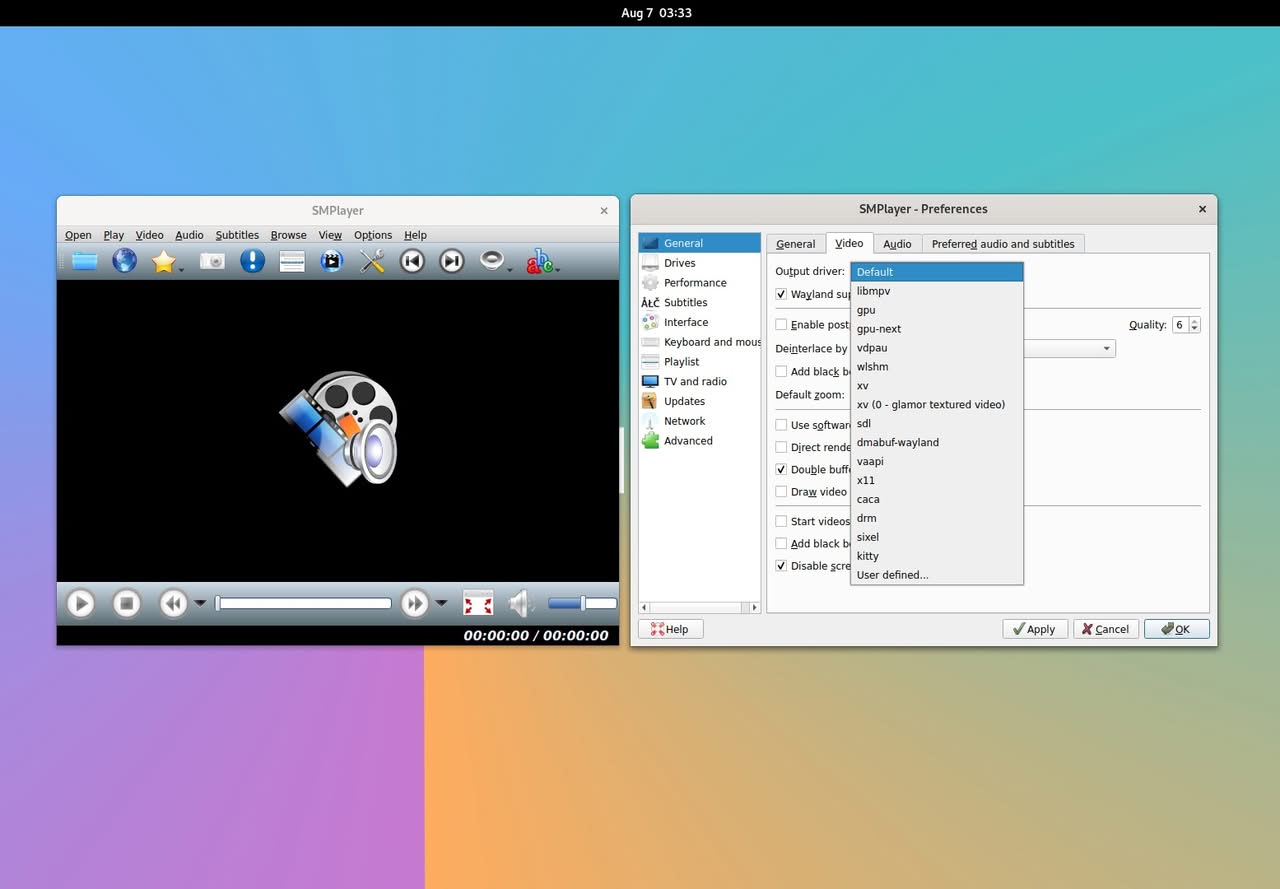
SMPlayer
The device came pre-installed with the Orange Pi Ubuntu Noble image. Thanks to full video decoding support, we were able to play 4K and 2K videos without any issues. While you shouldn’t expect every file to play perfectly, the overall performance was satisfactory.
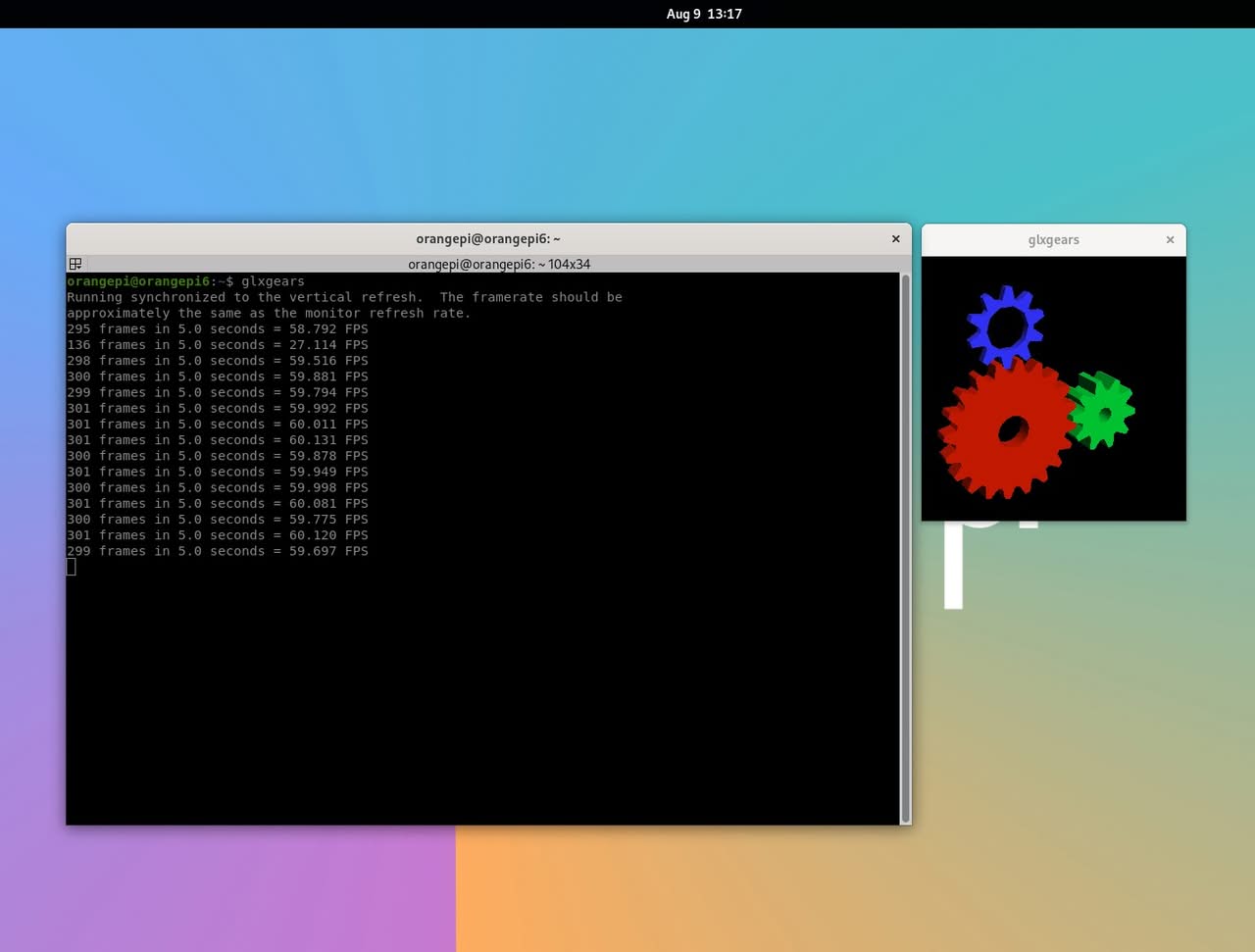
Testing if 3D hardware acceleration is working (glxgears)
Full report on the Orange Pi 6’s graphics stack.
3D/Desktop GPU rendering Support
The output shows that our Orange Pi 6 is running an X11 session with hardware‑accelerated graphics, using the Mesa driver stack and the Zink layer to provide OpenGL by translating it over the GPU’s native Vulkan 1.3 API; the GPU is a Mali‑G720 Immortalis, which supports OpenGL 4.0, OpenGL ES 3.2, and unified memory, so the large “15610 MB” video‑memory values simply reflect total system RAM rather than real VRAM, confirming that our system has full acceleration, modern API support, and a Vulkan‑based OpenGL implementation.
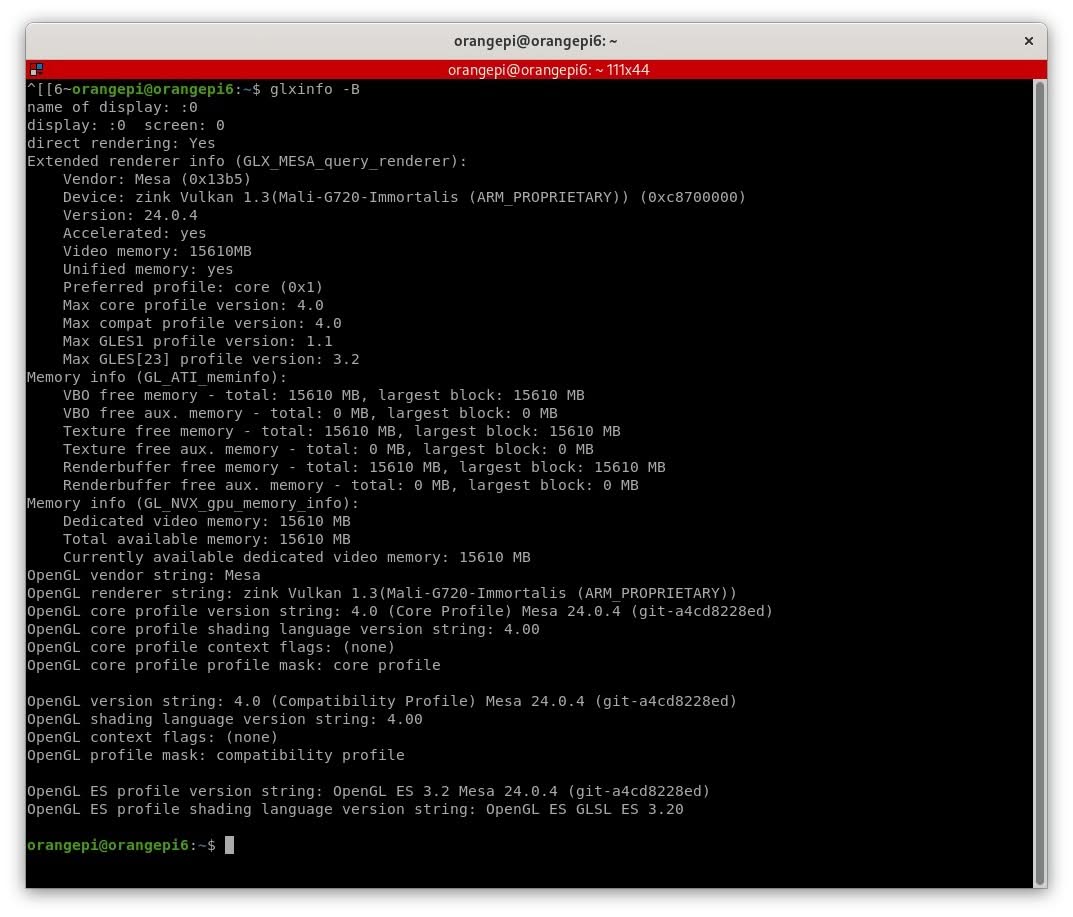
Hardware video decoding checked and confimed!
The adjusted regular expression is filtered specifically for decoding blocks, allowing the video4linux2 plugin suite to handle VPU operations directly through the standard Linux V4L2 drivers.
Supported Hardware Decoders Installed:
- AV1:
v4l2av1dec(Hardware AV1 decoding) - H.264:
v4l2h264dec(Hardware AVC decoding) - H.265 / HEVC:
v4l2h265dec(Hardware HEVC decoding) - VP8 & VP9:
v4l2vp8dec&v4l2vp9dec(Hardware VP8/VP9 decoding, used extensively by YouTube) - MPEG-2 / MPEG-4:
v4l2mpeg2dec&v4l2mpeg4dec - JPEG & H.263:
v4l2jpegdec&v4l2h263dec
Because these stateful and stateless v4l2 decoders are registered with GStreamer, video players that utilize GStreamer, such as Totem or custom pipelines, can offload the decoding process directly from the CPU to your board’s VPU hardware.
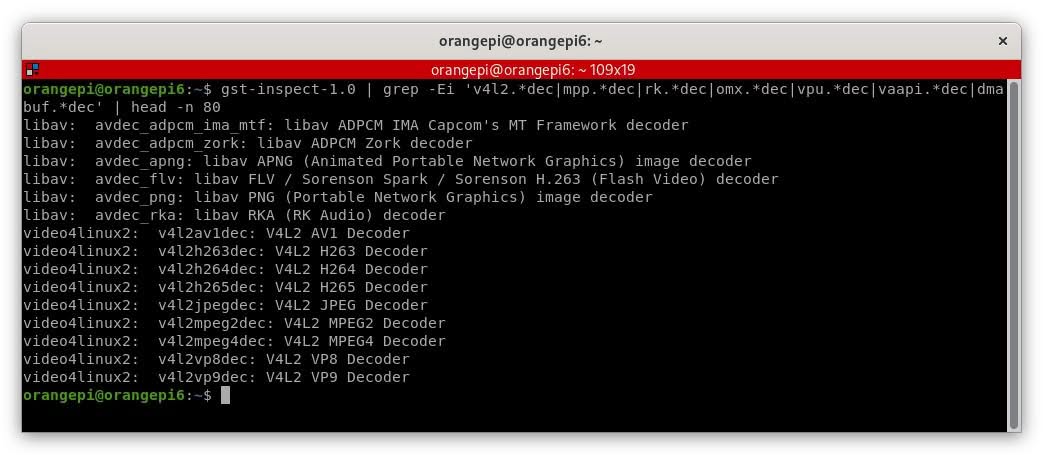
Confirming if GStreamer on our Orange Pi includes hardware-accelerated decoders for recent video codecs.
This command lists all hardware video decoders available on your system through GStreamer, letting you verify which codecs (H.264, H.265, VP9, AV1, etc.) are supported by the hardware.
This output indicates the available video decoders for our Orange Pi 6 via GStreamer. It confirms that the board supports hardware-accelerated decoding for modern codecs through V4L2, in addition to software decoders from libav (FFmpeg).
🔍 What the list actually means
- libav: These entries are software decoders provided by FFmpeg. They run on the CPU and are used when no hardware decoder is available or when the format is obscure.
- video4linux2 (V4L2): These entries are hardware accelerated decoders provided by the kernel’s media subsystem. These are the important ones for performance:
- v4l2av1dec — hardware AV1 decoding
- v4l2h263dec — hardware H.263 decoding
- v4l2h264dec — hardware H.264 decoding
- v4l2h265dec — hardware H.265 / HEVC decoding
- v4l2jpegdec — hardware JPEG decoding
- v4l2mpeg2dec — hardware MPEG‑2 decoding
- v4l2mpeg4dec — hardware MPEG‑4 decoding
- v4l2vp8dec — hardware VP8 decoding
- v4l2vp9dec — hardware VP9 decoding
What does this tell us about the Orange Pi 6?
That our system fully supports hardware decoding for all major modern video formats (H.264, H.265, VP9, AV1). This capability ensures smooth playback in applications such as VLC, MPV, Kodi, or any GStreamer-based pipeline. When GStreamer utilizes these V4L2 decoders, video playback is offloaded to the GPU/VPU rather than the CPU, resulting in:
- lower CPU usage
- cooler temperatures
- smoother playback
- better battery/energy efficiency